Which Rotary Car Lift Fits the Work?
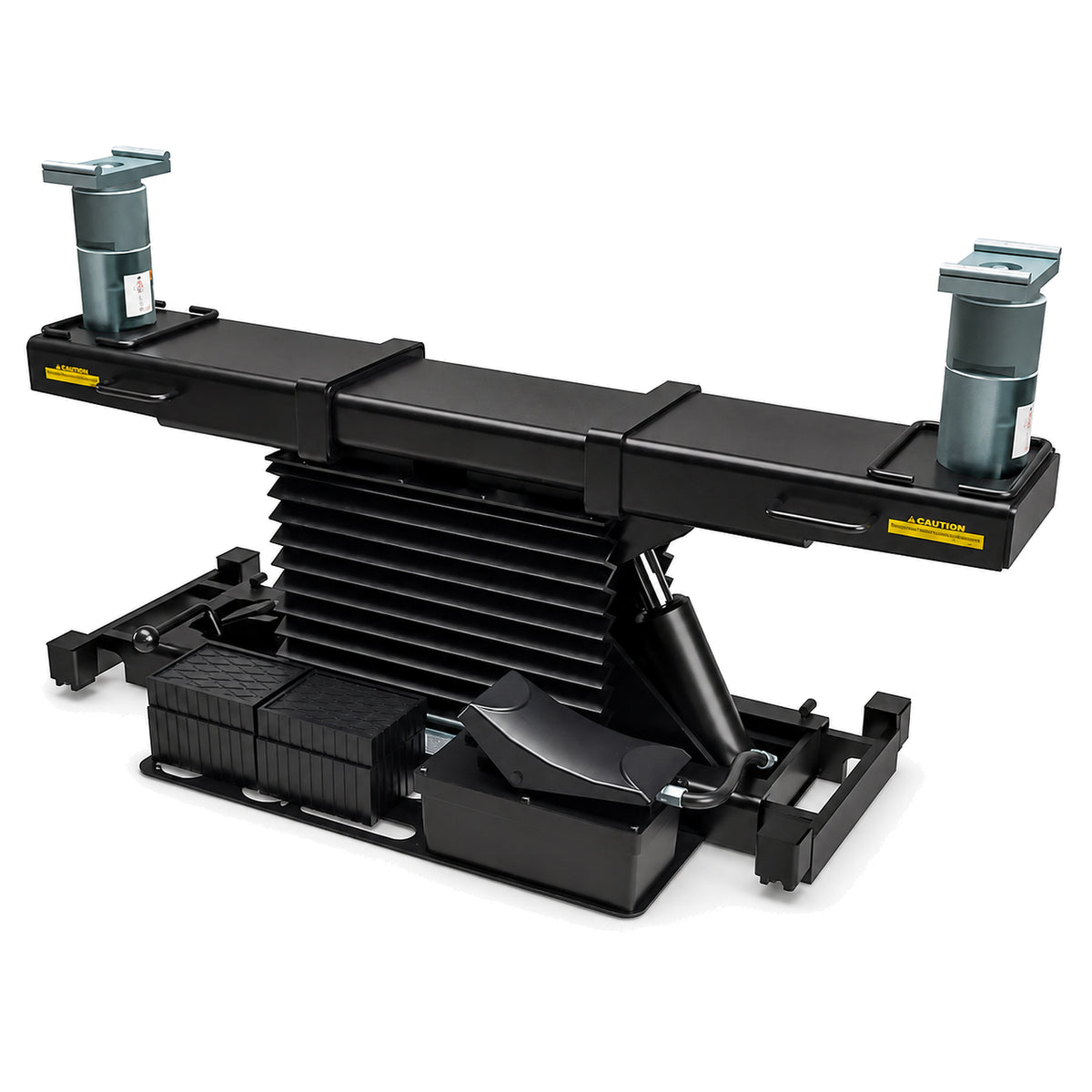
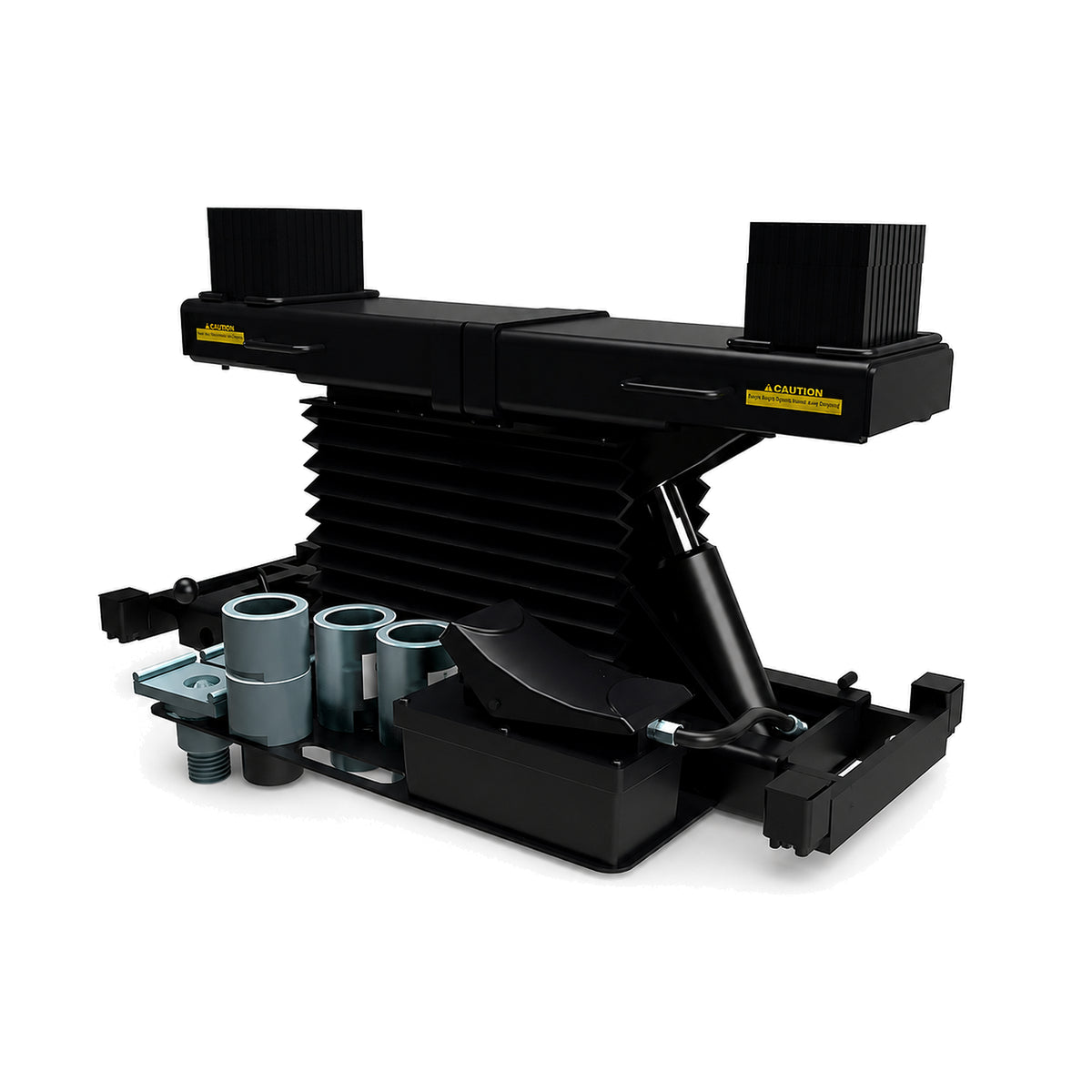
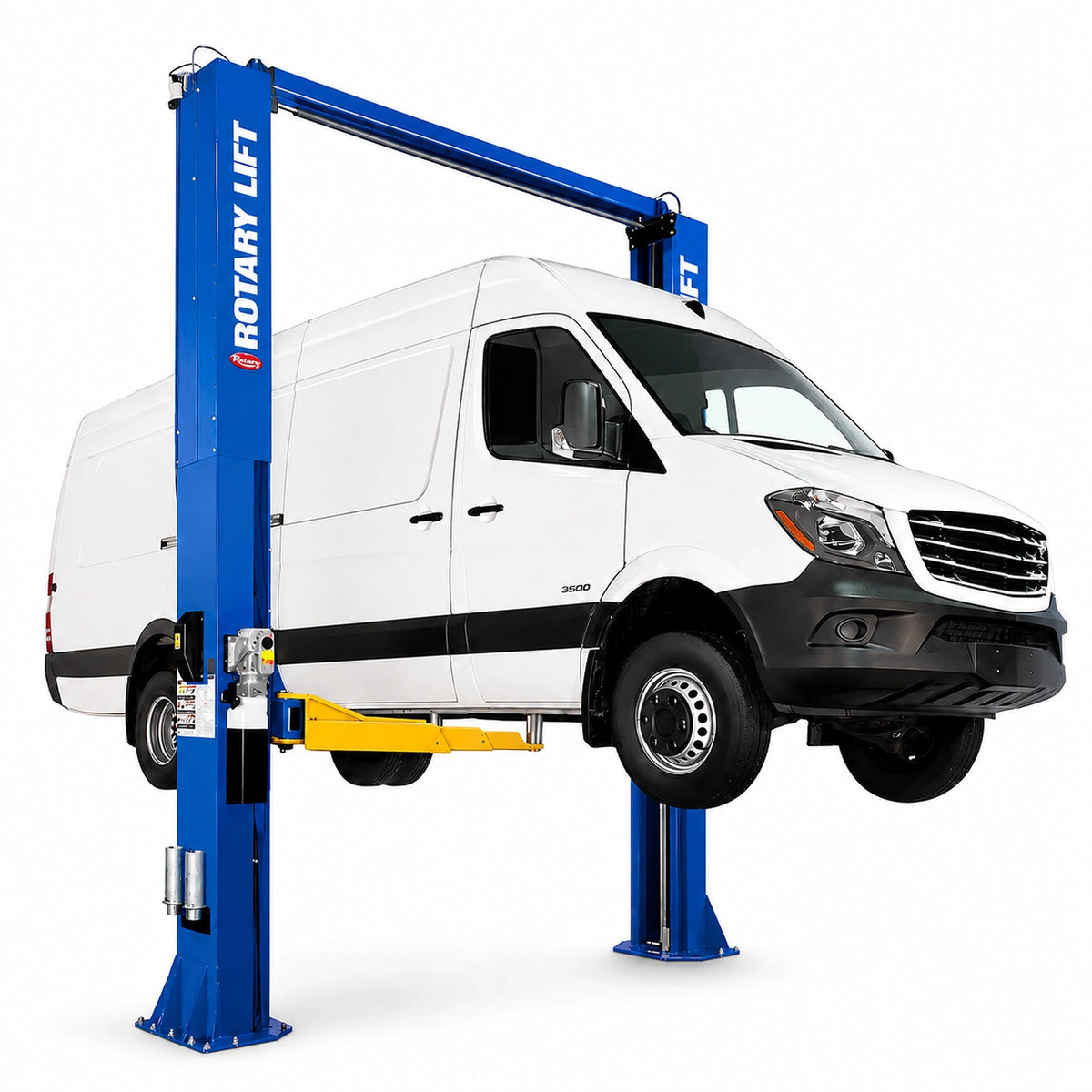
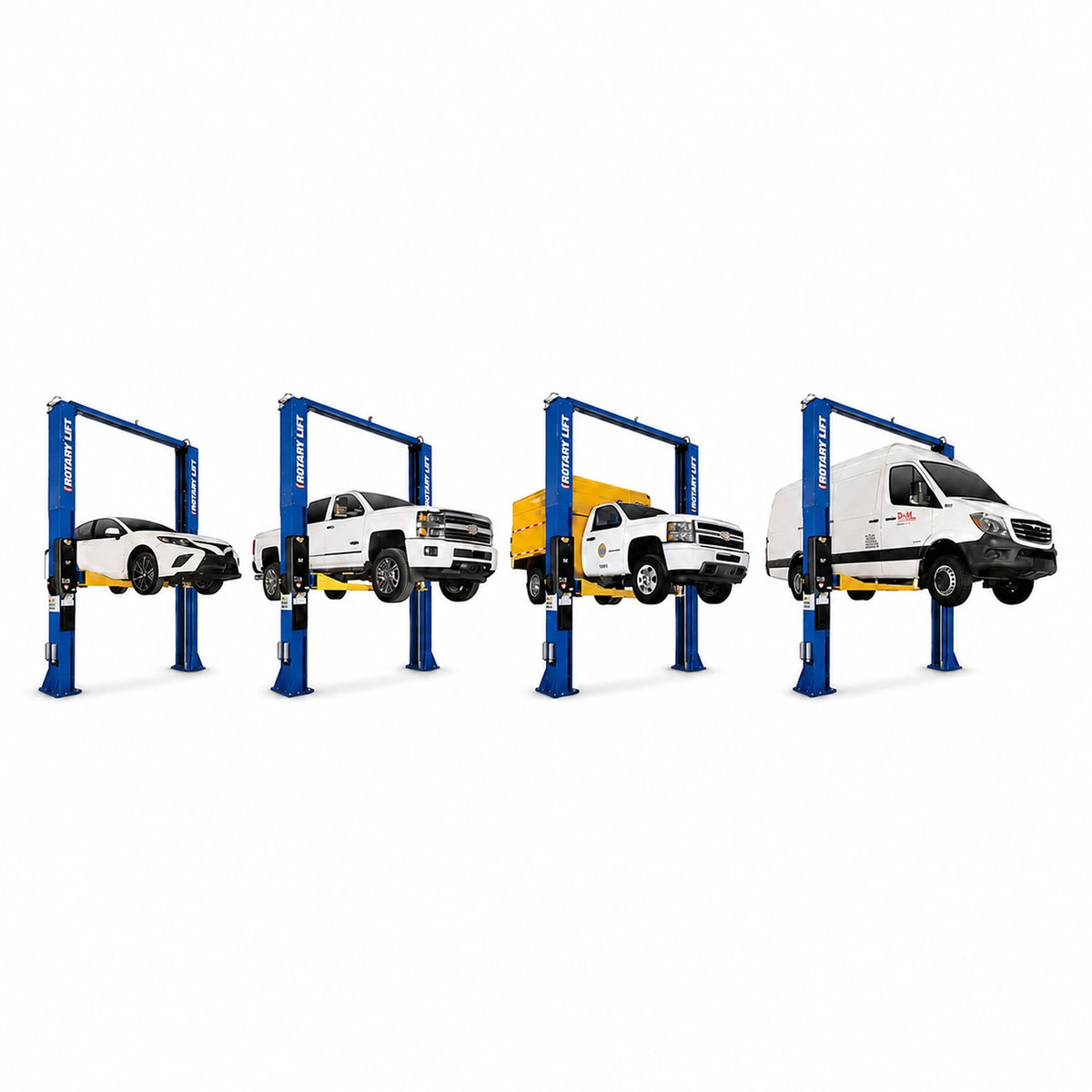
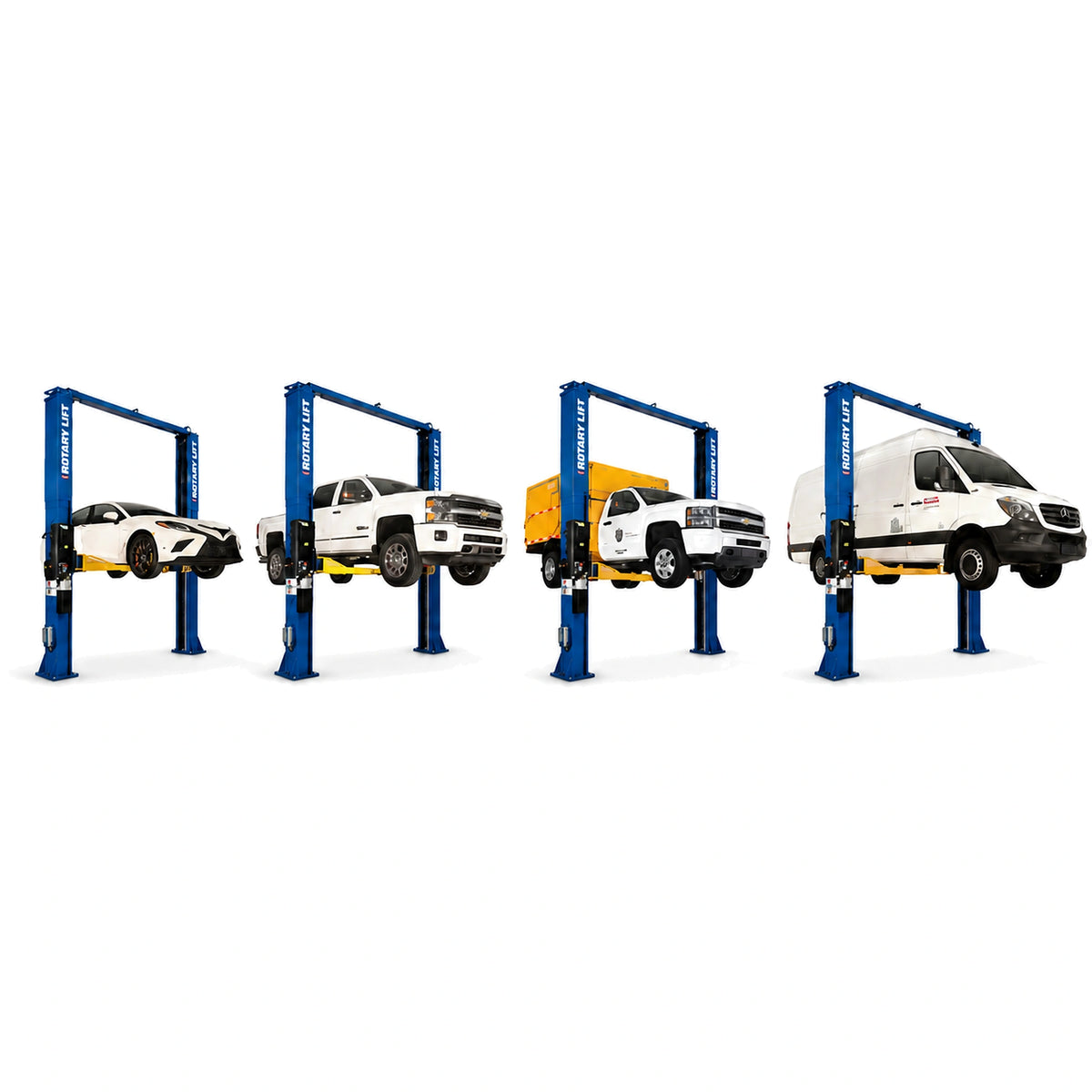
Rotary's current lineup covers several different ways to lift a vehicle. Two-post models support the vehicle at approved pickup points and leave the wheels free. Four-post and drive-on models support the vehicle on runways. Scissor and low-rise lifts change the floor footprint and access pattern, while mobile column systems are designed around heavier vehicles and movable lifting positions. Those differences affect the bay long before a higher capacity number becomes useful.
| Lift type |
Rotary families represented |
Capacity represented |
Start by comparing |
| Two-post |
SPOA7-MP, SPOA10, SPOA10-AV, SPO10, SPO12, SPO16, SPO20 |
7,000 to 20,000 lb |
Symmetric vs. asymmetric layout, arm or pad reach, vehicle pickup points, ceiling height, bay width, and per-arm limits |
| Four-post / drive-on |
SM14, SMO14, SM18, SM30 |
14,000 to 30,000 lb |
Open vs. closed front, runway length, vehicle wheelbase, drive-through needs, and rolling-jack requirements |
| Alignment |
ARO16, ARO22, XA14 |
14,000 to 22,000 lb |
Four-wheel and two-wheel alignment range, general-service wheelbase, rack layout, bay size, and included alignment equipment |
| Scissor / low-rise |
RLP77, X14, VLXS10 |
7,700 to 14,000 lb |
Full-rise vs. low-rise access, drive-over profile, working height, service task, and surface or recessed installation where applicable |
| Mobile column |
MCHM14 Flex MAX, MCHM19 Flex MAX |
14,000 or 18,800 lb per column |
Per-column capacity, number of columns, wheel size, vehicle weight distribution, and the need for a movable heavy-duty lifting system |
Rotary 2 Post Lifts: Symmetric, Asymmetric, and Quick-Service Choices
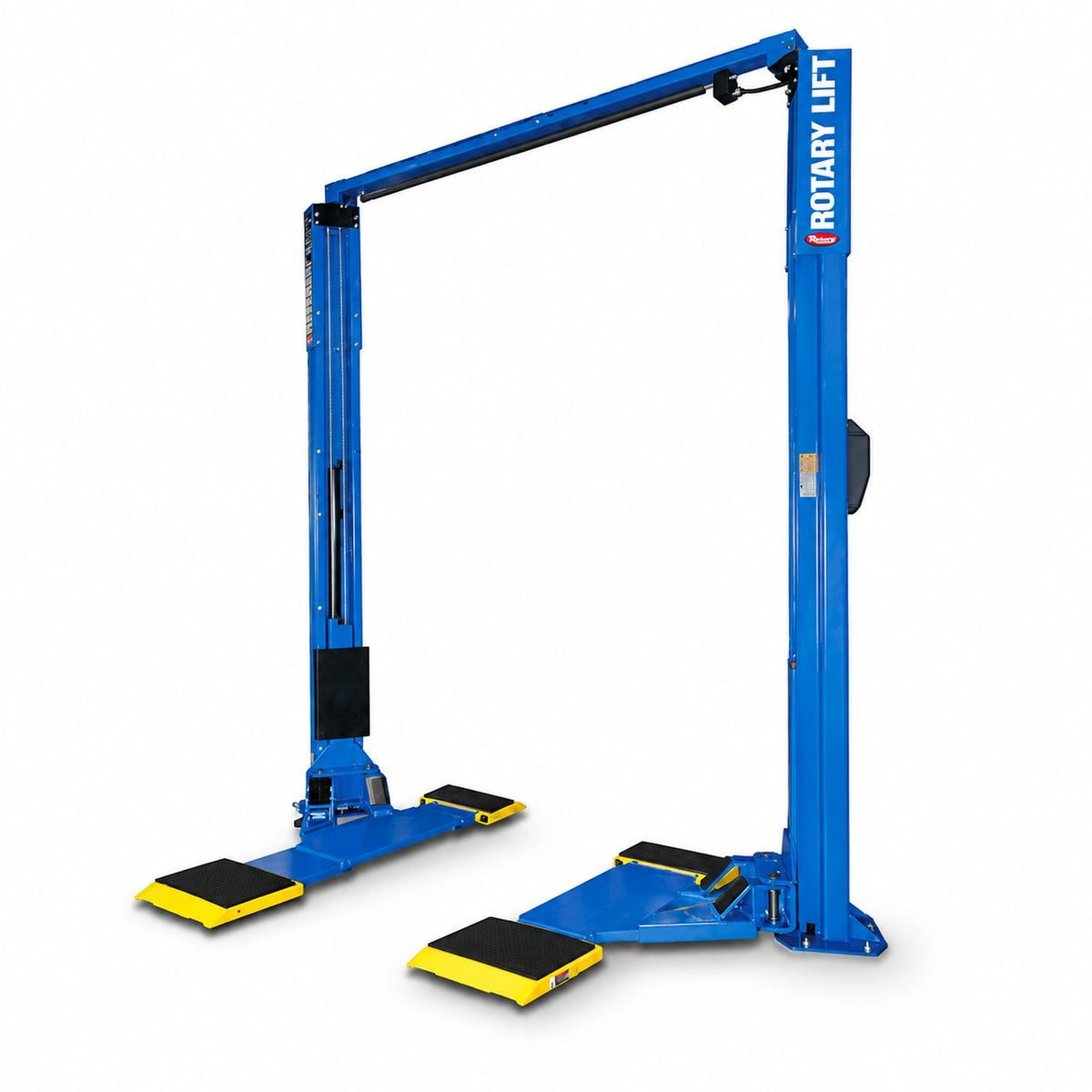
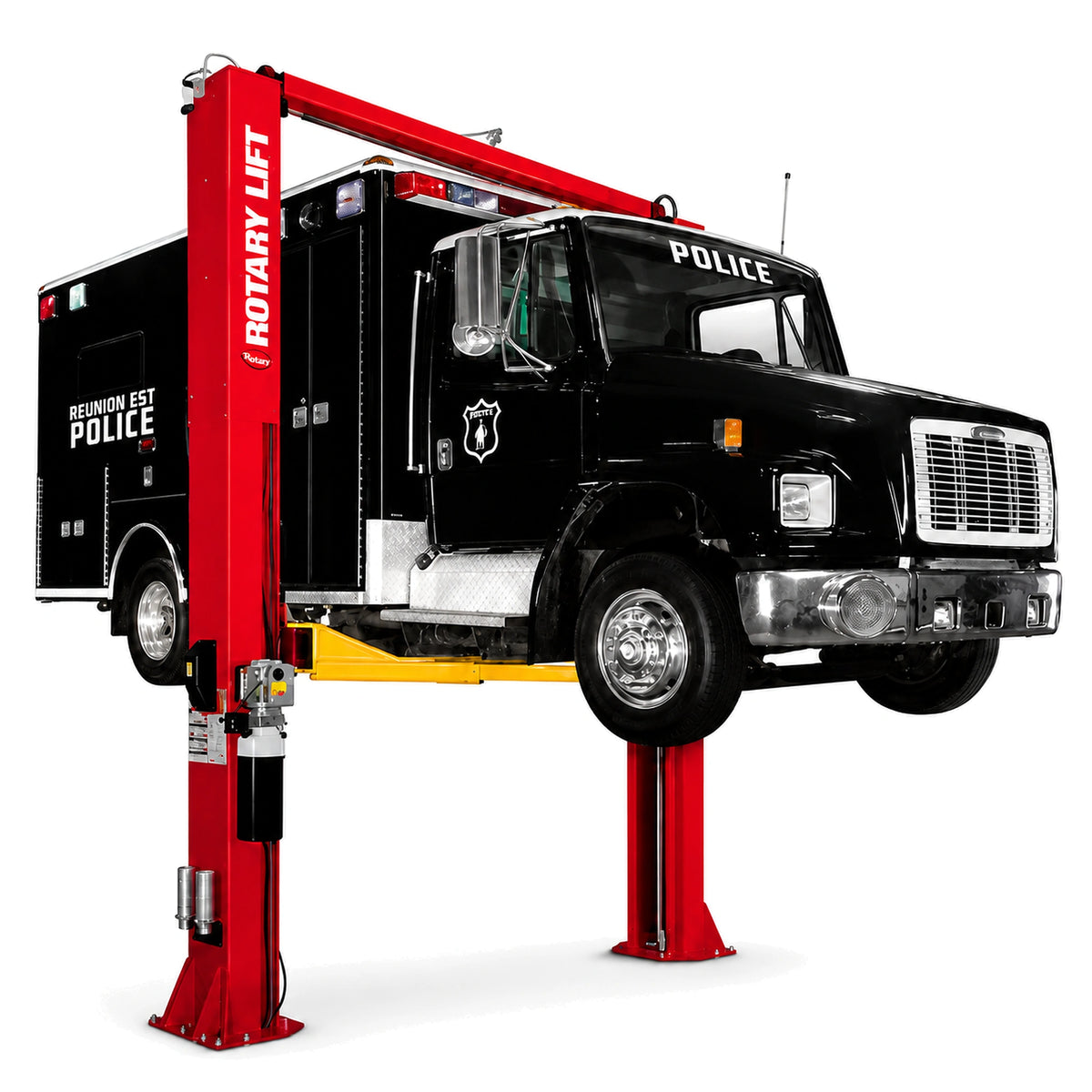
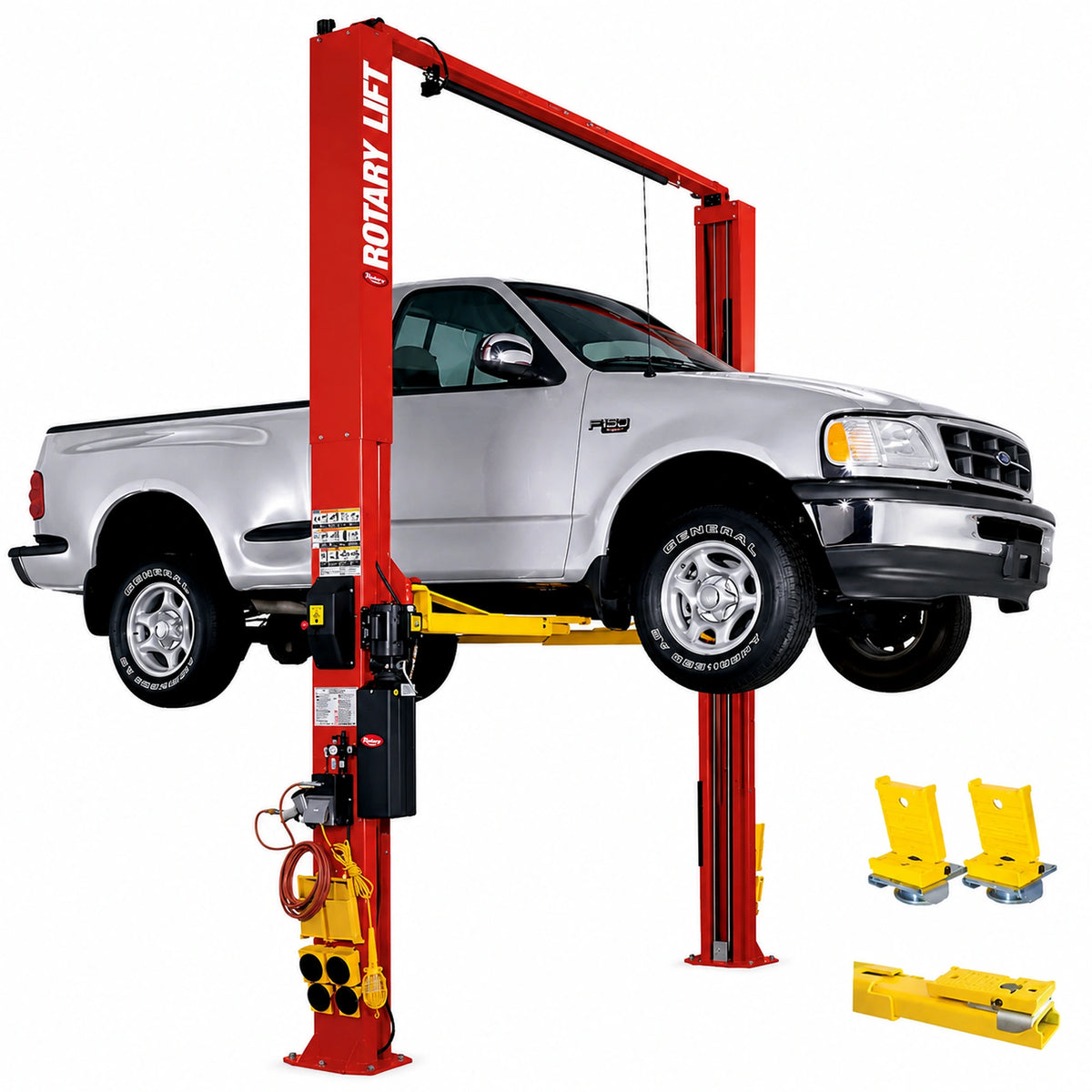
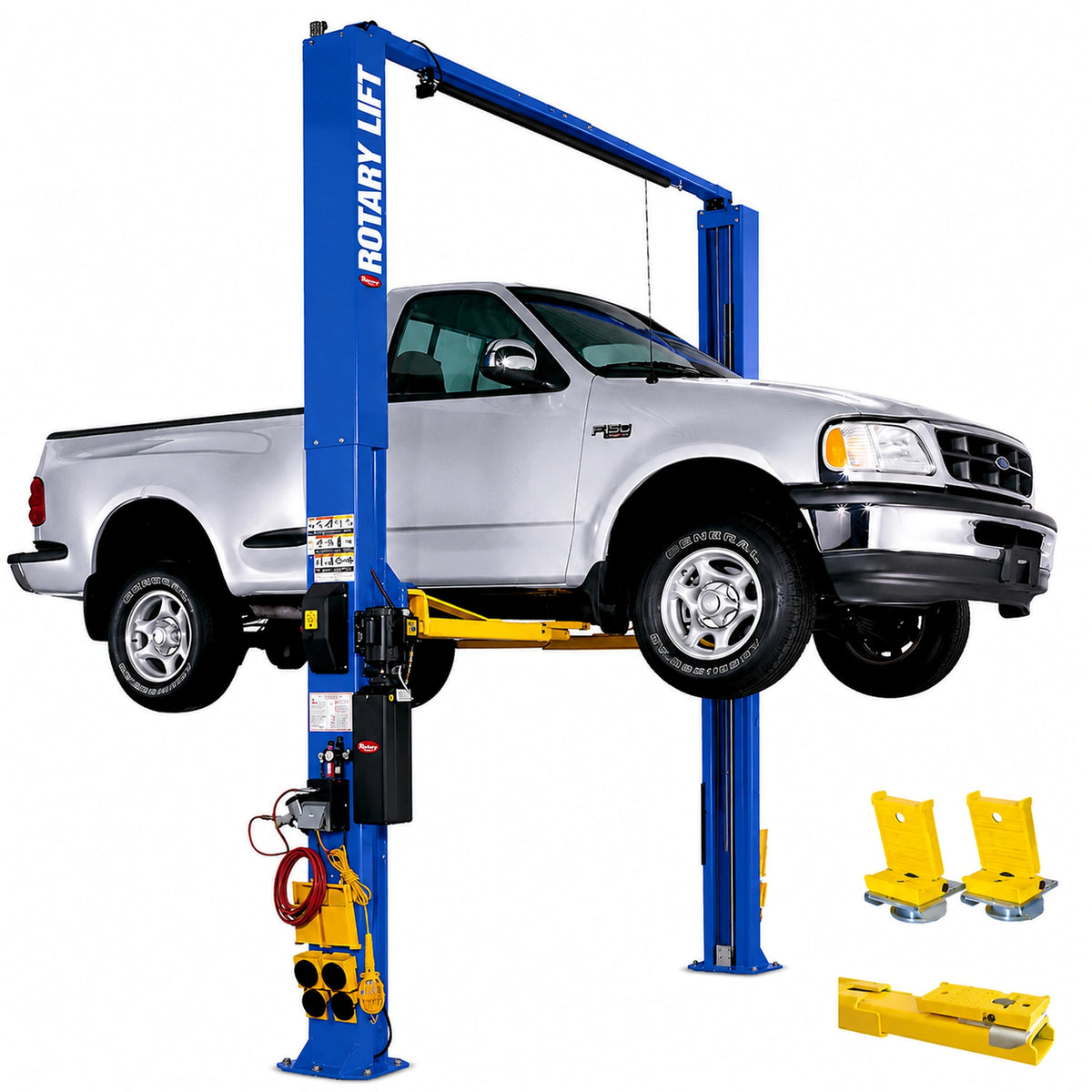
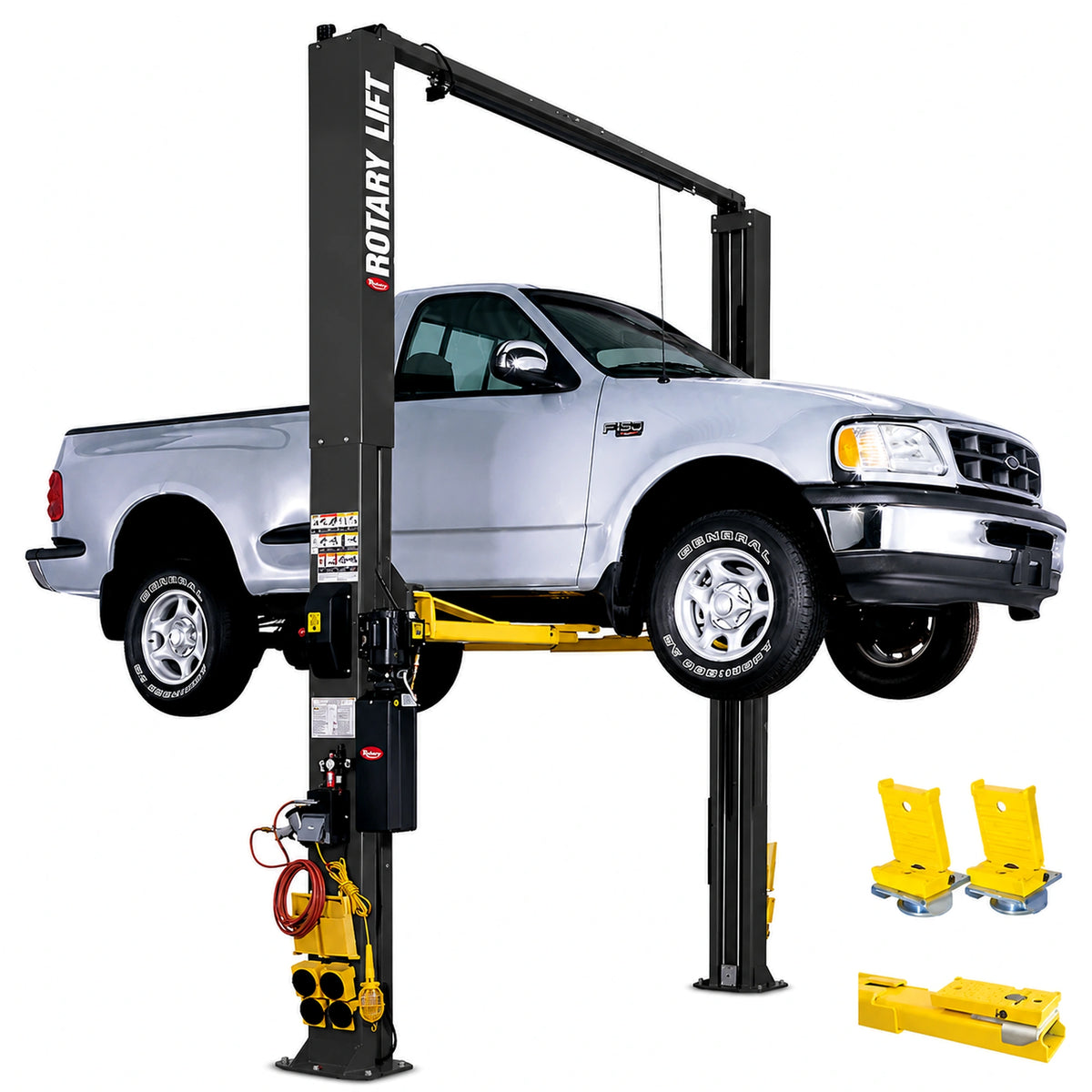
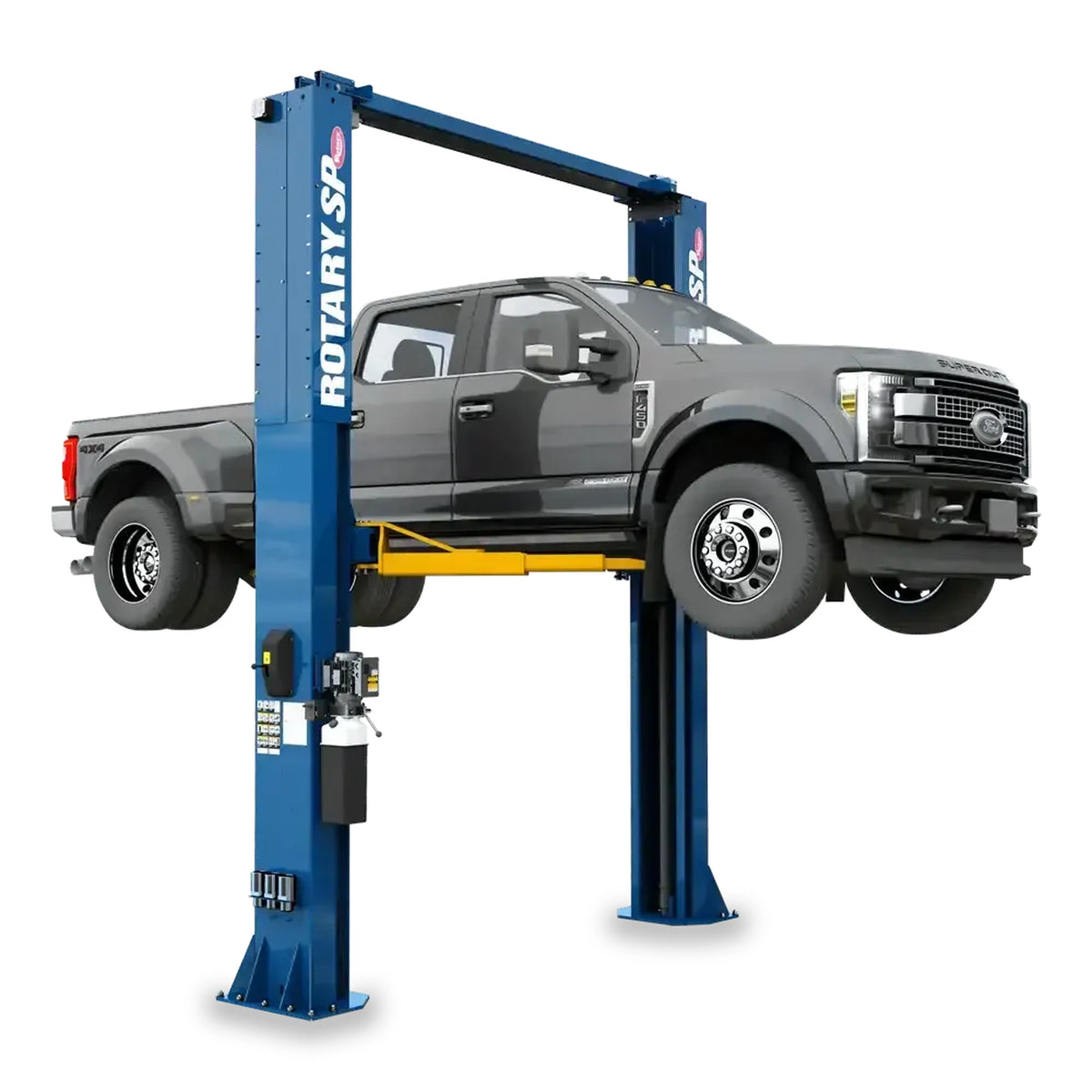
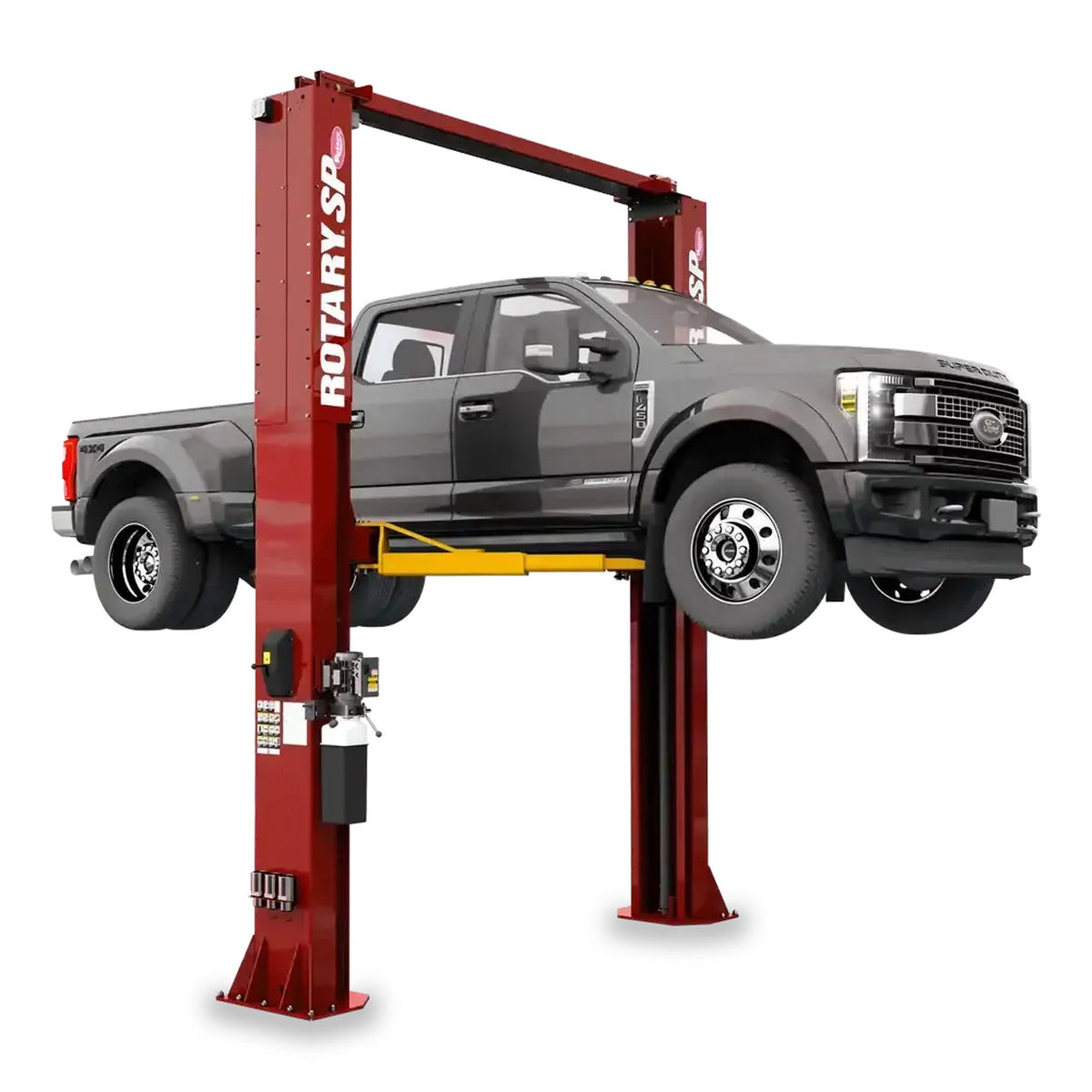
The two-post side of the collection has the widest model spread. The 10,000 lb SPOA10 is Rotary's asymmetric family, with the columns rotated 30 degrees. The 10,000 lb SPO10 uses a symmetric layout. The SPOA10-AV adds All-Vehicle arms intended to expand pickup-point reach across different roadgoing vehicle types within the lift's rated capacity.
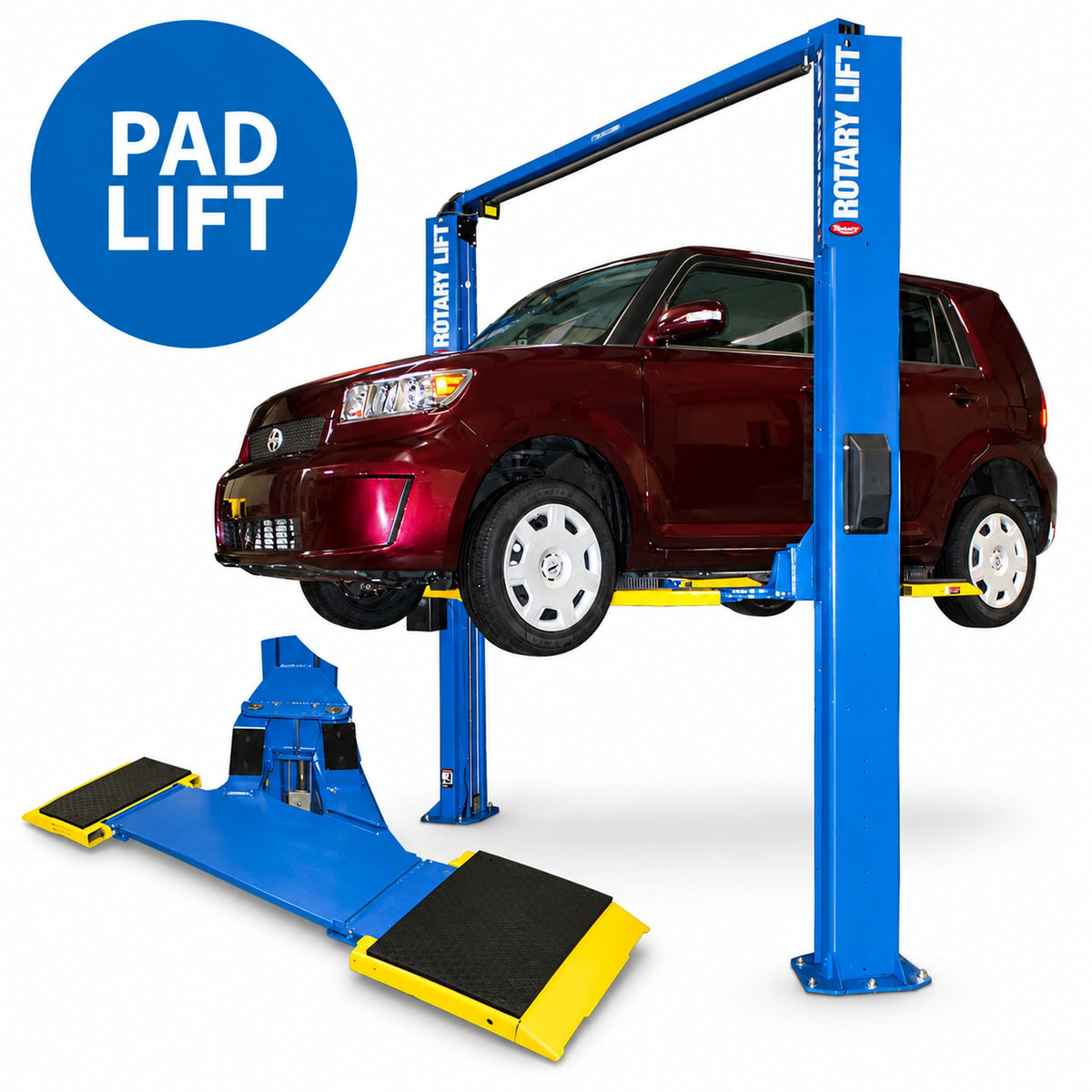
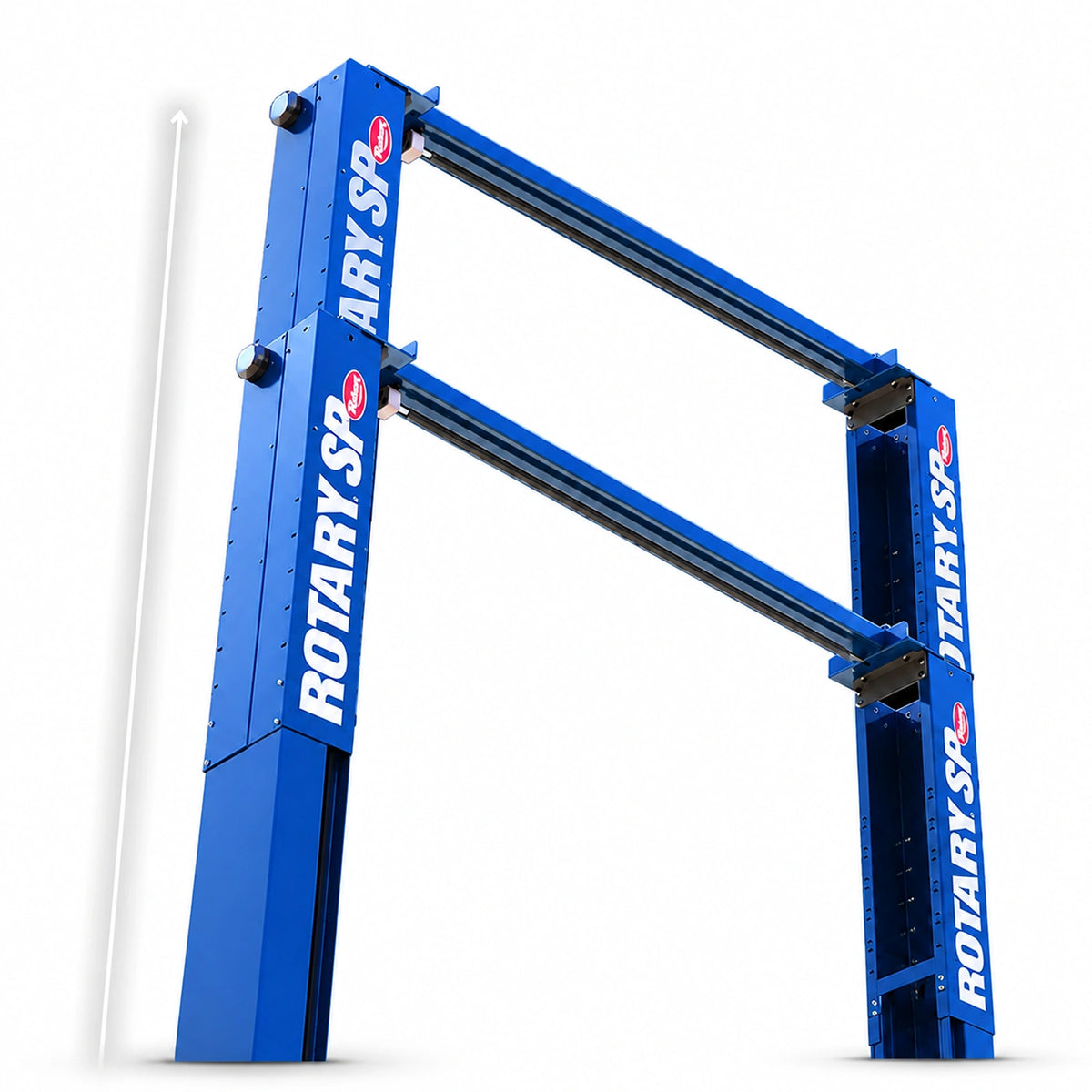
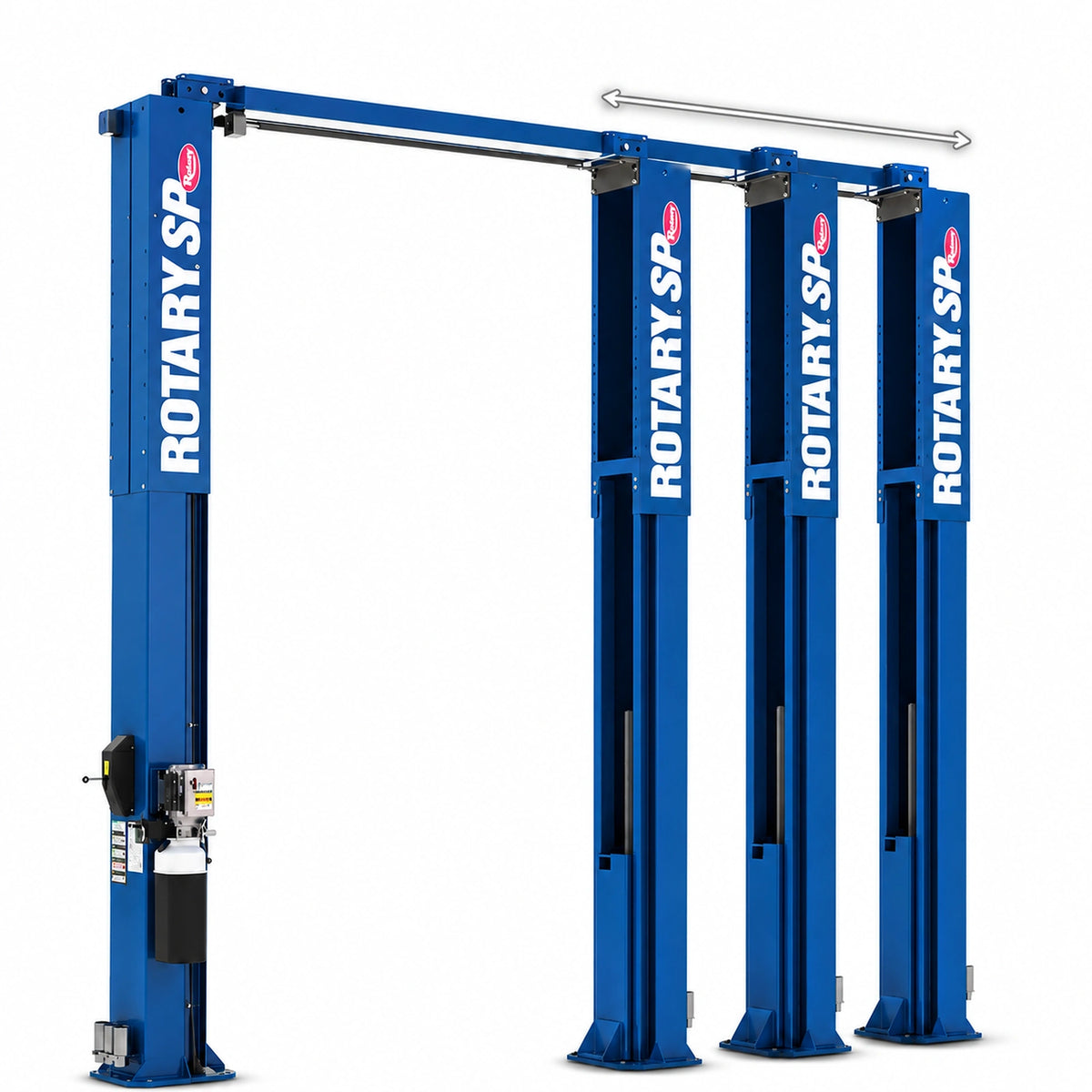
The 12,000 lb SPO12 family moves into a larger symmetric platform; the current public collection includes SPO12-TA and SPO12-AV configurations. For heavier work, Rotary's SPO16 and SPO20 families raise rated capacity to 16,000 and 20,000 lb and use longer-reaching three-stage arm configurations. The SPOA7-MP is different again: it is a 7,000 lb two-post quick-service lift that supports the vehicle on adjustable drive-over pads instead of conventional swing arms.
Don't size a two-post lift from total vehicle weight alone. Rotary publishes arm, adapter, axle, bay, and configuration limits that can matter before the lift reaches its overall rated capacity. Confirm the exact vehicle pickup points and load distribution against the selected model.
Rotary 4 Post Lifts: Service Racks and Longer Vehicles
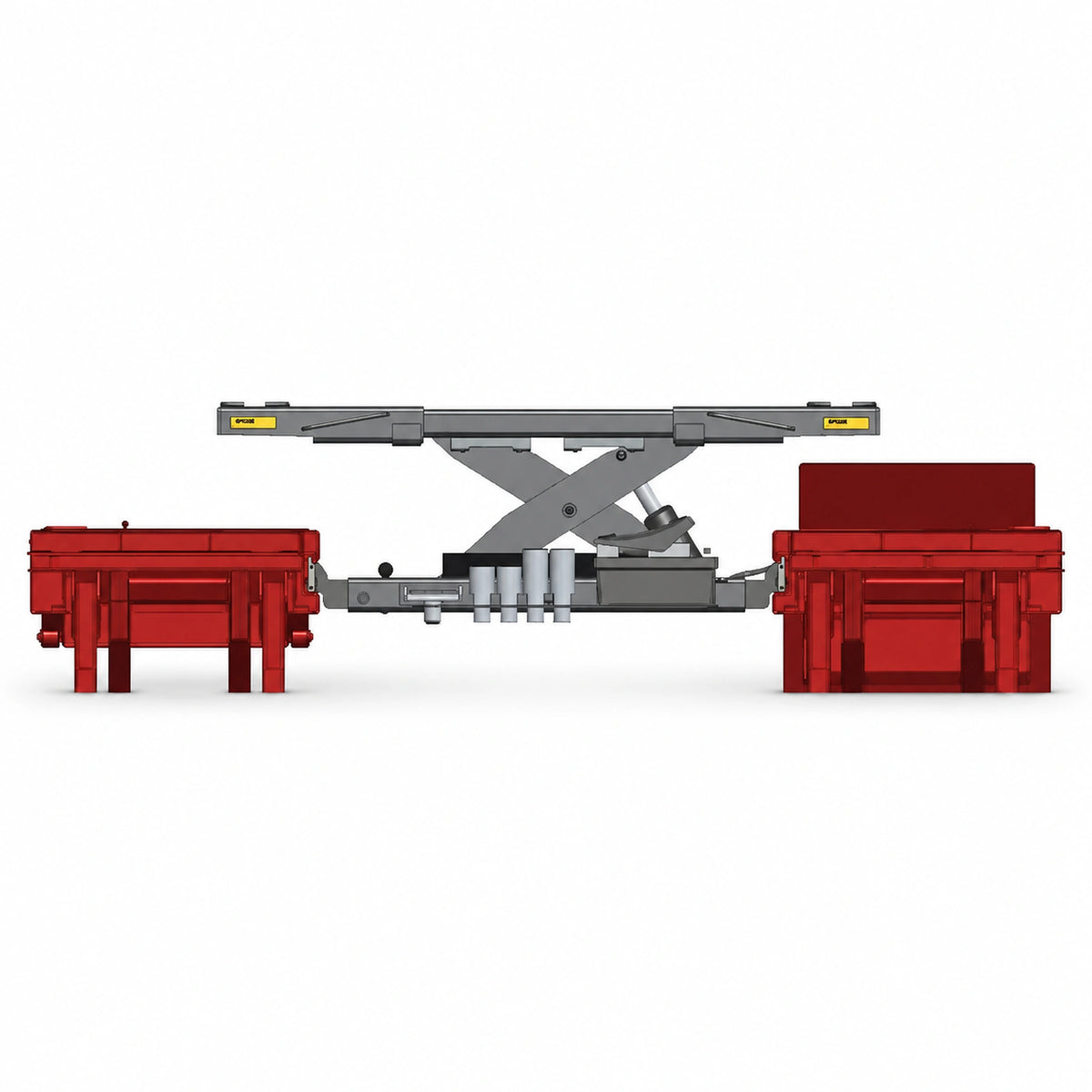
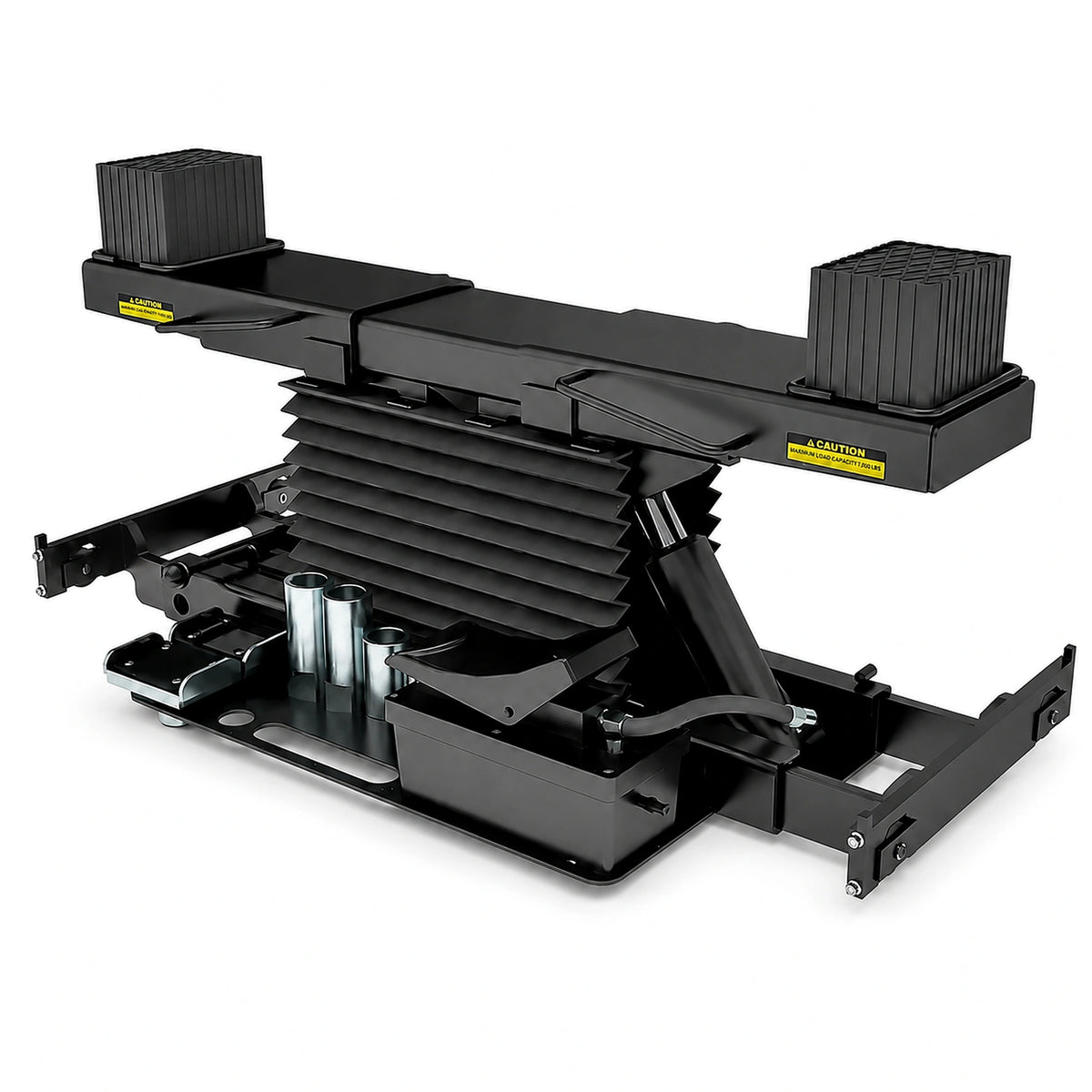
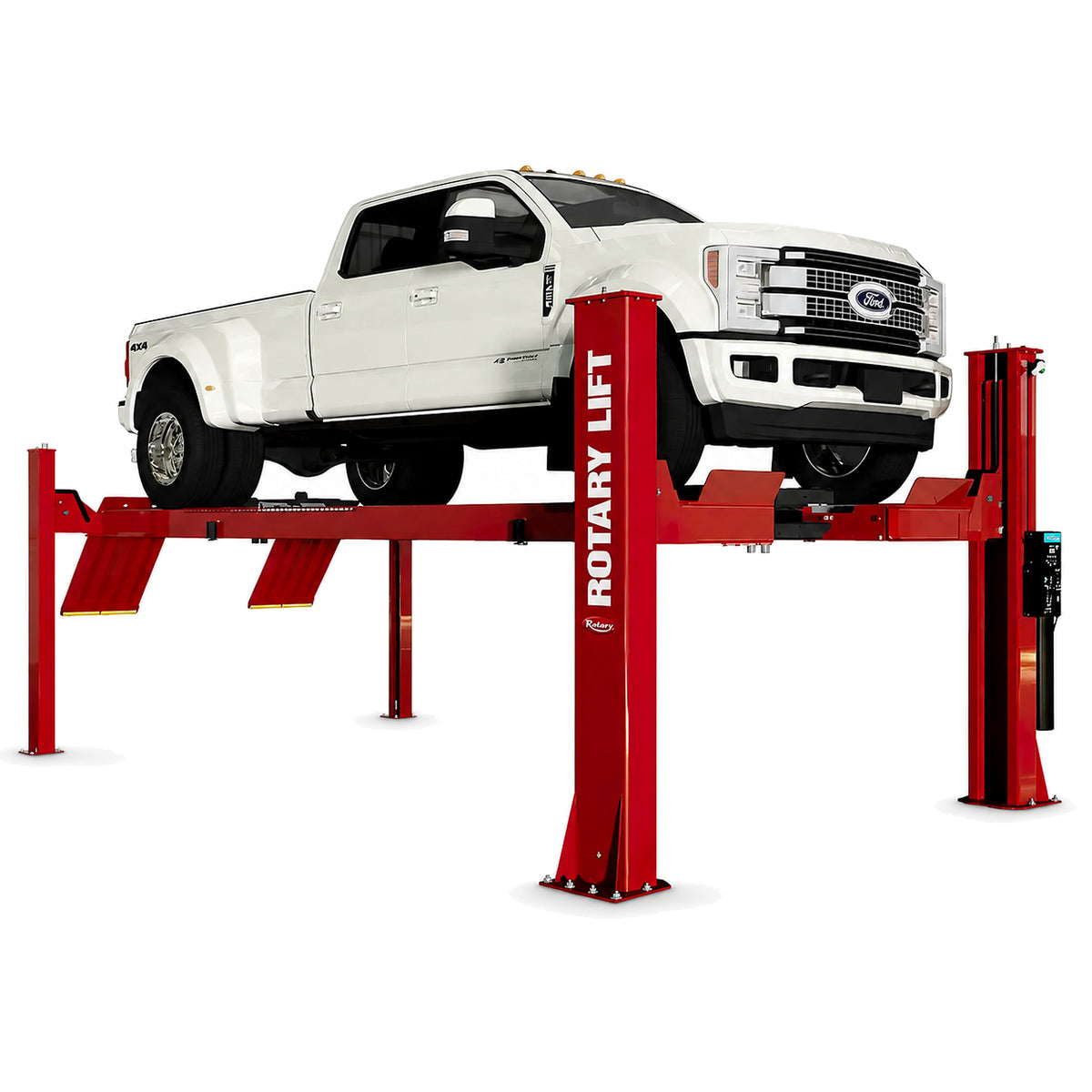
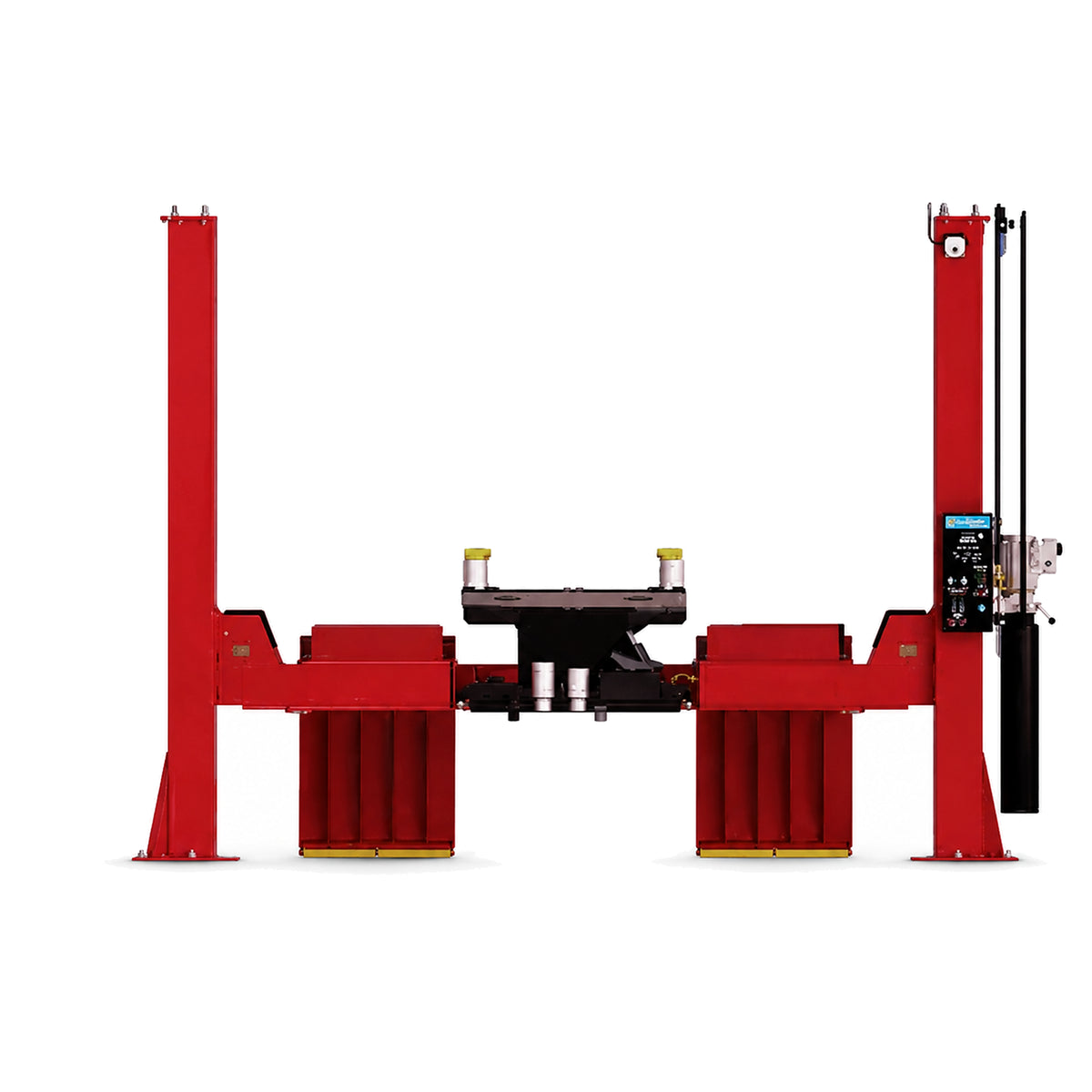
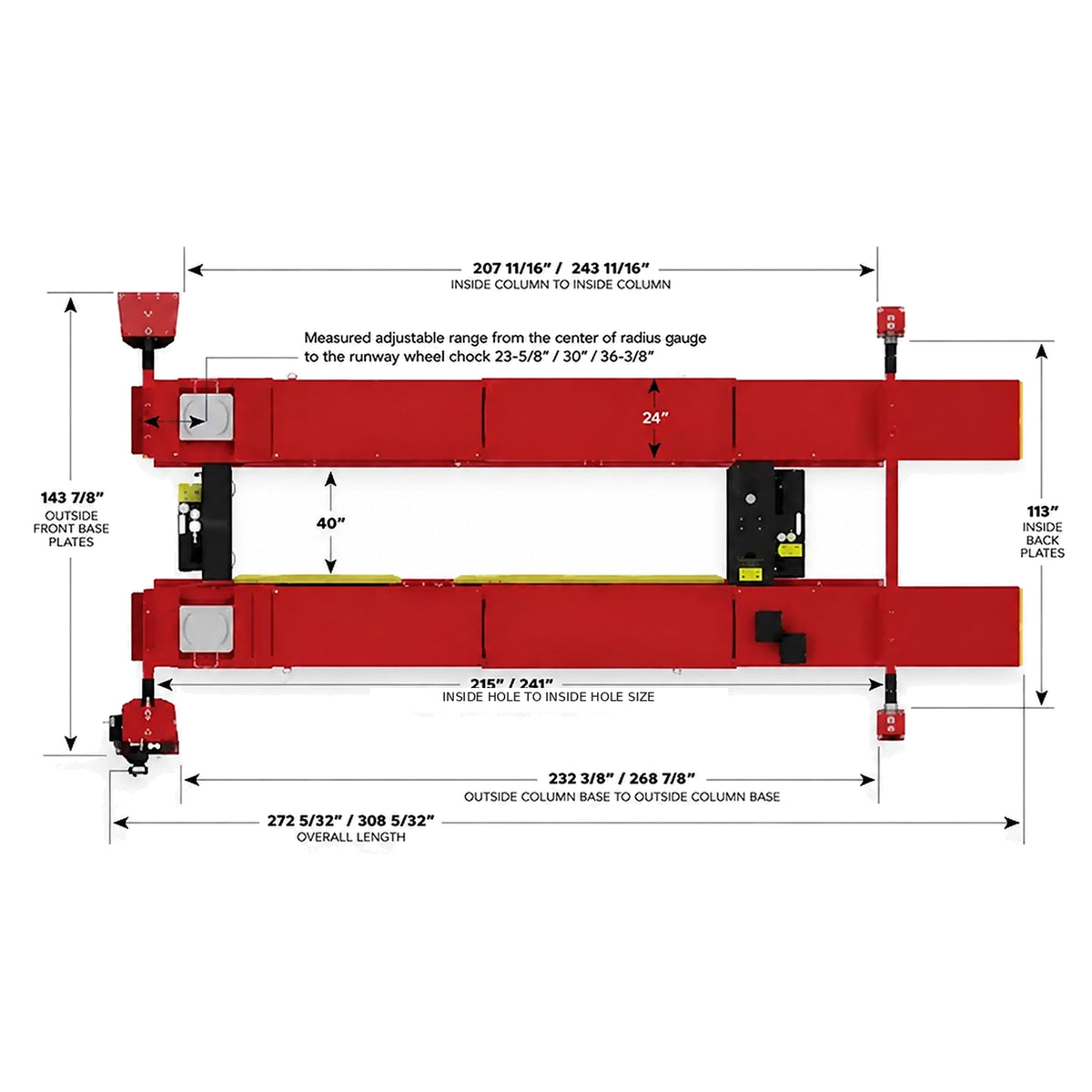
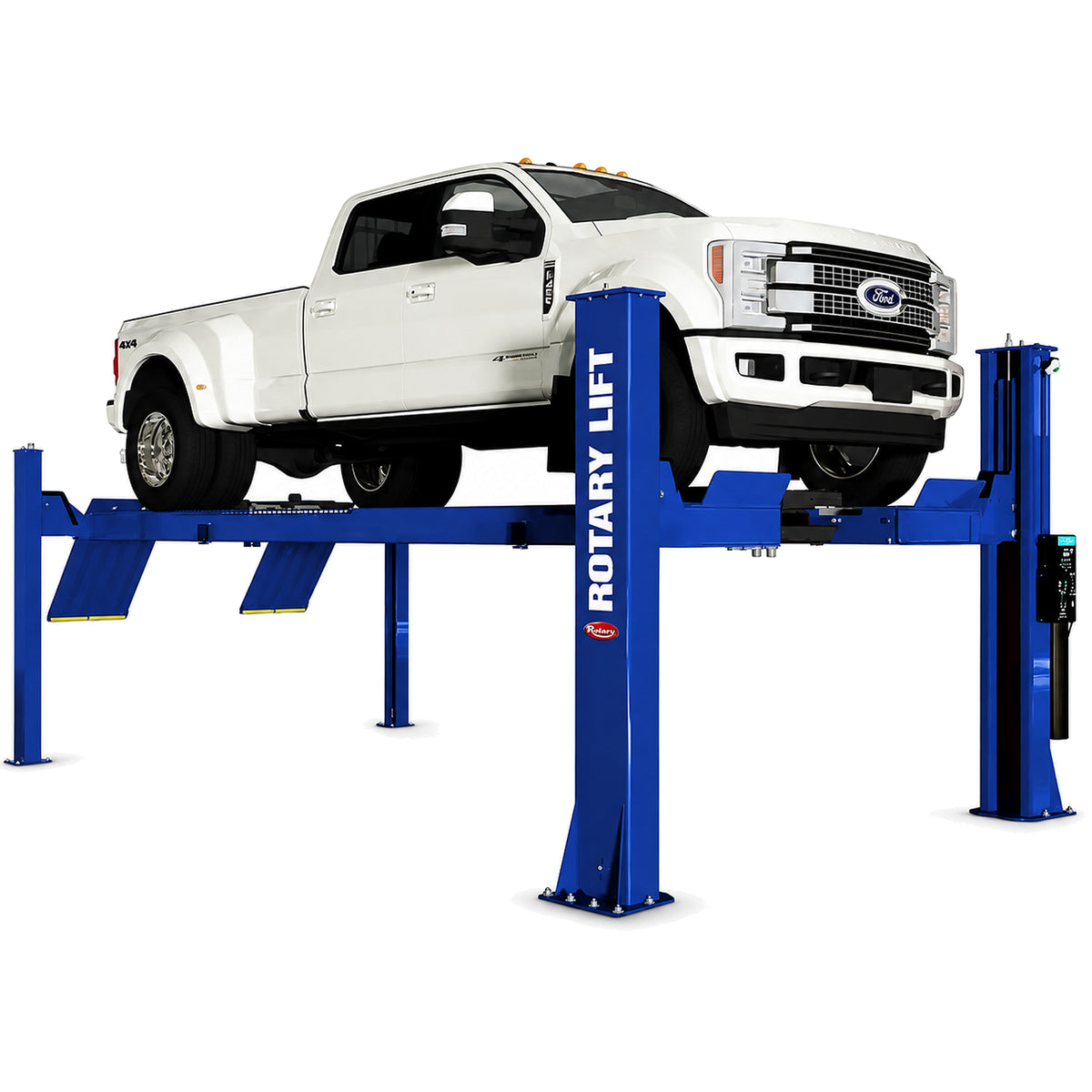
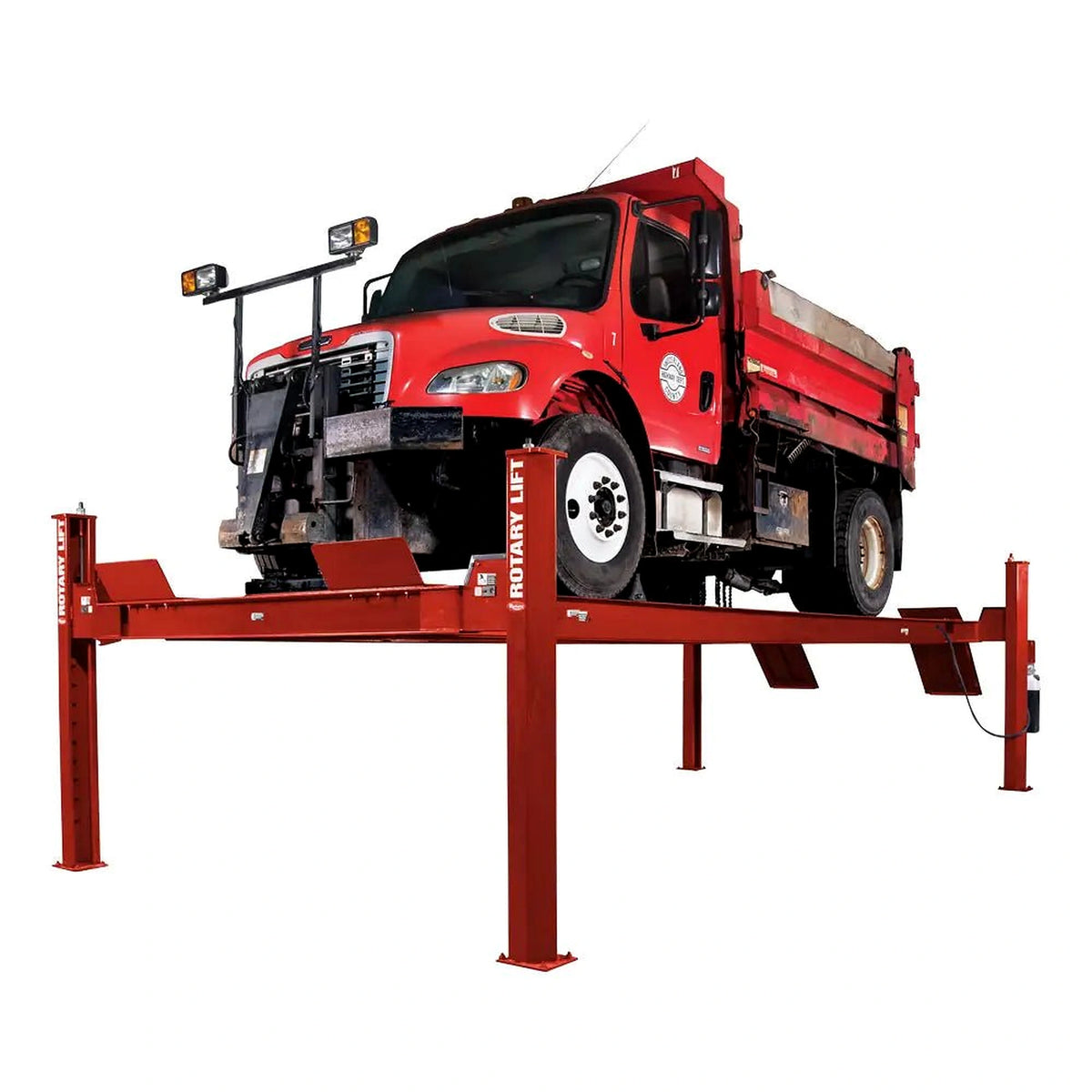
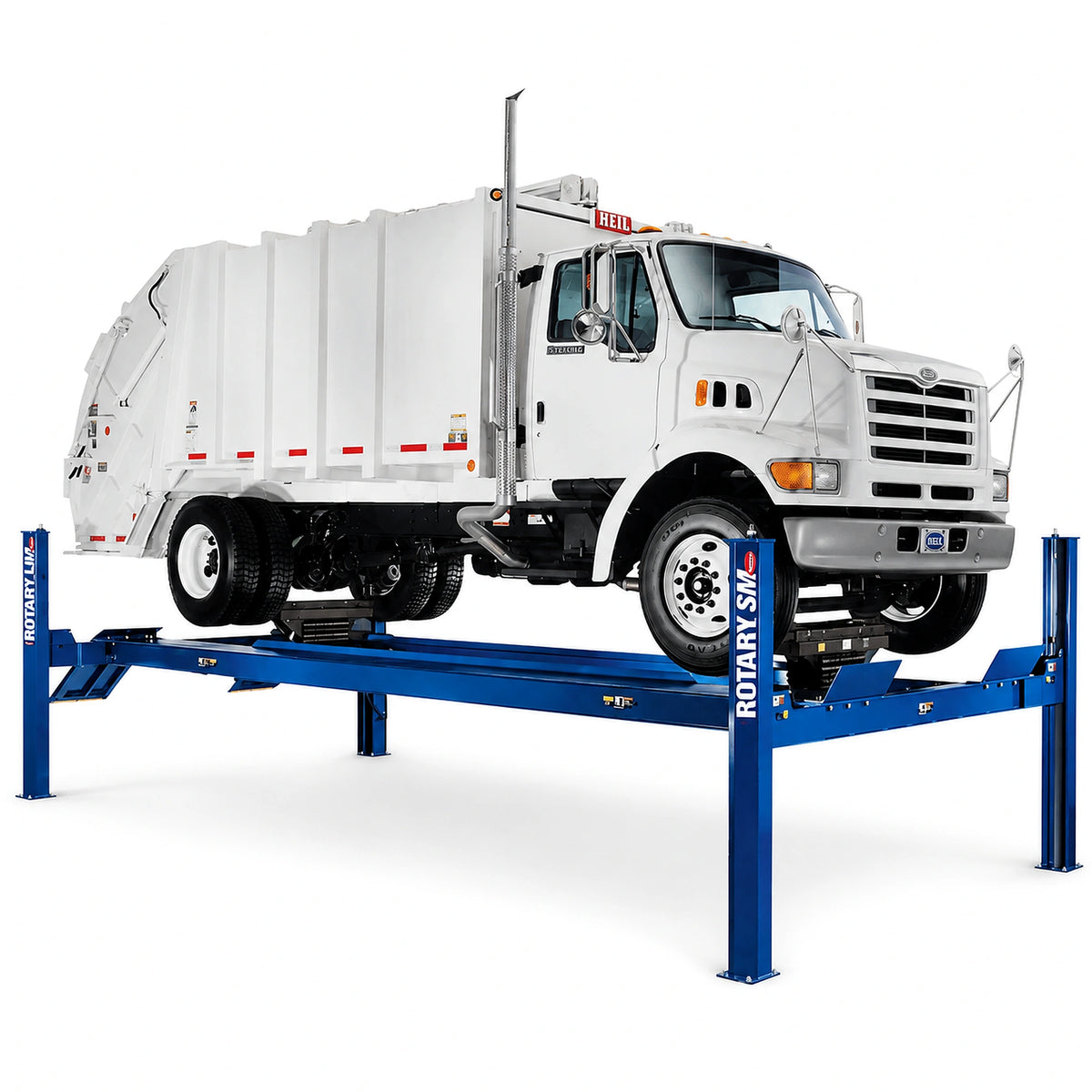
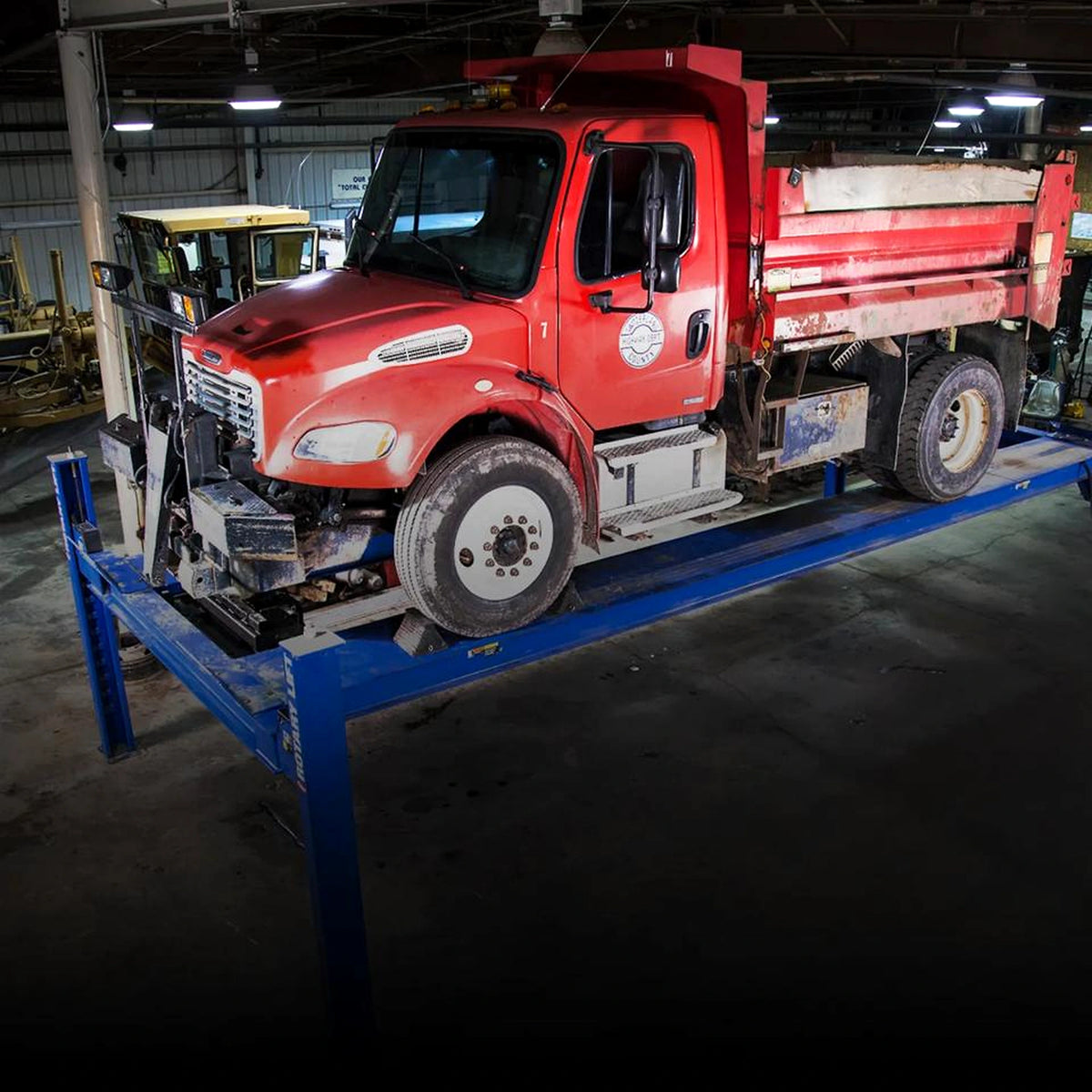
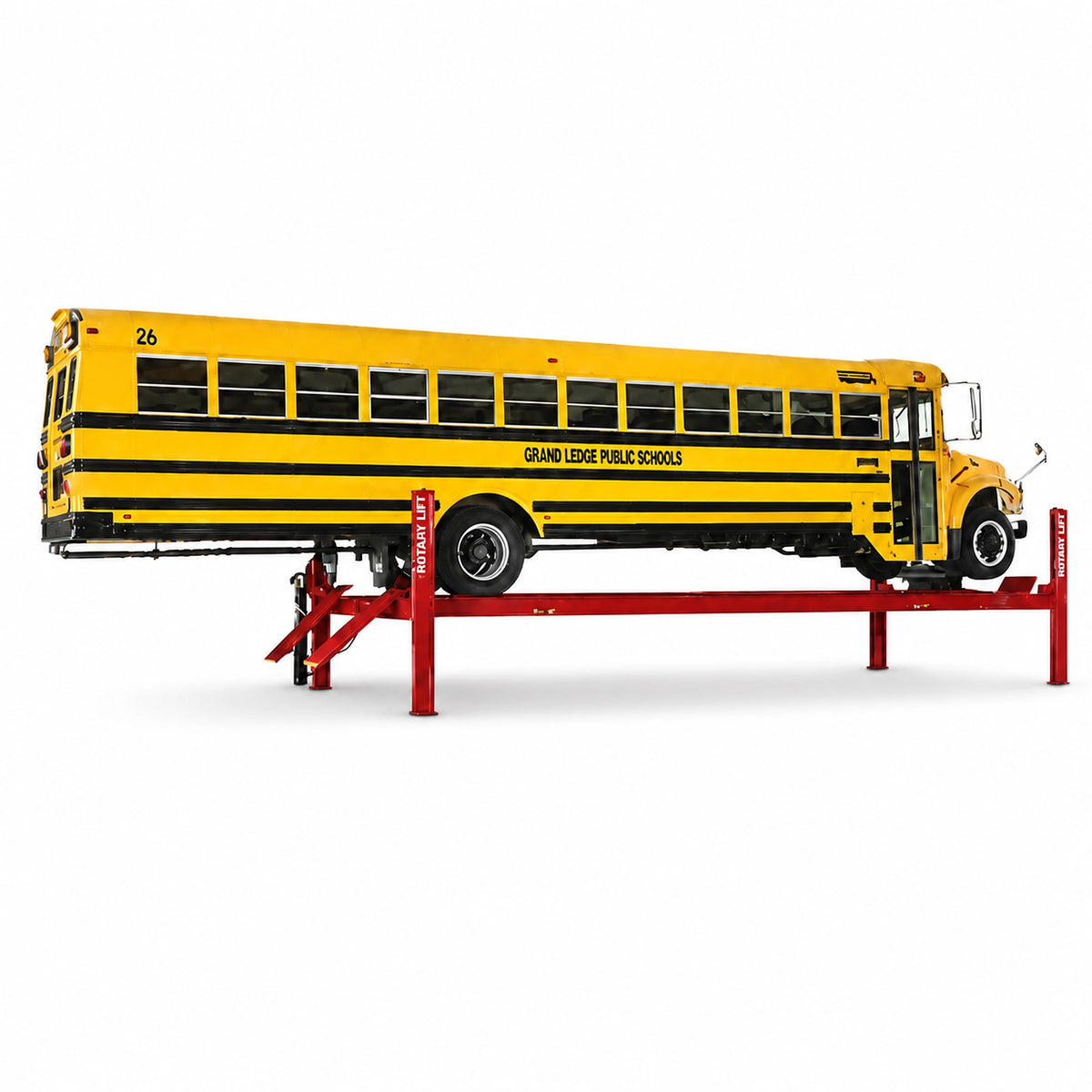
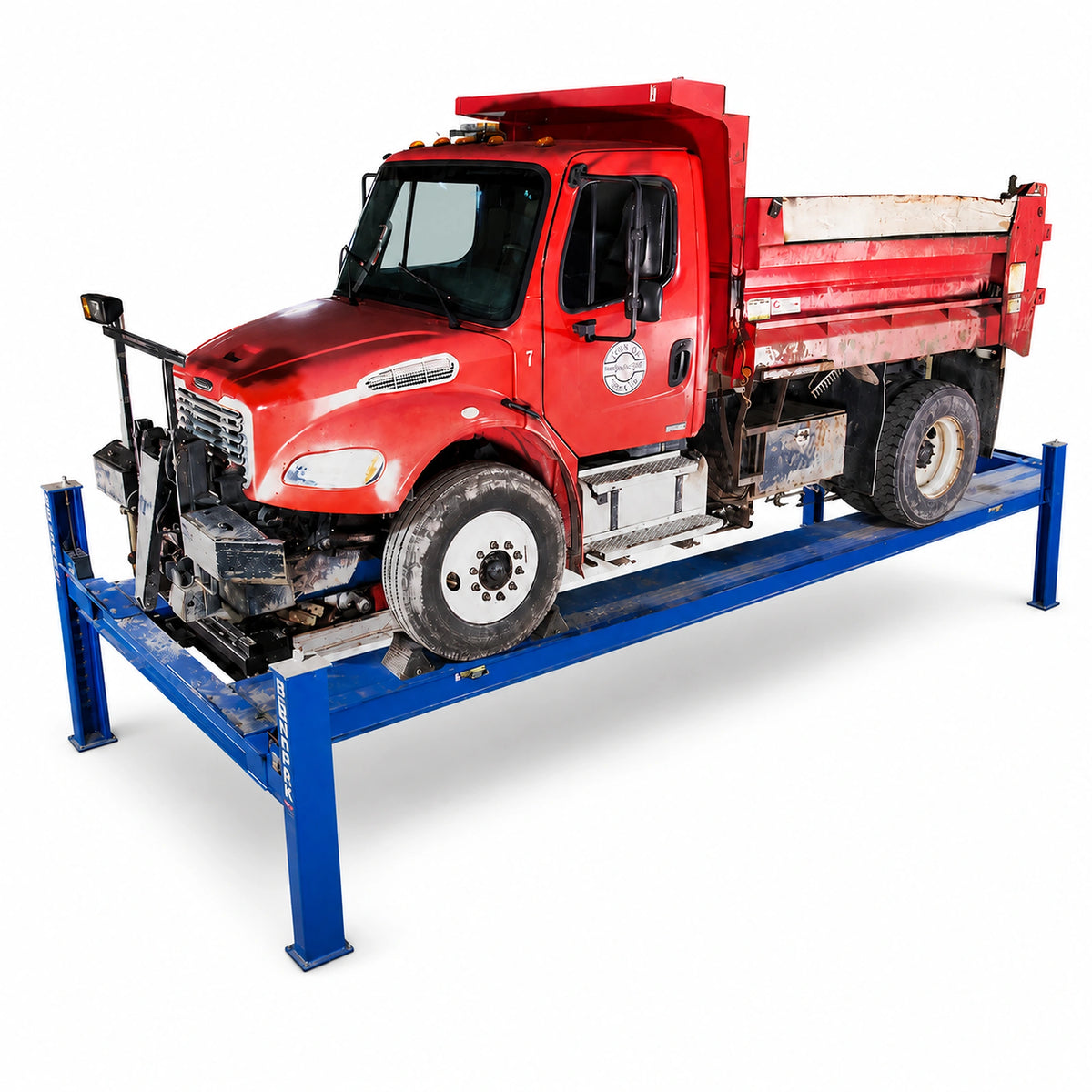
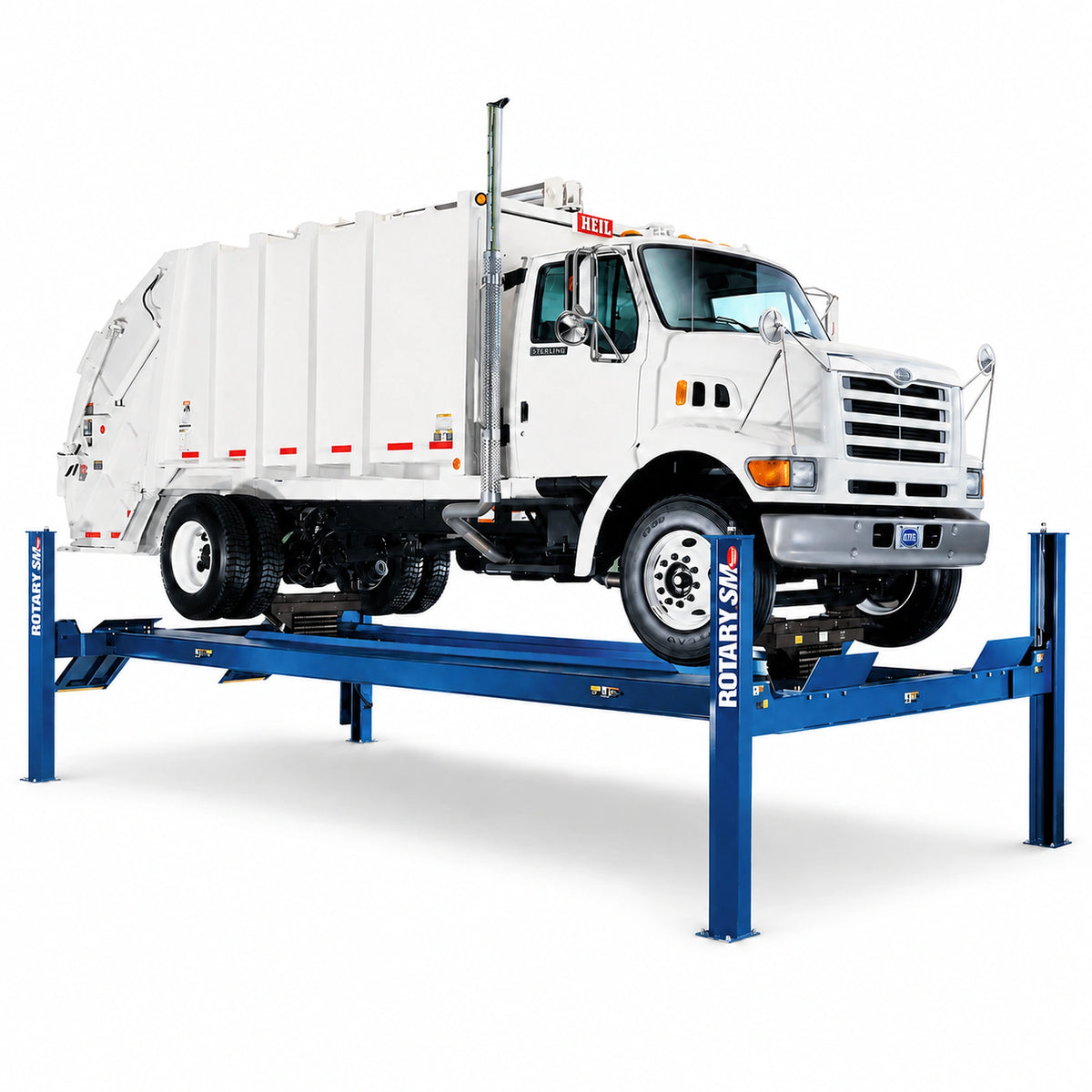
Rotary's SM runway lifts are built around drive-on service. The SM14 is a 14,000 lb closed-front family, while the SMO14 provides a 14,000 lb open-front layout. The SM18 moves closed-front service capacity to 18,000 lb, and the SM30 family reaches 30,000 lb for heavier truck service.
Runway length matters almost as much as capacity on these lifts. A vehicle can be comfortably below the weight rating and still require a longer runway or wheelbase configuration. Open-front versus closed-front design also changes how technicians approach steering, suspension, and front-end work. Rolling jacks add wheel-free capability, but jack fitment is model-specific and should be matched by part number rather than capacity alone.
Rotary Alignment Lifts: Four-Post or Scissor
Alignment work introduces another sizing problem because the longest general-service wheelbase is not necessarily the longest four-wheel alignment wheelbase. Rotary's ARO16 and ARO22 use open-front four-post architecture and publish separate limits for four-wheel alignment, two-wheel alignment, and general service. That distinction should drive the standard-versus-extended decision.
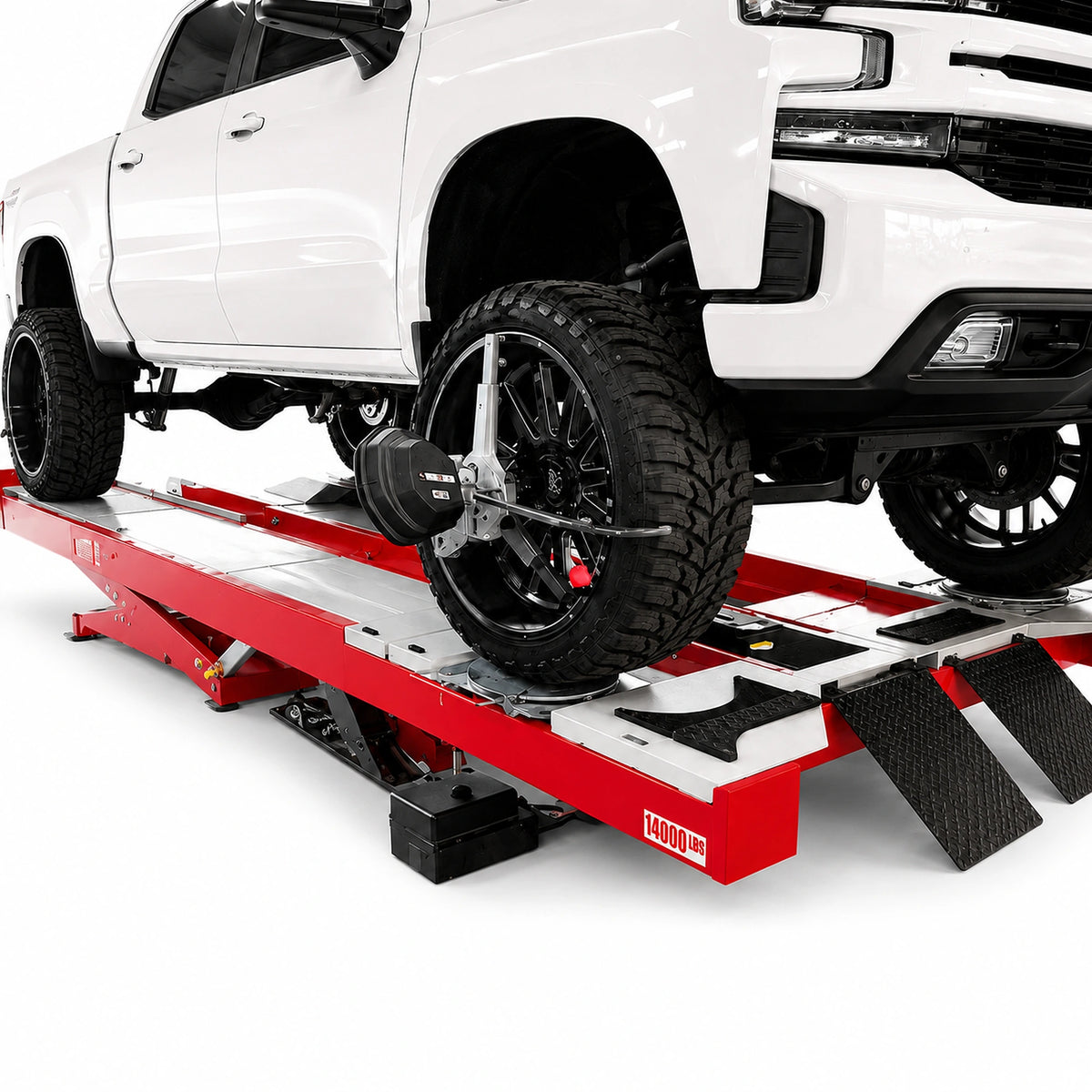
The XA14 takes a different route with a 14,000 lb scissor platform and alignment equipment. Rotary's current literature distinguishes the standard X14 service scissor lift from the alignment-focused XA14, so those names should not be treated as interchangeable packages.
If alignment is the primary purpose of the bay and you want to compare other brands as well, browse alignment lifts.
Rotary Scissor and Low-Rise Lifts
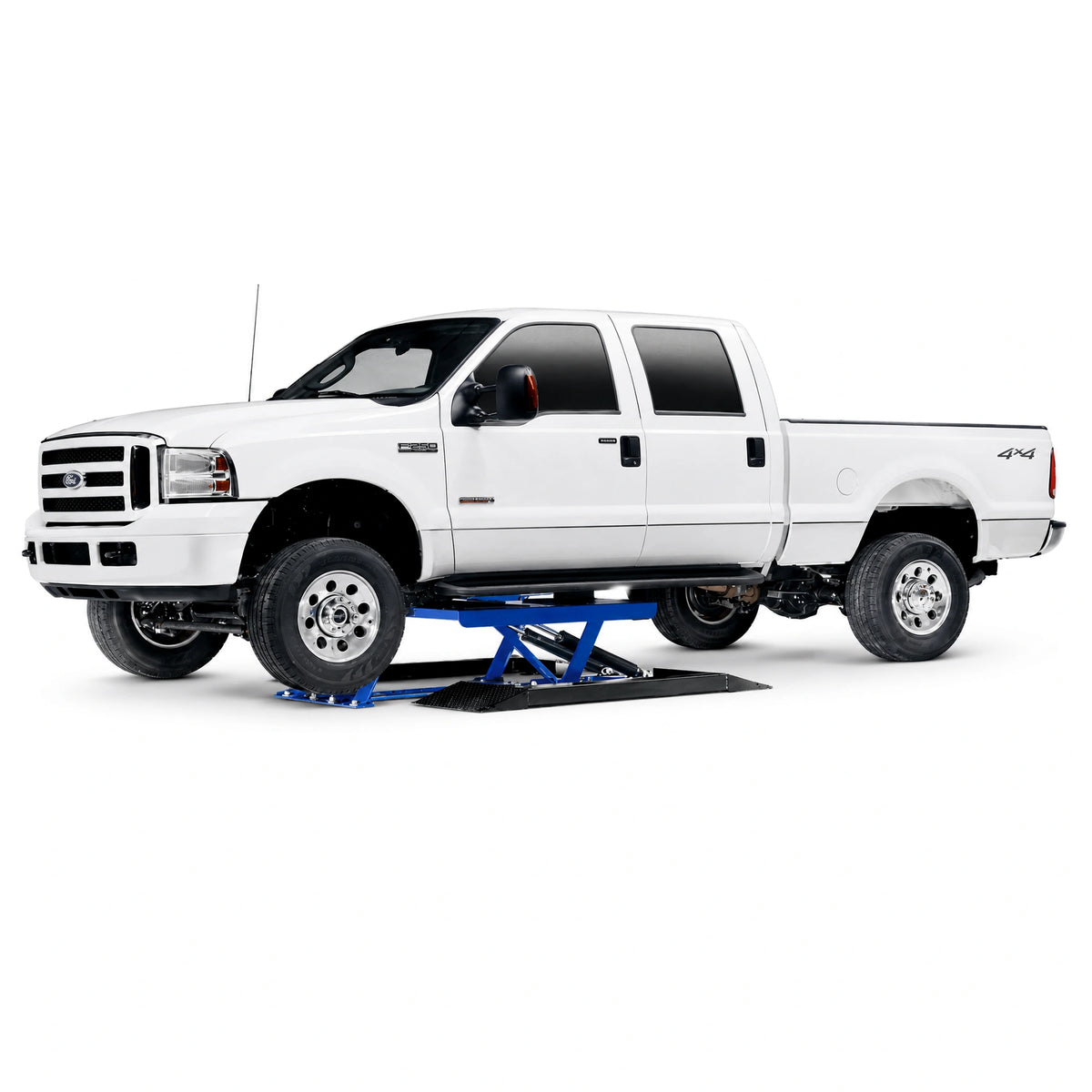
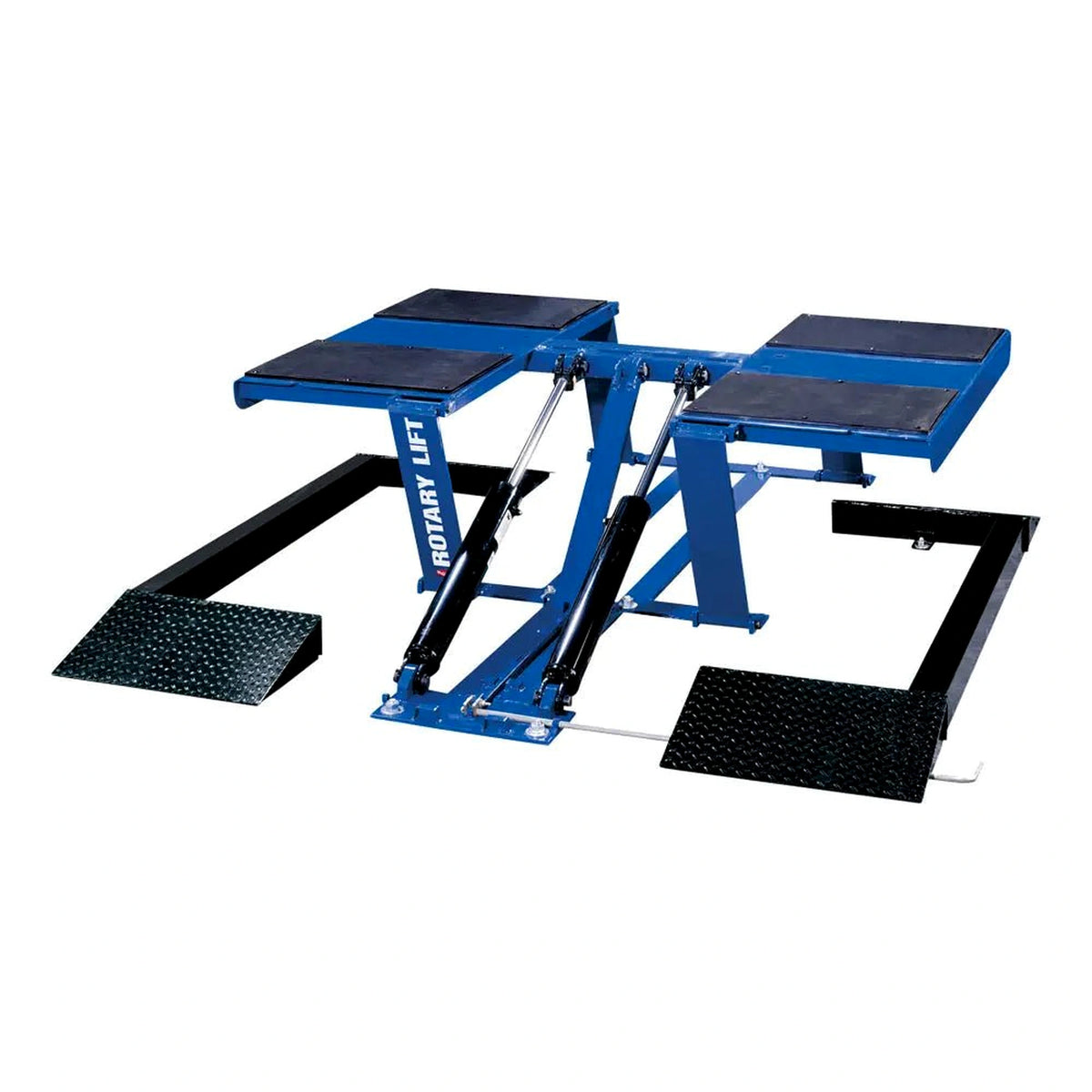
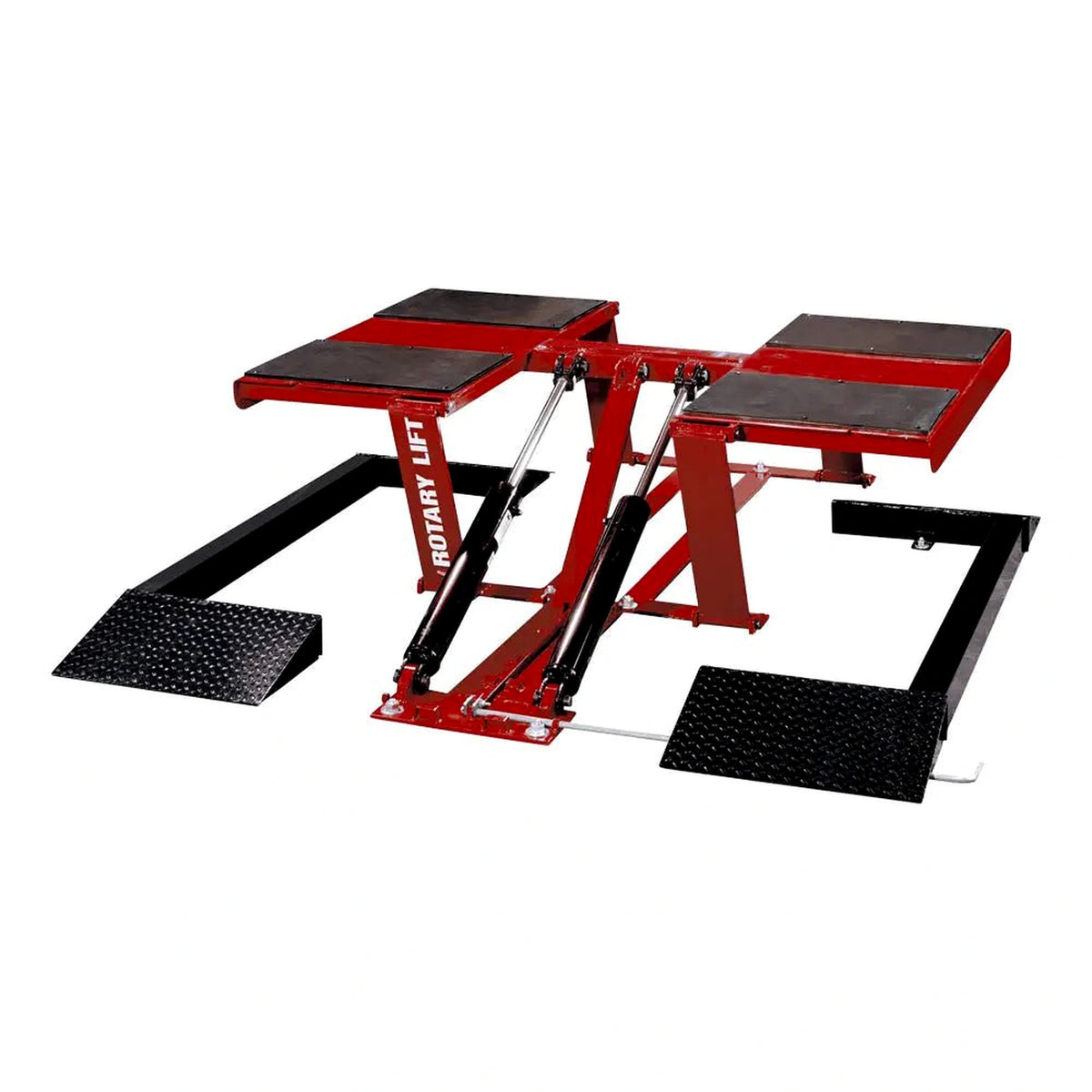
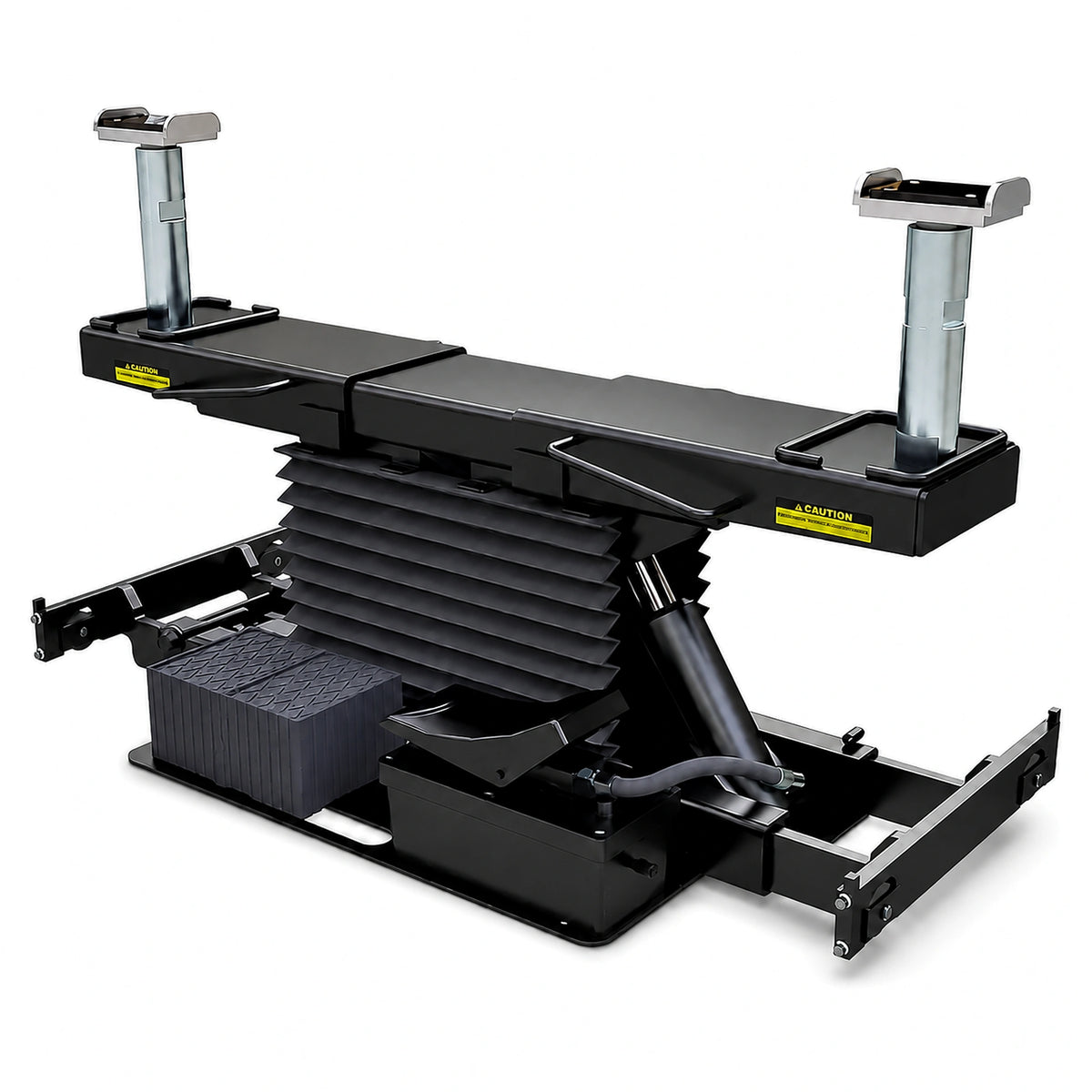
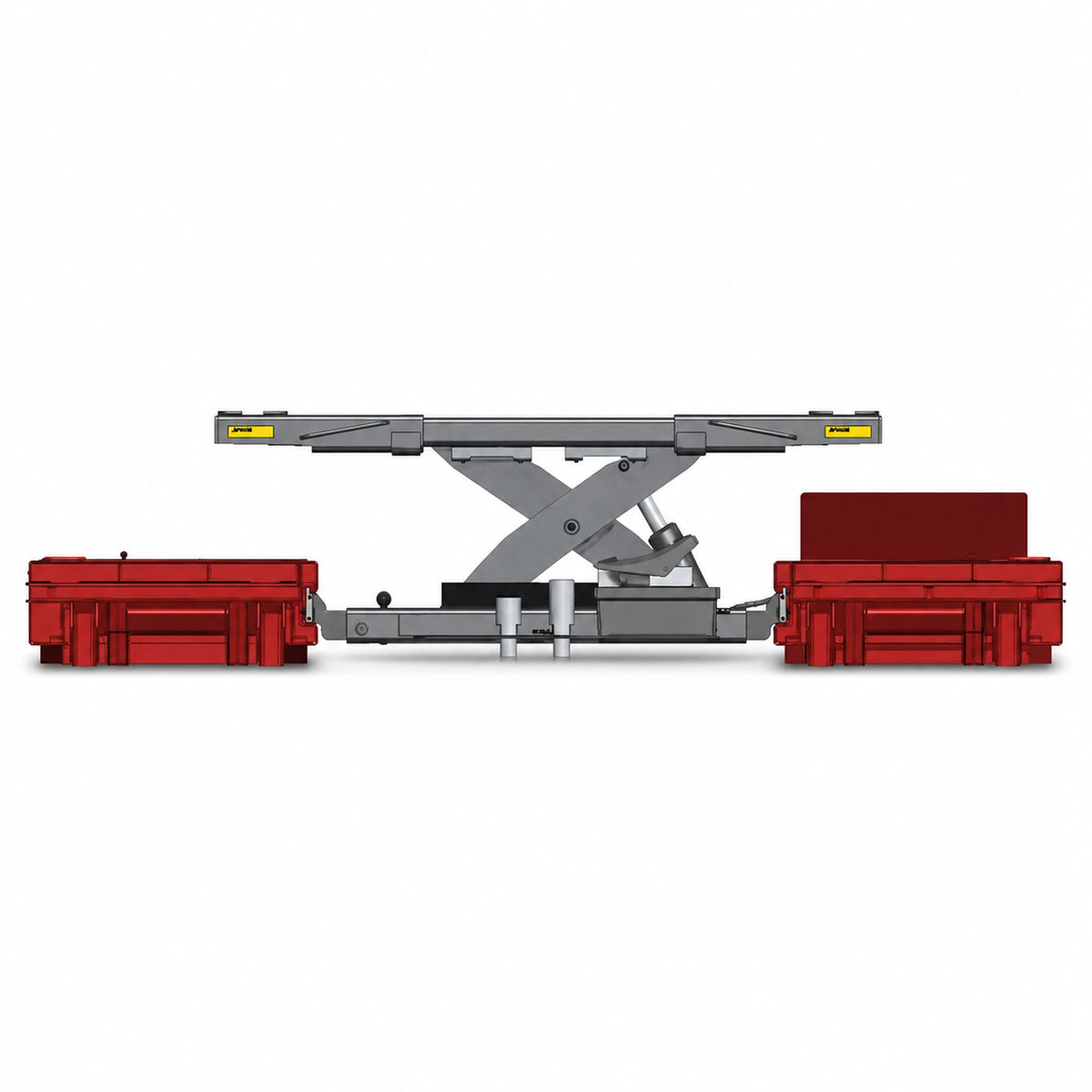
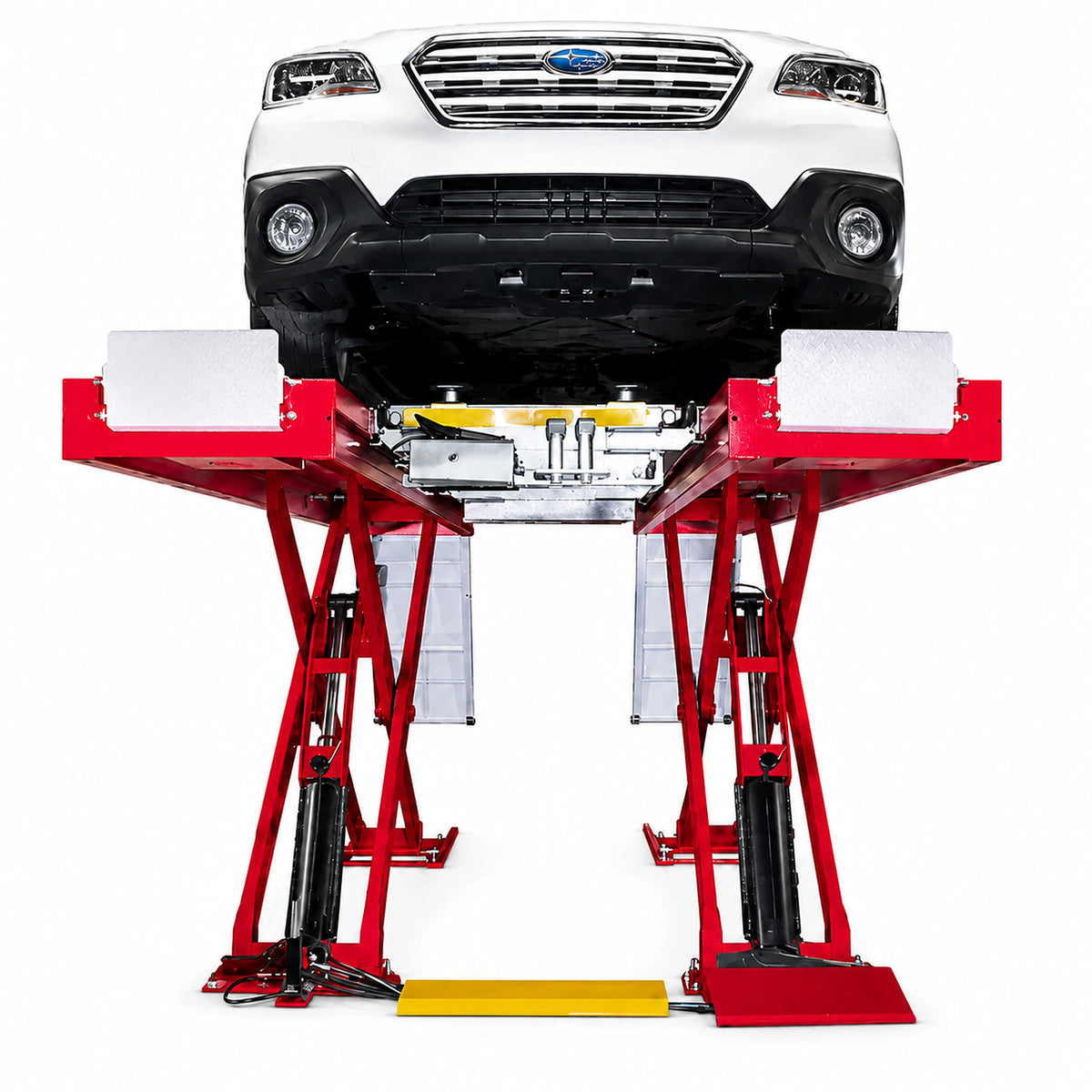
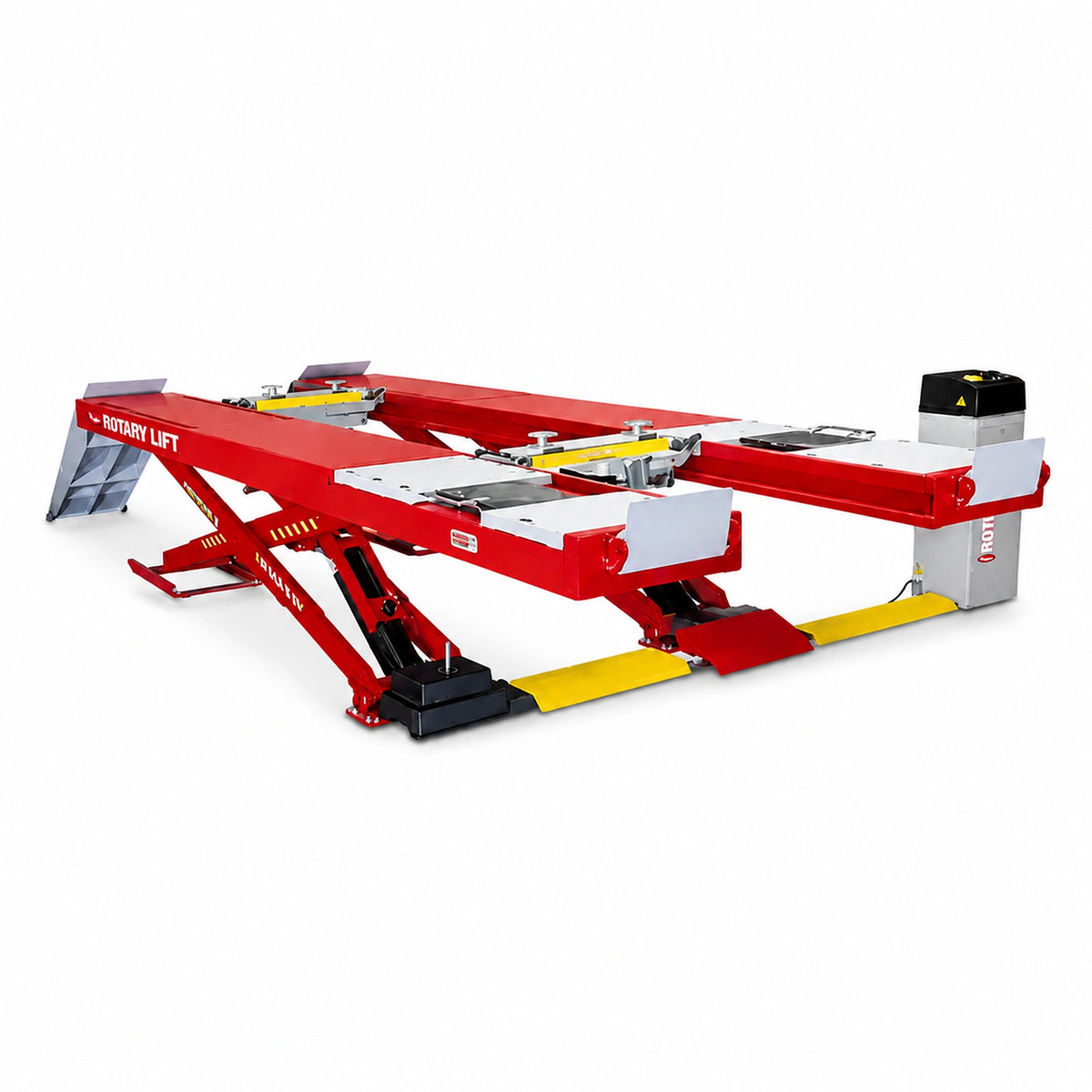
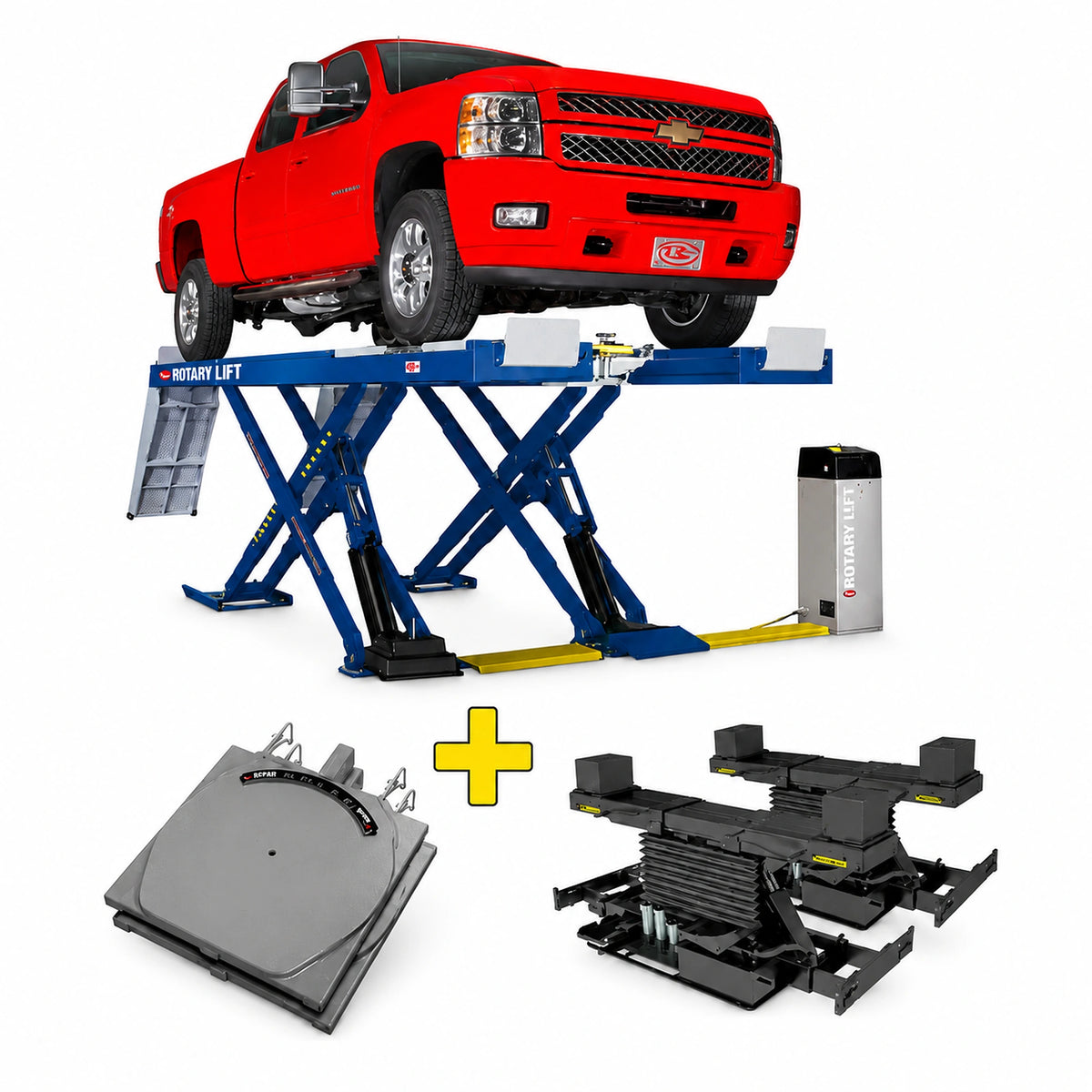
The RLP77 is a 7,700 lb double-scissor service lift with a low-profile drive-over design and full working rise. The X14 is a 14,000 lb drive-on scissor lift with long runways and an alignment model available. The VLXS10 is a 10,000 lb low-rise pad lift with a much lower working height than the full-rise scissor platforms.
That makes working height the useful distinction. Low-rise equipment can be a better fit for tire, brake, quick-service, and other wheel-area work where full standing-height undercar access is unnecessary. A full-rise scissor platform earns the extra space and installation commitment when technicians need substantially more access beneath the vehicle.
Rotary Mobile Column Lifts for Fleet and Heavy-Vehicle Work
Rotary Flex MAX mobile column systems move the lifting equipment to the vehicle instead of dedicating the vehicle to a fixed two-post or runway bay. Rotary rates the MCHM14 at 14,000 lb per column and the MCHM19 at 18,800 lb per column, with approved systems configured in groups of columns.
Total system capacity is not the only number to check. Per-column loading, vehicle weight distribution, wheel size, the selected number of columns, and any frame-engaging or cross-beam accessory all affect the application. For broader brand comparisons, see the mobile column lift systems collection.
Before Ordering a Rotary Vehicle Lift
-
Define the vehicle mix: list the lightest, heaviest, longest, widest, and lowest-clearance vehicles that regularly use the bay.
-
Match the support method: two-post arms and pads, drive-on runways, scissor platforms, and mobile columns solve different access problems.
-
Check bay dimensions: verify overall height, width, length, drive-through clearance, column placement, runway length, and technician working space for the exact model.
-
Verify pickup or wheelbase range: two-post models depend on arm and adapter reach, while runway and alignment lifts depend heavily on wheelbase and alignment geometry.
-
Confirm the slab and anchoring: concrete requirements are model-specific. Use the current Rotary installation document for the exact lift instead of applying one specification across the brand.
-
Confirm utilities: electrical and compressed-air requirements vary by lift family, power option, and configuration.
-
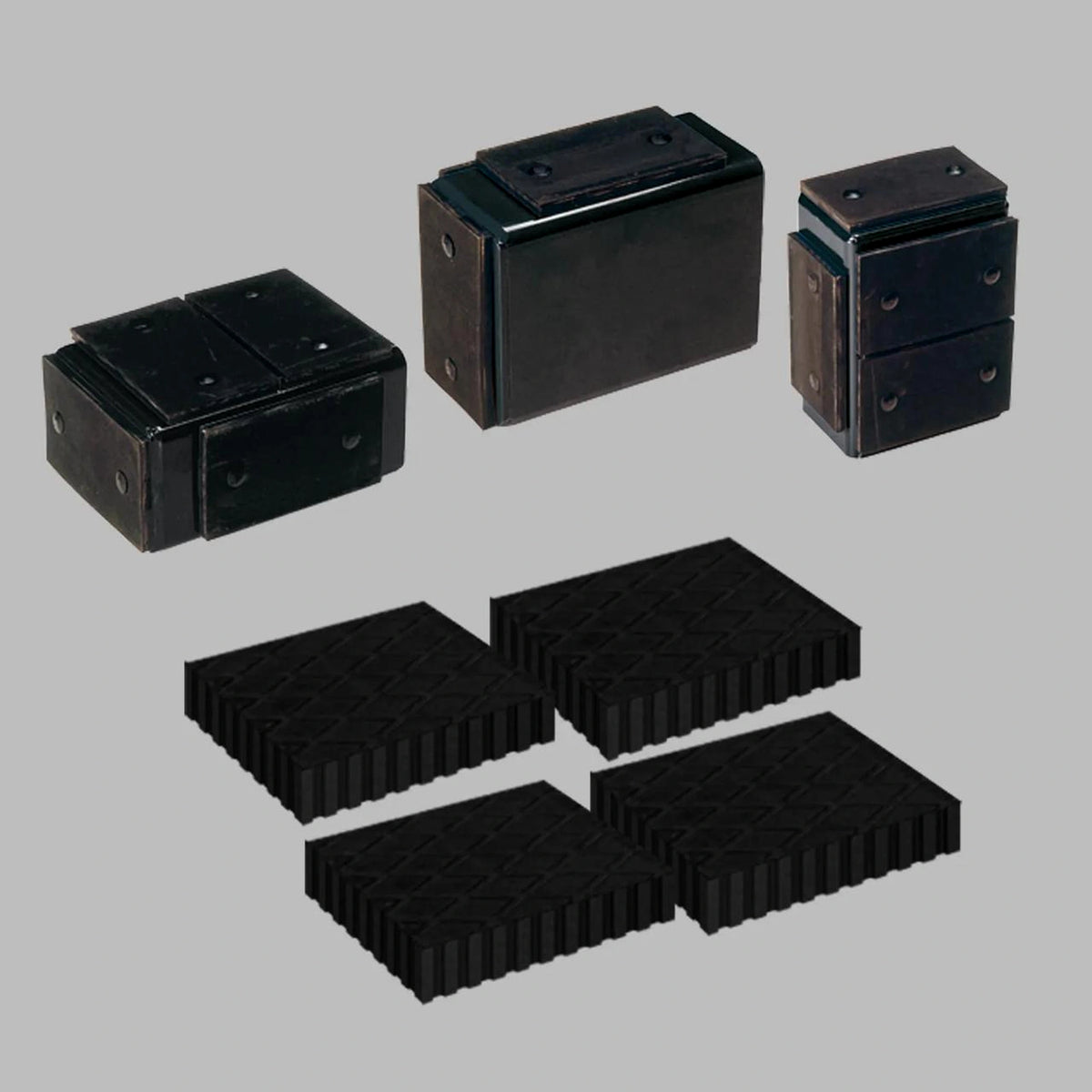
Confirm what's included: adapters, rolling jacks, turntables, slip plates, ramps, lighting, and other equipment differ by model and part number.
-
Check delivery requirements: freight and unloading needs vary by product. Confirm the current product-specific instructions before the equipment ships.
Rotary Car Lift FAQs
Should I choose a Rotary 2 post lift or 4 post lift?
Choose by service workflow first. A two-post lift supports the vehicle at approved pickup points and leaves the wheels free, which is useful for many mechanical, suspension, brake, and tire-service jobs. A four-post lift supports the vehicle on runways and is better suited when drive-on operation, longer wheelbases, alignment capability, or runway-based service is the priority.
What is the difference between a symmetric and asymmetric Rotary lift?
Rotary's SPO10 uses a symmetric layout, while the SPOA10 family uses an asymmetric arrangement with columns rotated 30 degrees. The correct choice depends on the vehicles being serviced, approved pickup points, arm reach, door access, and bay dimensions. Neither layout should be selected from vehicle weight alone.
How much does a Rotary car lift cost?
Rotary lift pricing varies substantially by lift type, capacity, runway or arm configuration, power option, and included equipment. Use the product grid for current pricing rather than relying on a static collection-page number, then confirm any required accessories and delivery charges for the exact configuration.
What are the concrete requirements for a Rotary lift?
There is no safe brand-wide concrete specification. Slab thickness, concrete strength, anchoring, and installation requirements must be taken from the current installation document for the exact Rotary model and configuration. The existing slab should be verified before installation is scheduled.
Is a Rotary scissor lift the same as a low-rise lift?
No. Rotary uses scissor mechanisms in more than one service format. The RLP77 and X14 provide full-rise working access, while the VLXS10 is a low-rise pad lift. Compare maximum working height, platform style, access around the vehicle, and the jobs assigned to the bay.
How do Rotary mobile column lifts differ from fixed lifts?
Mobile columns are positioned at the vehicle's wheels and can be configured in approved groups rather than being permanently fixed in one two-post or runway bay. Rotary publishes a per-column capacity for each Flex MAX family, so system selection must account for individual column loading as well as the total number of columns.
Are all Rotary car lifts ALI Gold Certified?
Do not assume certification from the Rotary name or collection membership alone. Rotary identifies ALI Gold certification on many specific lift models and configurations, but certification should be verified for the exact lift part number being purchased.
Match the Lift to the Bay Before You Match the Model Name
The right Rotary lift starts with the vehicles and work already coming through the shop. Narrow the choice by lift architecture, then verify capacity, pickup points or wheelbase, bay dimensions, utilities, installation requirements, and included equipment on the exact configuration. For help comparing Rotary car lifts, contact Garage Supply Guys at (855) 498-2147 or support@garagesupplyguys.com.