Rotary Tire Changers
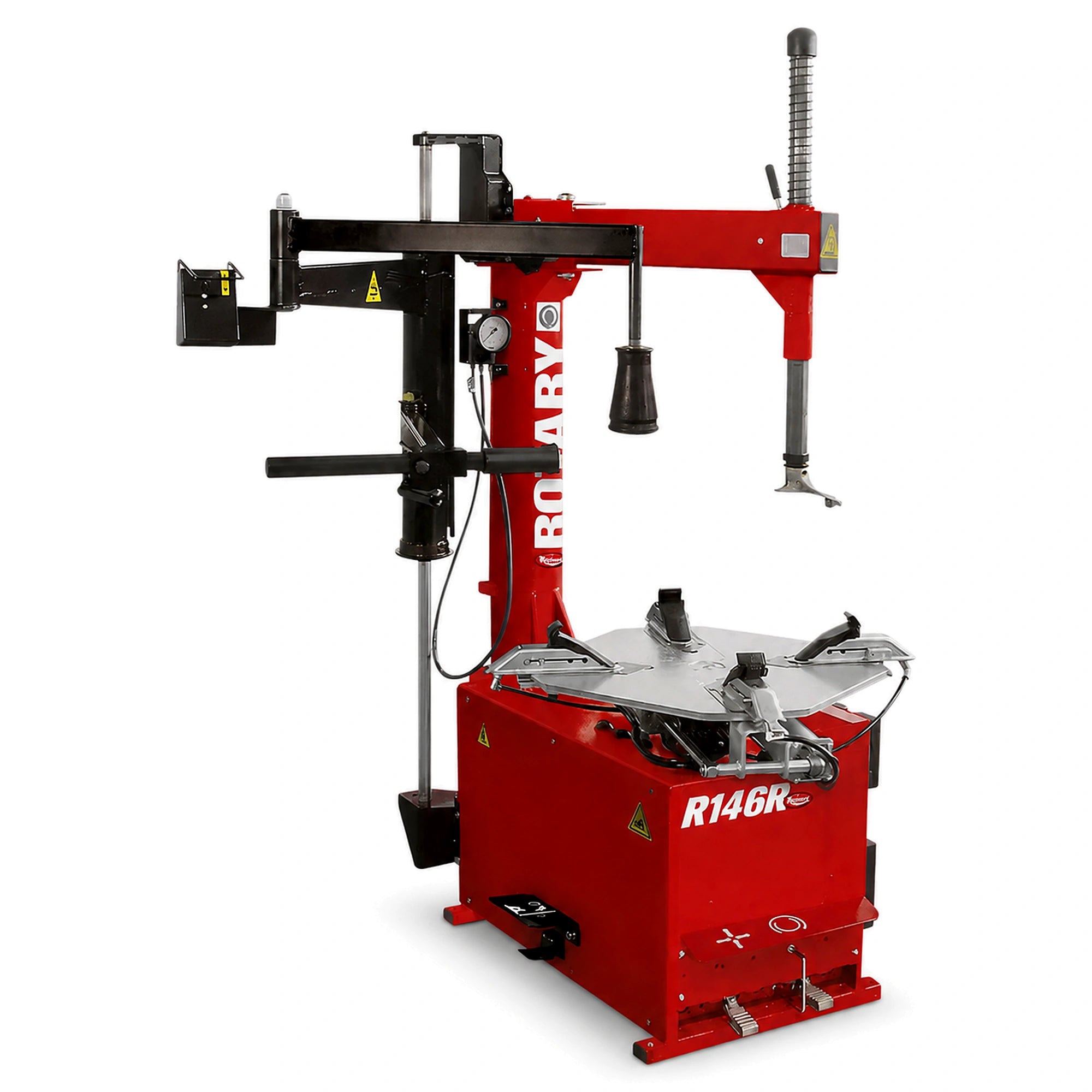
Shop Rotary tire changers for professional passenger and light-truck wheel service, with leverless center-post machines and R146 swing-arm configurations in the current lineup. The main decision is how much tire and wheel handling you want the machine to do for the technician: compare leverless tool systems and roller control against the more conventional swing-arm platform, then check wheel range, tire size, power, air and included assistance equipment.
SEE MORE CLOSE
Leverless Center-Post or Swing Arm?
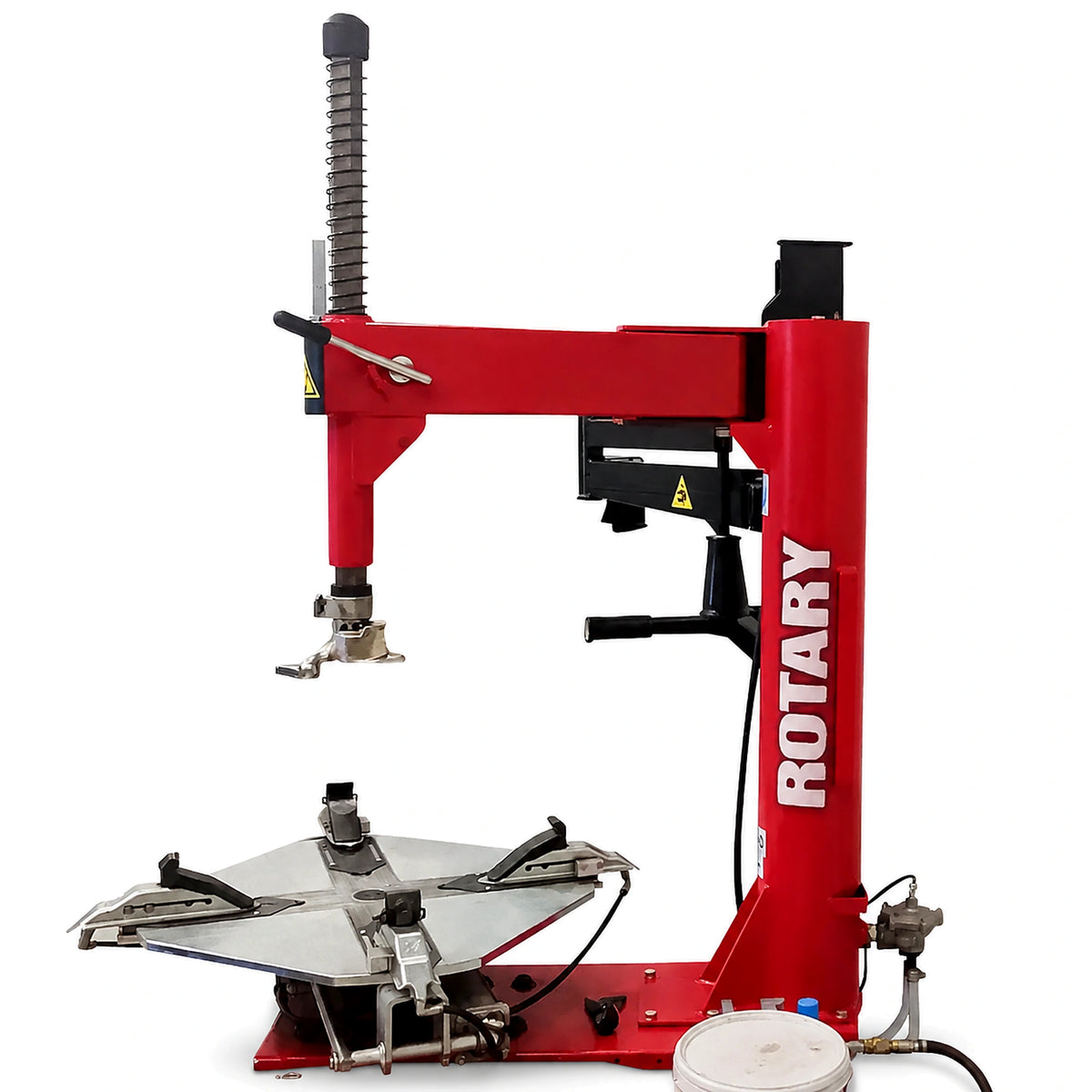
The biggest split in the current Rotary tire changer lineup is machine architecture. The R1200 and R1250 use center-post leverless systems with rollers doing more of the bead work. The R146 family uses a swing-arm layout with rim clamping and multiple configurations for shops that prefer a more conventional tire machine workflow.
| Rotary family | Machine type | Wheel / tire range | Main reason to compare it |
|---|---|---|---|
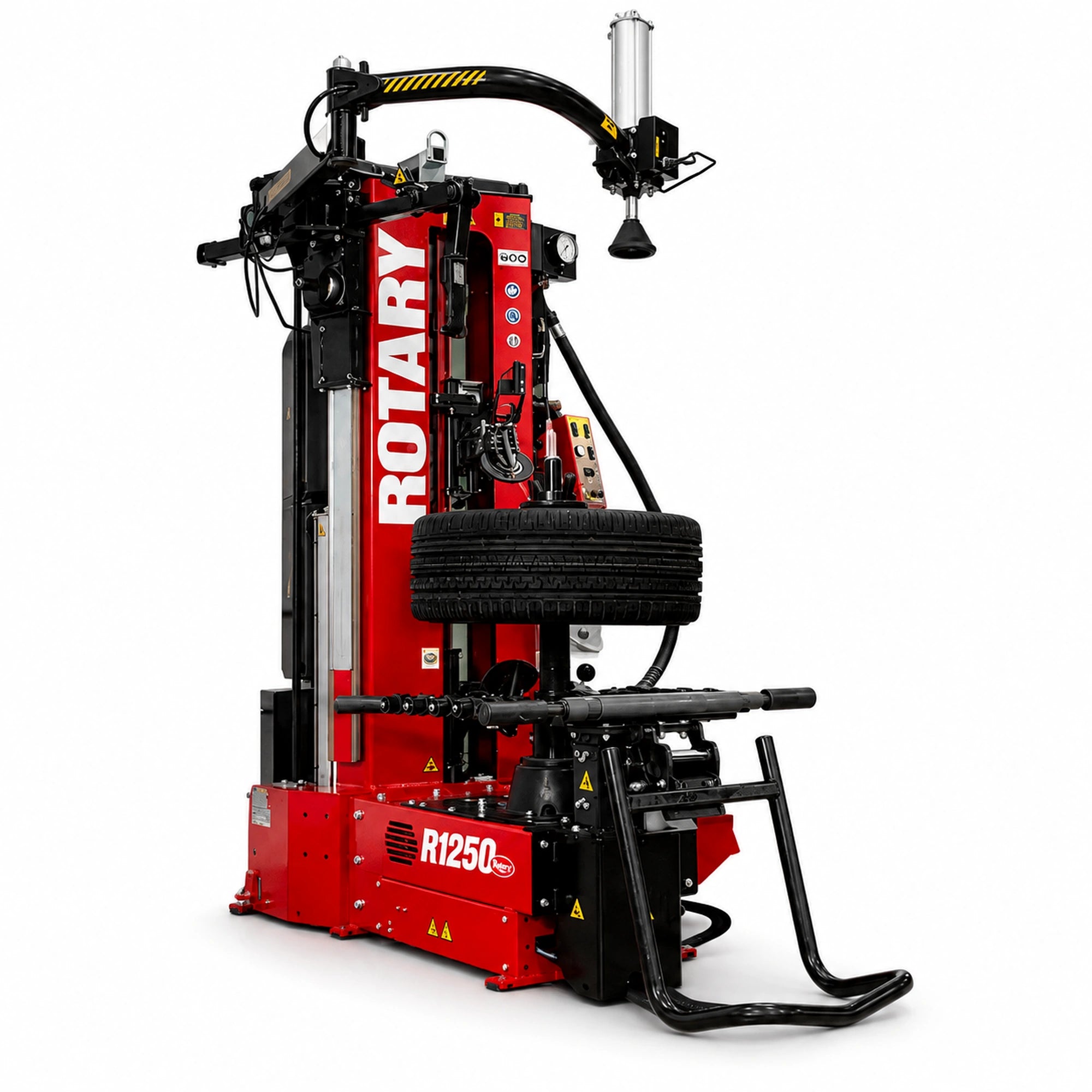
| R1250 | Leverless center-post | 10 to 30 in clamping; up to 47 in tire diameter and 19 in tire width | Laser-guided roller positioning, polymer tool head, automatic bead indentation, tool memory, variable speed and an integrated wheel lift. |
| R1200 | Leverless center-post, dual roller | 10 to 30 in wheels; up to 45 in tire diameter and 19 in tire width | Synchronized bead rollers, variable-speed control and an integrated pneumatic wheel lift. |
| R146 family | Swing arm | 10 to 26 in external and 12 to 28.5 in internal clamping; up to approximately 46 in tire diameter and 15 in width | A more conventional clamping and swing-arm workflow with electric, air and assisted configurations represented across the family. |
When the R1250 Makes Sense
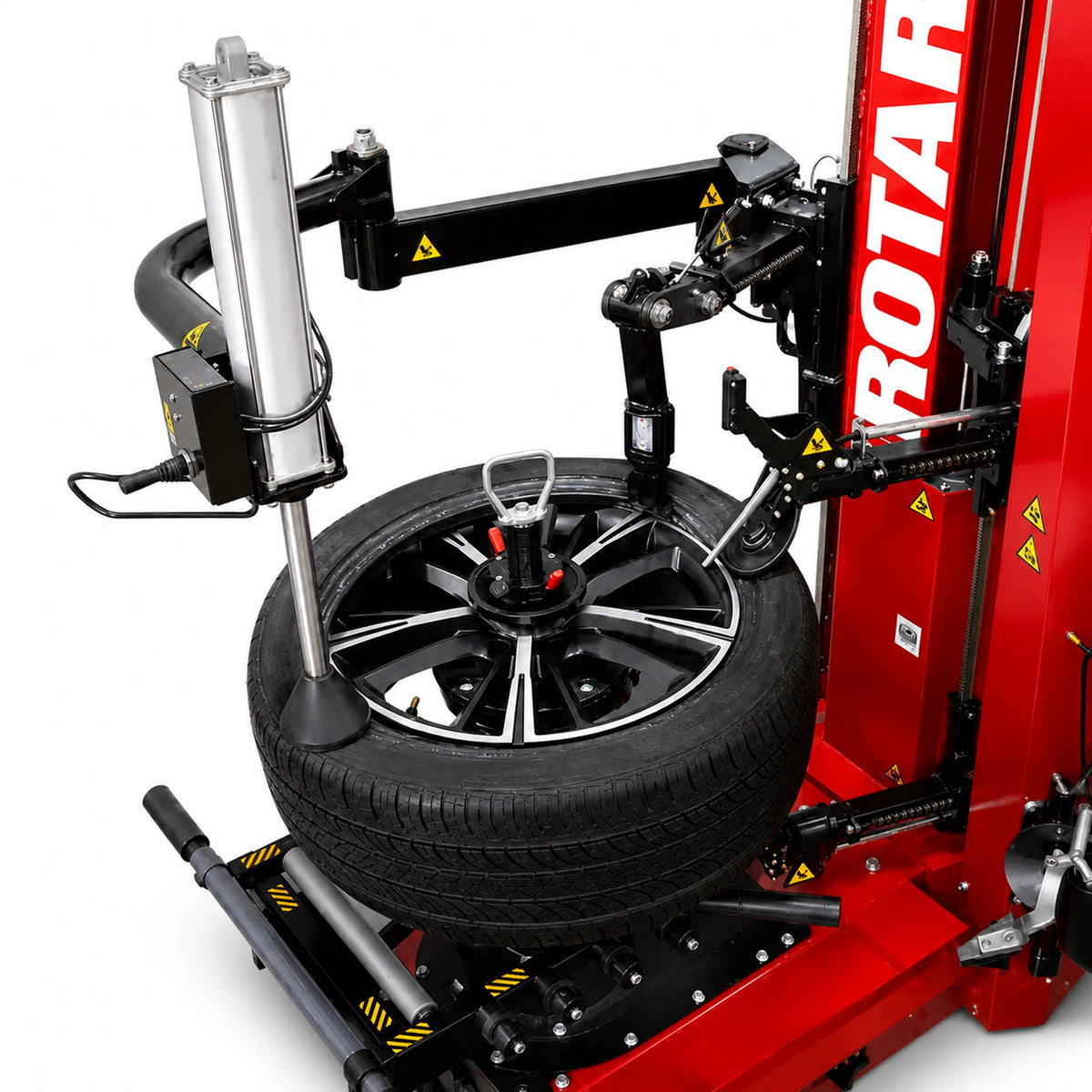
The R1250 is the most automated leverless option represented here. Rotary uses a polymer tool head so the demounting tool does not make metal-to-metal contact with the rim, while laser-guided roller positioning helps set the tools against the wheel. Mechanical sensors control the auto-indentation system, and the rollers release when the machine senses a direction change.
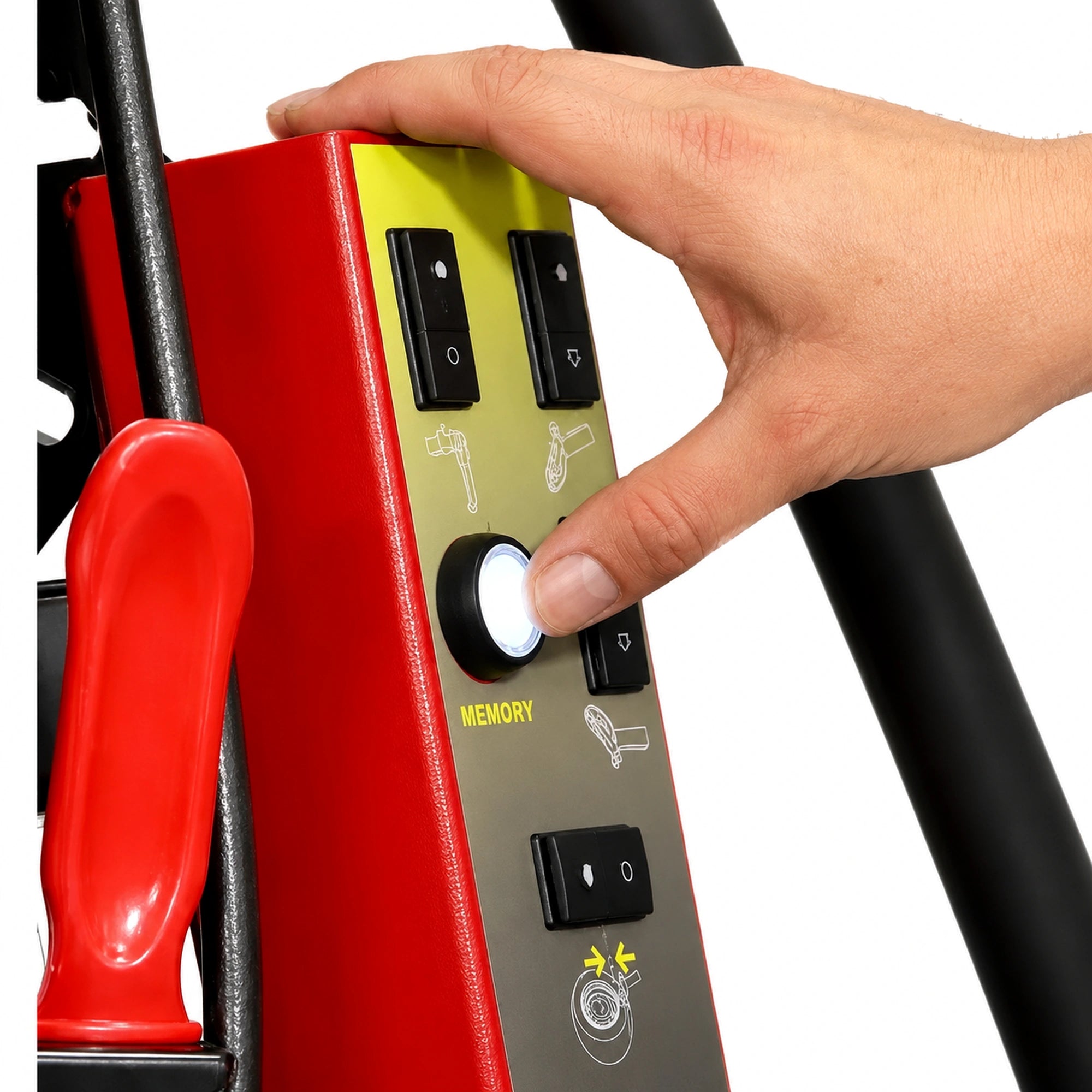
The R1250 also adds tool memory and a home function, which matter when a technician is working through repeated wheel sets. Its center post accepts standard and reverse-mount rims across the documented 10 to 30 inch clamping range, while the variable-speed motor gives the operator control from 0 to 15 RPM.
R1200: Leverless Without the Same Control Package
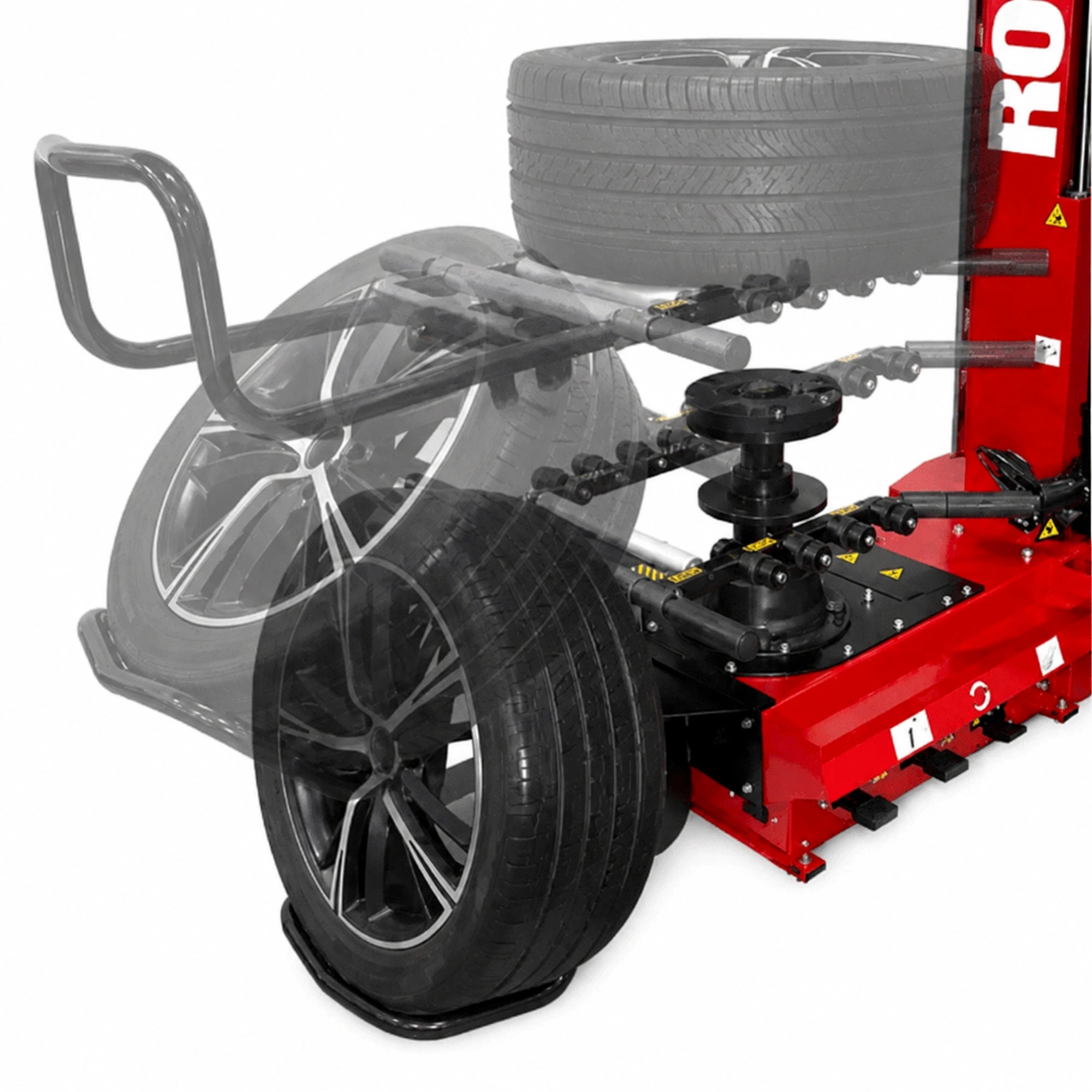
The R1200 stays in the center-post leverless category but uses synchronized dual bead rollers to work the tire during mounting and demounting. GSG documents a 10 to 30 inch wheel range, up to 19 inch tire width and 45 inch maximum tire diameter, along with an integrated pneumatic wheel lift and variable-speed operation.
For a buyer choosing between R1200 and R1250, the useful question is not whether both are leverless. They are. The question is whether the additional positioning, automation and tool-control features on the R1250 solve enough real workflow problems to justify moving up from the R1200.
R146 Swing-Arm Tire Changers
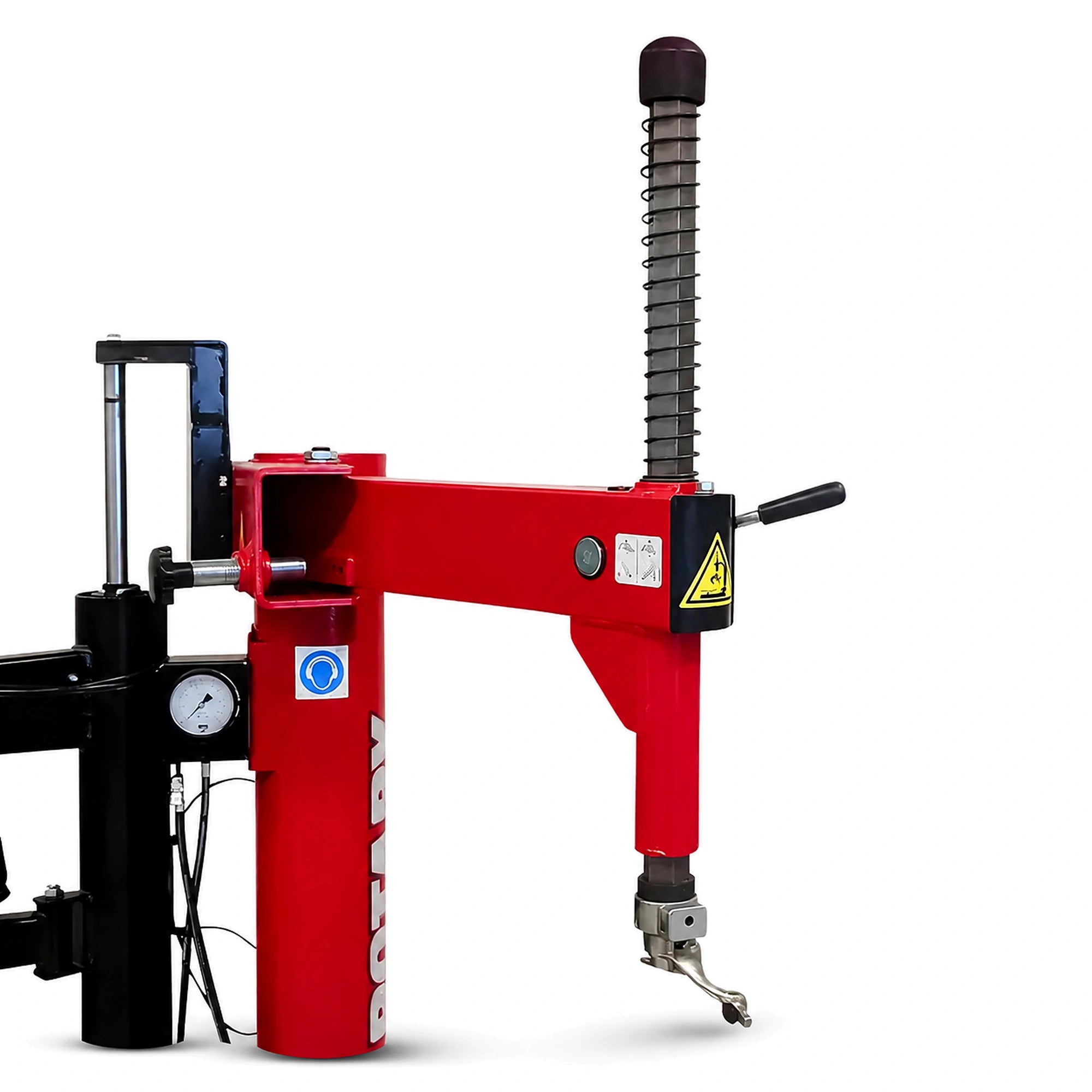
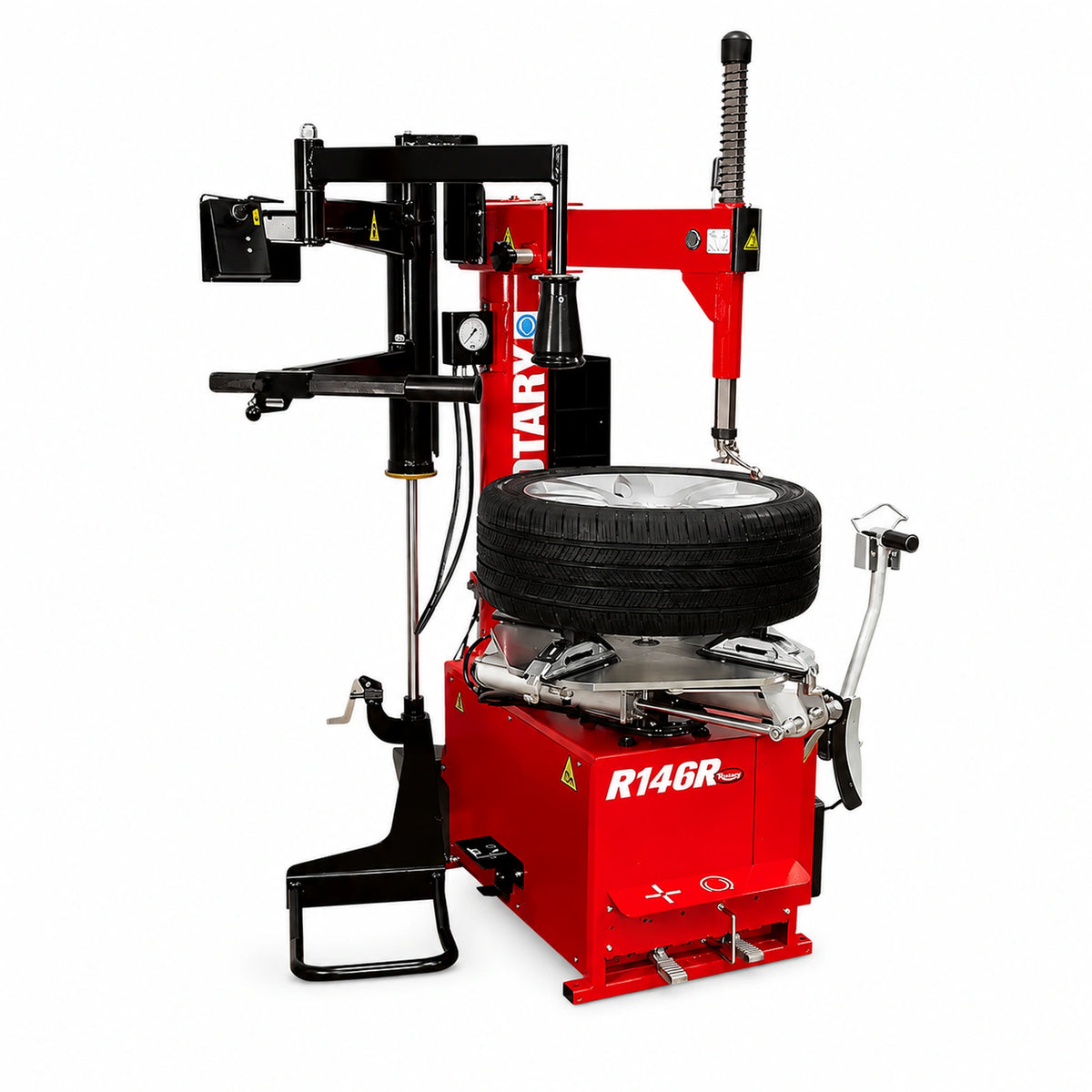
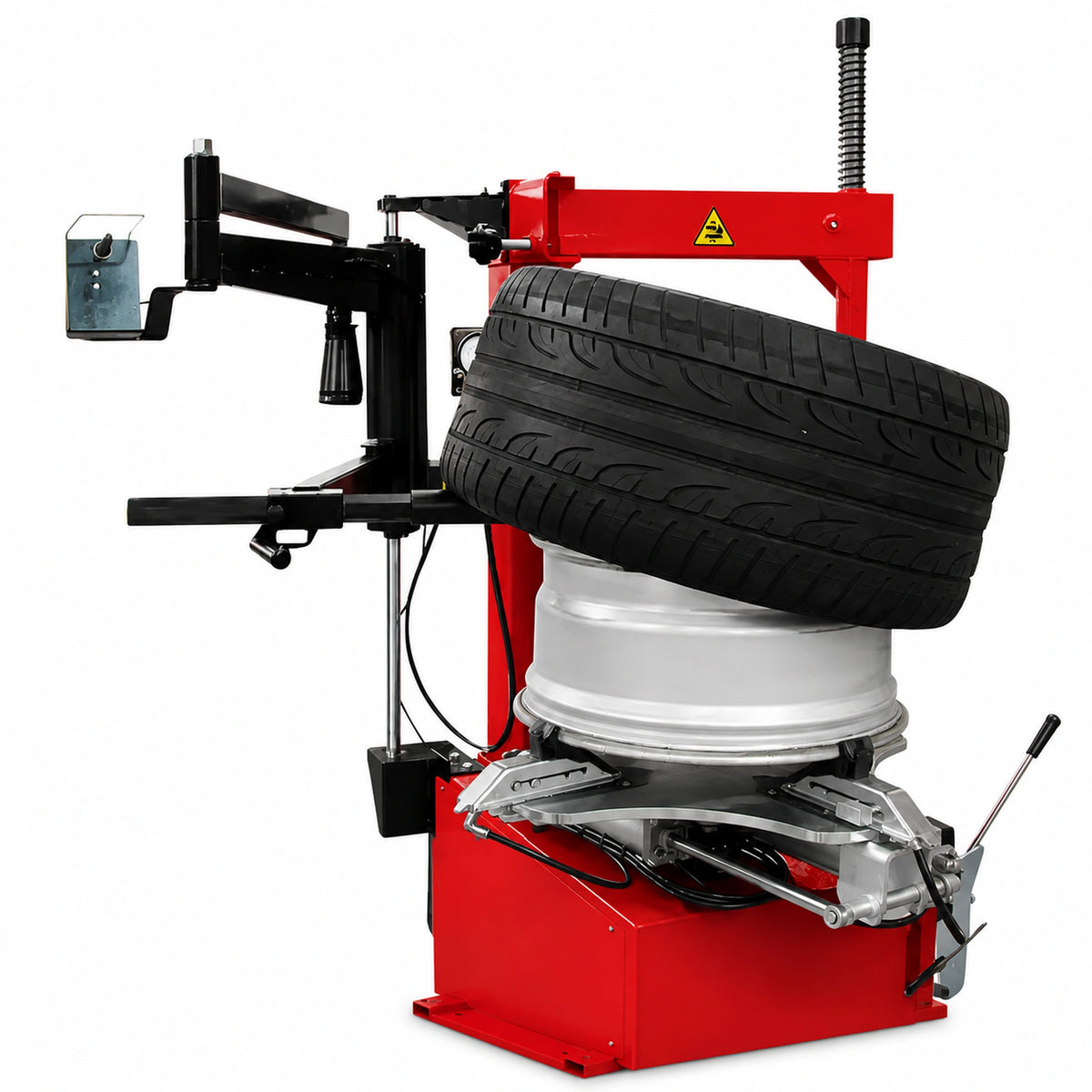
The R146 family takes the more familiar swing-arm route. The base R146 product is offered with electric or air drive options and uses an external and internal rim-clamping system rather than the R1200/R1250 center-post architecture. Its documented range reaches 10 to 26 inches for external clamping and 12 to 28.5 inches internally, with tire assemblies up to approximately 46 inches in diameter and 15 inches wide.
Additional R146 configurations add assistance equipment for harder tire work and heavier assemblies. Because the current R146RP product title and body copy do not agree cleanly on which assistance equipment is included, confirm the exact helper-arm and wheel-lift package on the selected part number instead of choosing from the R146 suffix alone.
What Changes the Tire Changer Decision?
- Wheel clamping or center locking: R1200 and R1250 use center-post architecture, while R146 machines use conventional rim clamping.
- Wheel finish and tire construction: low-profile, run-flat, reverse-mount and high-value wheels can make tool contact and bead-control features more important.
- Wheel and tire dimensions: verify the exact wheel range, maximum tire diameter and maximum tire width for the machine being considered.
- Technician handling: wheel lifts and helper systems reduce the amount of manual wheel positioning and bead manipulation, but included equipment differs by model.
- Shop volume: automation, tool positioning and memory functions become more useful when the machine repeatedly processes similar wheel sets throughout the day.
- Utilities: electrical and compressed-air requirements differ by model and power configuration. Confirm both before placing the machine in the bay.
Power, Air and Bay Planning
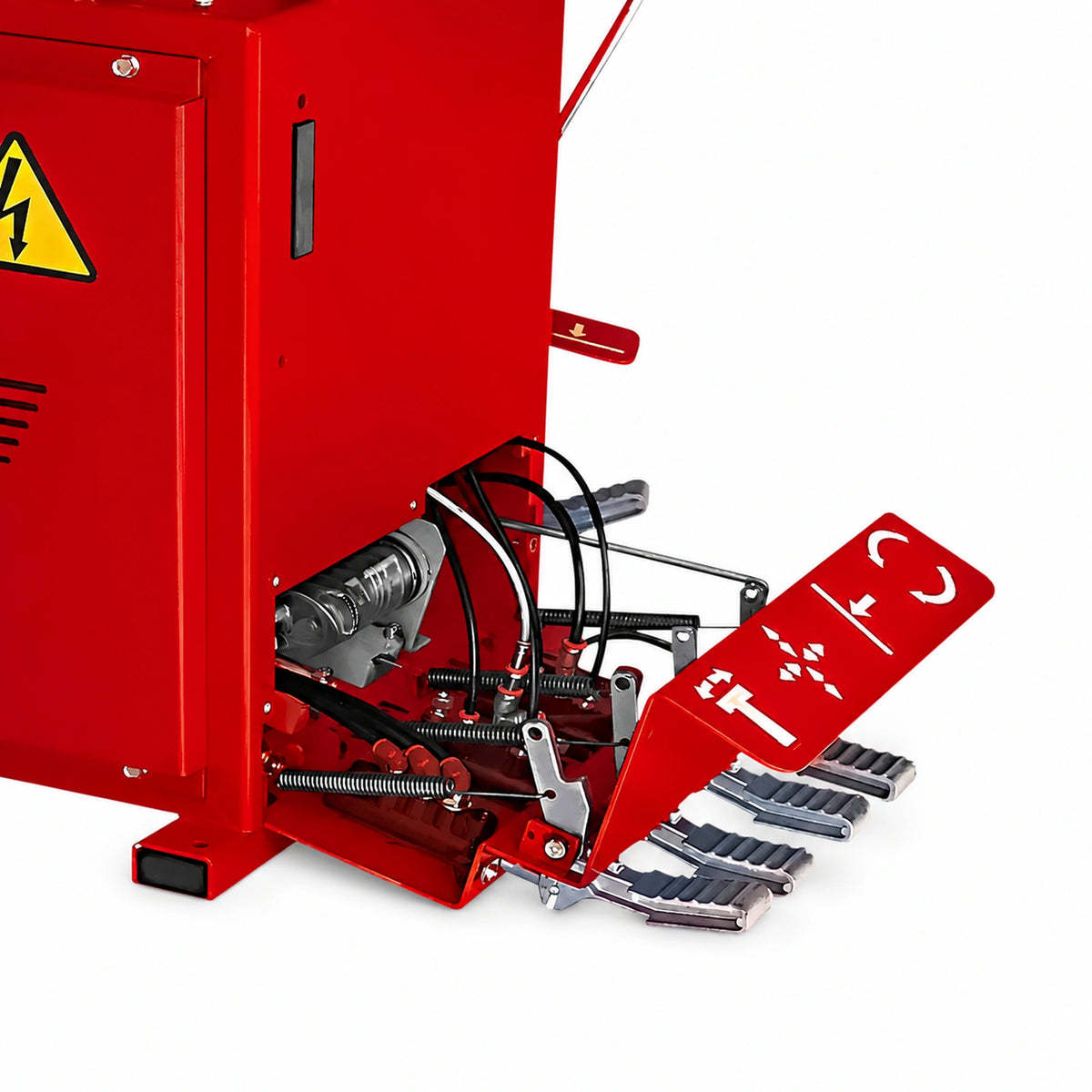
Tire changers require more planning than finding an open patch of floor. The R1250, for example, uses 220V single-phase power and requires compressed air, while the R146 family has electric and air-drive configurations. Working clearance also needs to account for the wheel lift, swing arm, bead tools and the technician moving around the machine.
Use the installation information for the exact model rather than assuming every Rotary tire machine shares the same utility requirements. Confirm the shop air system can maintain the required pressure while other pneumatic equipment is running.
Tire Changer Parts and Accessories
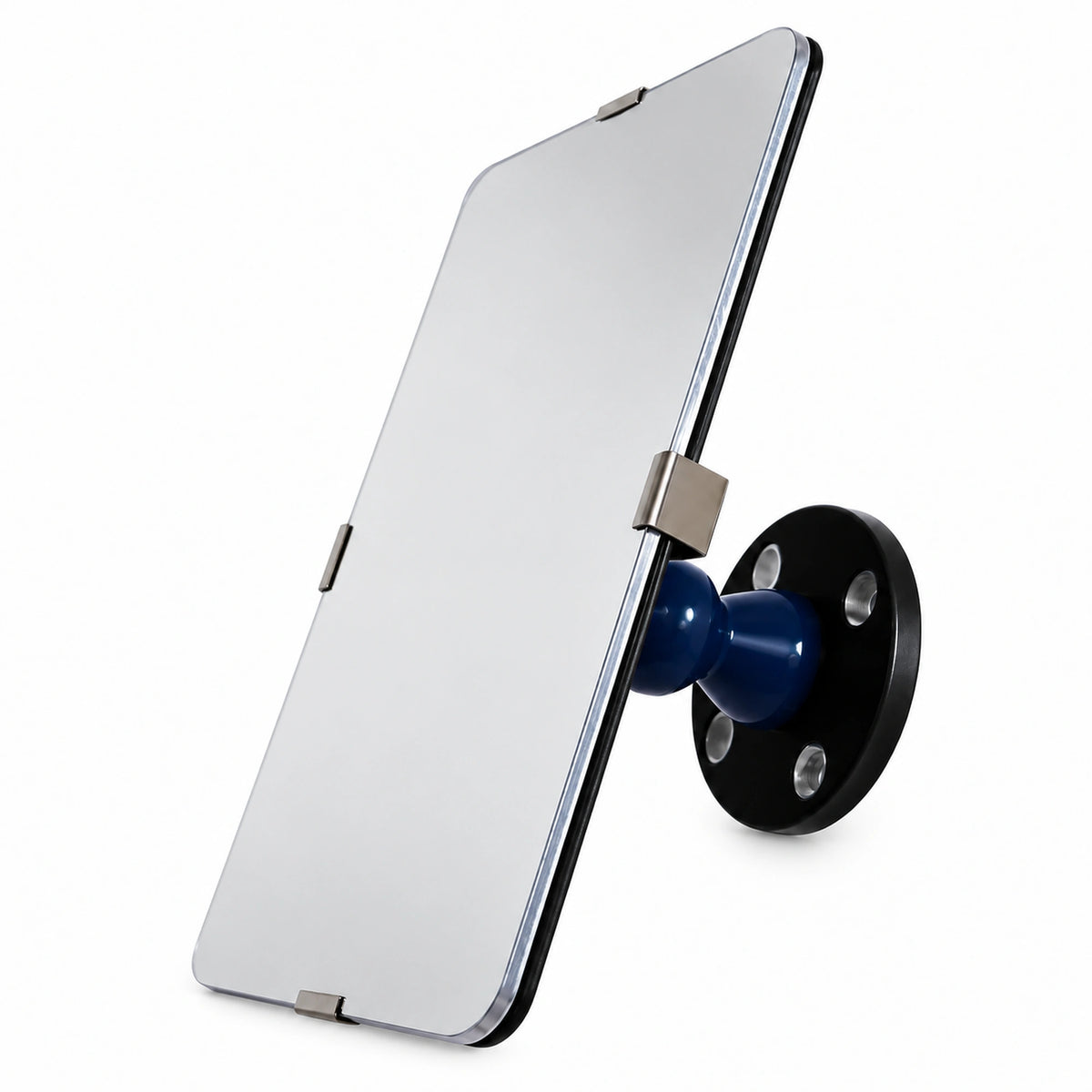
The VSG1000A86 mirror in this collection is an accessory rather than a complete tire changer. Rotary also offers model-specific wheel-service accessories and protection components. Match every accessory to the exact machine before ordering rather than assuming compatibility across the R1200, R1250 and R146 platforms.
If you're looking specifically for replacement or add-on components instead of a complete machine, browse tire changer parts and accessories.
Rotary Tire Changer FAQs
What is the difference between the Rotary R1200 and R1250?
Both are center-post leverless tire changers. The R1200 uses synchronized dual bead rollers with variable-speed operation and an integrated wheel lift. The R1250 adds Rotary's polymer tool head, laser-guided roller positioning, auto-indentation, tool memory and home controls. Choose according to whether those additional setup and control features matter to the shop's wheel mix and service volume.
Is the Rotary R146 a leverless tire changer?
No. The R146 family uses a swing-arm mount/demount tool and rim-clamping architecture. Buyers specifically looking for Rotary leverless machines should compare the R1200 and R1250 center-post models.
What wheel sizes can the Rotary R1250 handle?
Rotary specifies a 10 to 30 inch clamping range, up to 47 inch maximum tire diameter and up to 19 inch tire width for the R1250. Wheel size is only one fitment dimension, so verify tire diameter, tire width, wheel construction and any required adapter before committing to a specific application.
Can Rotary tire changers handle 19.5 inch tire assemblies?
The R146 family represented in this collection is specifically marketed around service that includes 19.5 inch tire assemblies. Verify the exact wheel and tire dimensions against the selected R146 configuration rather than relying on the nominal 19.5 inch designation alone.
Do Rotary tire changers include wheel lifts and helper arms?
Included assistance equipment varies by model. The R1250 and R1200 have manufacturer or GSG-documented integrated wheel lifts. R146 configurations vary, and the current R146RP catalog copy contains an inclusion inconsistency, so confirm helper arms and wheel lifts against the exact part number before ordering.
What power and air supply does a Rotary tire changer need?
Requirements differ by model. The R1250 is documented for 220V single-phase power plus compressed air, while R146 configurations include both electric and air-drive choices. Use the current installation information for the exact machine and verify the shop's electrical and compressed-air capacity before installation.
Choose the Machine Around the Wheels You Actually Service
Start with leverless center-post versus swing arm, then compare the wheel and tire sizes, bead difficulty, wheel finishes, technician handling and service volume in the bay. Use the product grid for current pricing and exact configurations. For a wider equipment comparison, browse tire changers and wheel balancing machines, or contact Garage Supply Guys at (855) 498-2147 or support@garagesupplyguys.com.
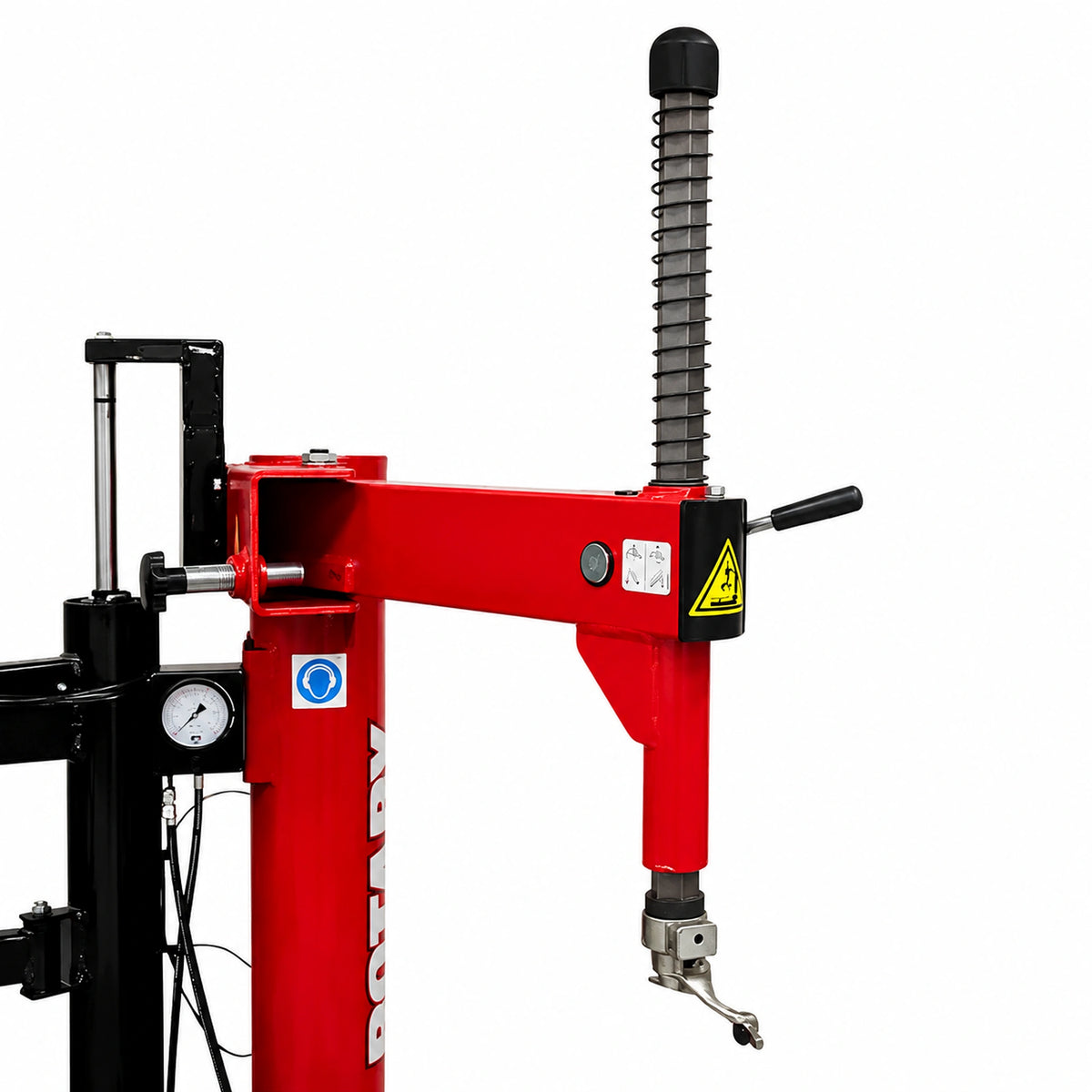
Rotary R146RP - Swing Arm Tire Changer, Helper Arm, 19.5" Tires
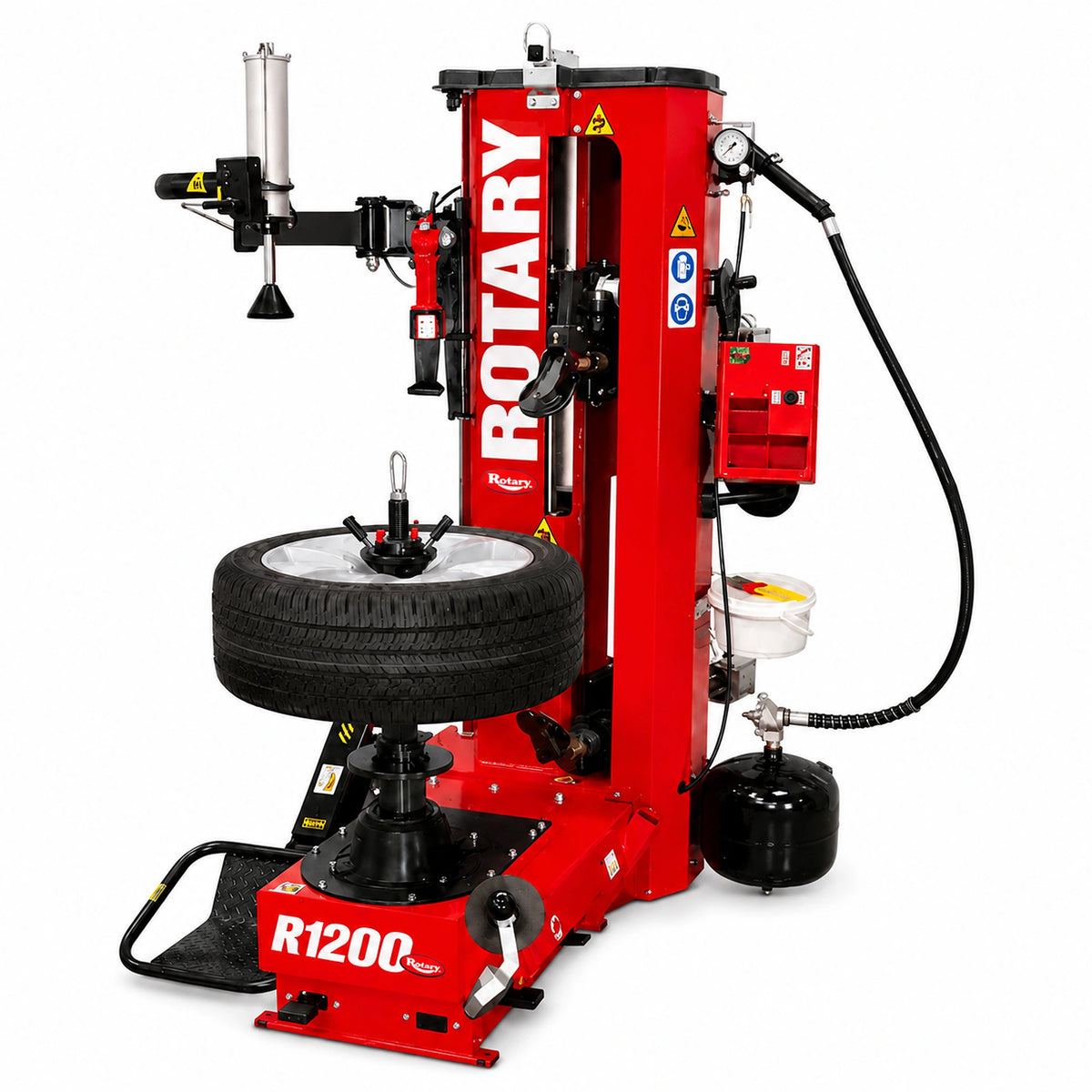
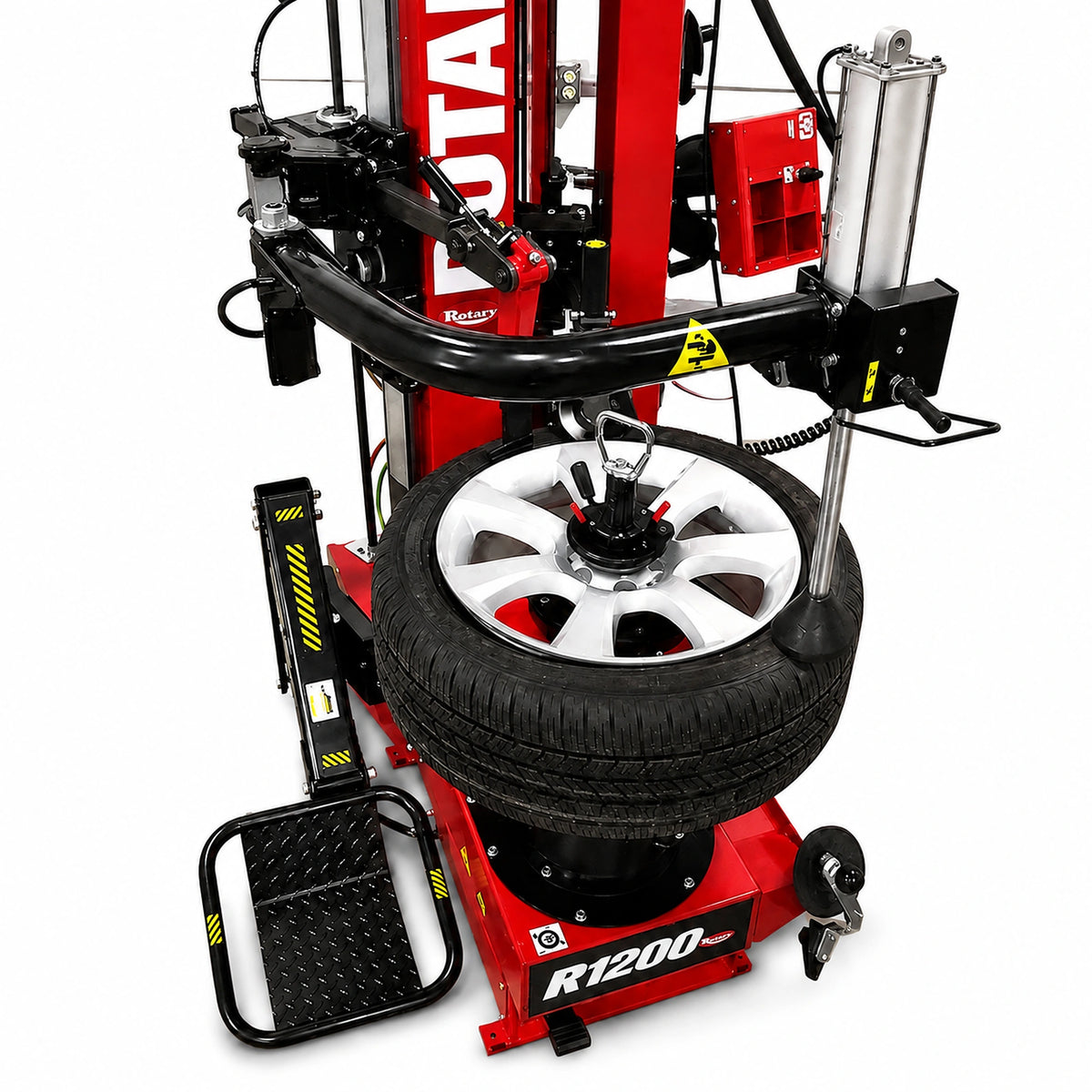
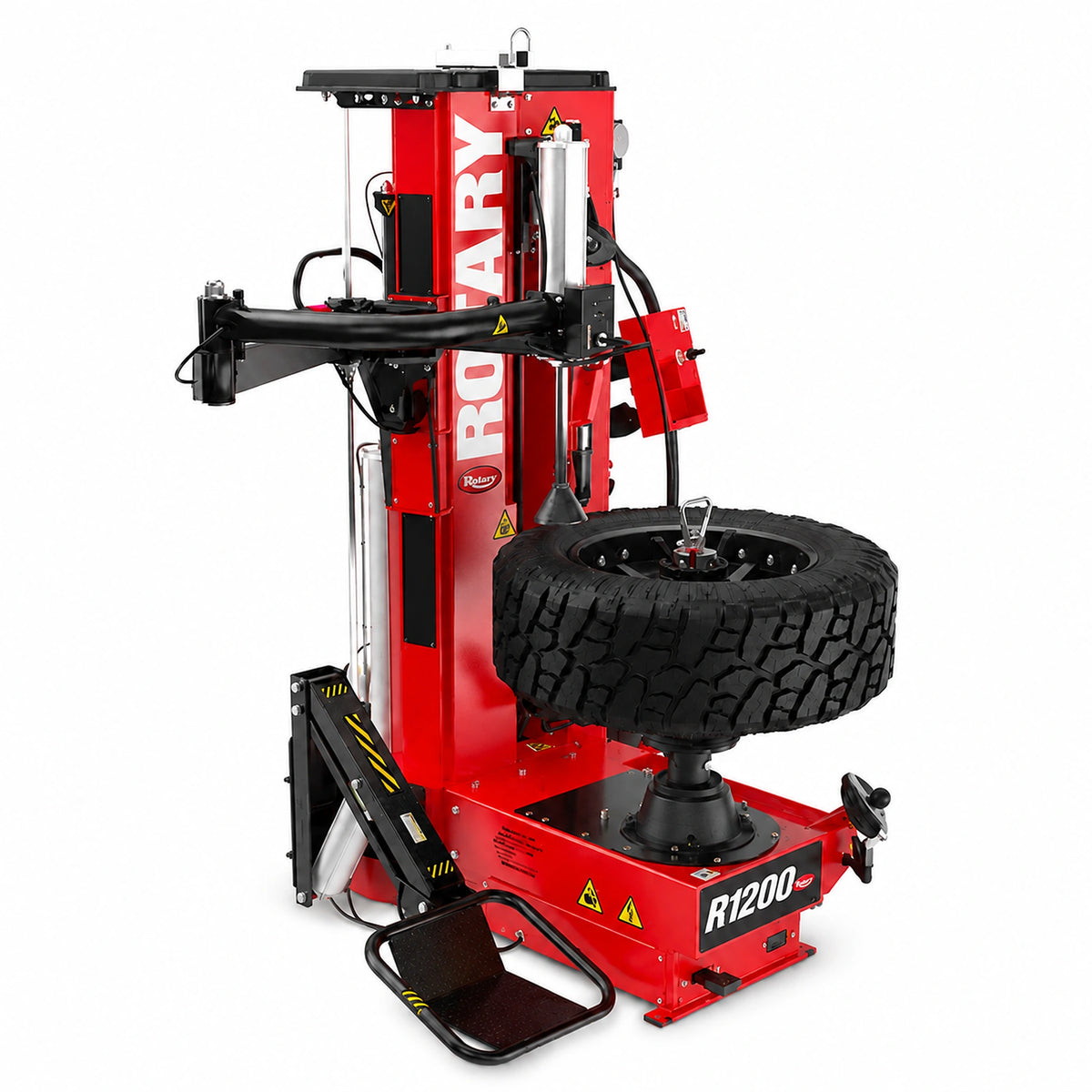
Rotary R1200 - Center-Post Leverless Tire Changer, Dual Roller