Challenger EQ10 10K Two-Post Lift (Quality/Economy)
SKU: EQ10
Financing options available
Financing estimates are based on the product price; selected add-ons and delivery services are excluded.
- Authorized Challenger Dealerdirect manufacturer relationship
- Manufacturer Warrantyincluded with purchase
- Price Match Guaranteefind it lower and we will beat it
- No Sales Tax Collected Outside PAPA orders include sales tax
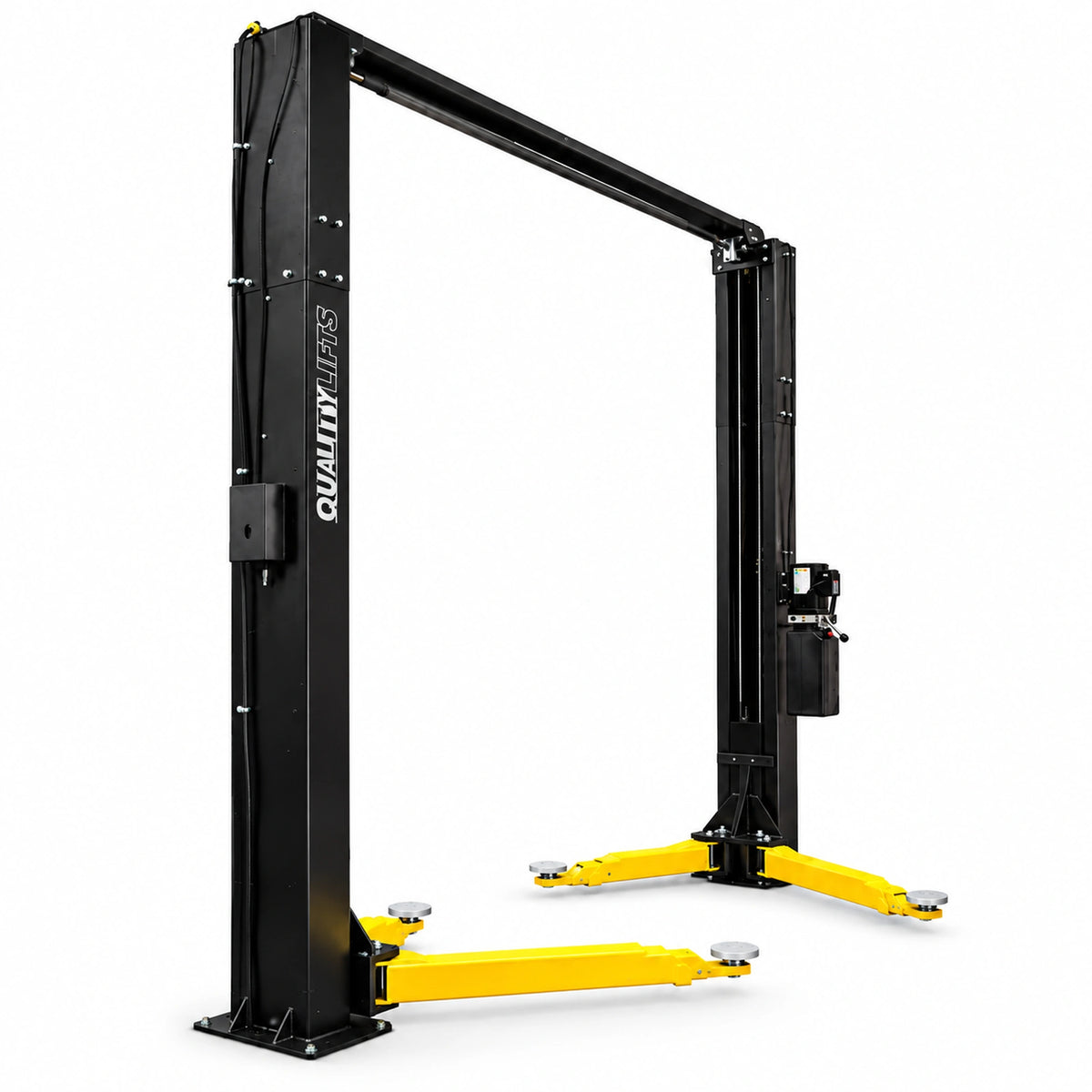
Challenger EQ10 10,000 lb Two-Post Lift for Commercial Automotive Service
The Challenger EQ10 is a 10,000 lb ALI-certified two-post lift engineered for routine automotive service on passenger vehicles, light trucks, and SUVs. Featuring 3-stage front and 2-stage rear arms, a 2 HP single-phase motor, and automatic arm restraints, this model delivers reliable performance in commercial shop environments and advanced home garages without premium-tier pricing.
Key Features & Benefits
ALI Certification & Commercial-Grade Design
The Challenger EQ10 carries ALI (Automotive Lift Institute) certification, meeting rigorous safety and performance standards required by commercial service facilities. This certification is uncommon among economy-tier lifts and confirms structural integrity, load-holding capability, and safety system reliability.
ALI certification addresses a critical industry requirement: shops operating under warranty protocols, insurance policies, and regulatory compliance frameworks depend on certified equipment. Traditional economy lifts often lack this credential, requiring facilities to rely on alternative verification methods or compromise on compliance confidence.
This enables shops to operate with documented compliance, simplifies insurance claims validation, and provides peace of mind that the lift meets the same engineering standards as premium models. The certification is backed by third-party testing and ongoing quality verification.
Multi-Stage Arm Configuration for Vehicle Compatibility
The lift features 3-stage front arms and 2-stage rear arms, a multi-stage design that expands the range of vehicle types and footprints this model can safely service. The varying arm stages allow precise positioning for vehicles with different wheelbase lengths and suspension geometries.
Standard two-stage or single-stage arm designs limit positioning flexibility, making it difficult to safely lift vehicles with extended wheelbases or unusual suspension layouts. The EQ10's multi-stage configuration addresses this industry-wide challenge by enabling technicians to adjust arm extension independently at front and rear, accommodating compact cars through full-size trucks within the same 10,000 lb capacity.
This enables single-lift flexibility for diverse shop environments without requiring separate equipment for different vehicle classes. Technicians can achieve optimal contact points on undercarriage components, reducing repositioning time and improving safety during service operations.
2 HP Single-Phase Motor & Efficient Lifting Performance
The integrated 2 HP motor operates on 208-230V single-phase power (60 Hz), delivering straightforward electrical integration into most existing shop wiring. Single-phase power is standard in commercial and residential facilities, eliminating the need for three-phase electrical upgrades that many heavy-duty lifts require.
Many alternative economy lifts require either undersized motors with slower lift cycles or three-phase power that necessitates costly electrical infrastructure upgrades. The EQ10 balances motor capacity with practical electrical compatibility, addressing the real-world constraint of existing facility power systems.
This enables rapid deployment without electrical retrofitting and reduces total cost of ownership for shops without three-phase infrastructure. The 2 HP output provides adequate hydraulic pressure for consistent lifting across the full 10,000 lb capacity range.
Automatic Arm Restraint System for Load Security
The lift includes an automatic arm restraint system with overhead safety shut-off bar, engineered to prevent unplanned arm movement during service operations. The restraint engages automatically on contact and releases via single-point lever operation when technician commands release.
Traditional manual restraint systems or lever-engaged designs fail when technicians focus on undercarriage work, particularly when removing or installing heavy components like engines, transmissions, or suspension assemblies. Automatic engagement addresses this industry-wide safety challenge by maintaining constant grip pressure without requiring manual re-engagement between tasks.
This improves safety during complex service operations by eliminating the human factor in restraint activation. The automatic mechanism holds position even when technicians reposition their work area, and the overhead shut-off bar provides redundant protection against arm drift.
Drive-Thru Clearance Design for Service Bay Efficiency
The lift delivers 98.375 inches (2,497 mm) of drive-thru clearance, permitting vehicles to drive through and out of the service bay without requiring backing or repositioning. This measurement represents clearance under the lift columns and boom structure when arms are in neutral position.
Traditional two-post lifts with overhead drive-shafts or wider column spacing reduce effective drive-thru clearance, requiring vehicles to be positioned precisely or backed in to avoid contact. This impacts shop workflow efficiency and increases the risk of accidental strikes. The EQ10's column geometry maximizes drive-thru space while maintaining structural rigidity.
This enables more efficient service bay traffic flow, reduces vehicle maneuvering time between stations, and improves technician workflow. The design accommodates vehicles up to 84 inches in height, covering the vast majority of passenger vehicles and light trucks.
Applications & Use Cases
- Independent Repair Shops: General automotive repair and maintenance for passenger cars, light trucks, and SUVs requiring routine undercar service including suspension work, brake service, and fluid changes.
- Light Commercial Service Bays: Fleet maintenance operations for small-to-medium vehicle pools requiring reliable, certified lifting for diagnostic and preventive maintenance.
- Dealership Service Departments: OEM-authorized warranty work and customer vehicle service within 10,000 lb capacity class, particularly for economy and compact vehicle lines.
- Advanced Home Garages: Serious automotive enthusiasts and small fabrication operations requiring professional-grade lifting equipment for project vehicles and restoration work.
Technical Specifications
| Specification | Value |
|---|---|
| Maximum Capacity | 10,000 lb (4,536 kg) |
| Rise Height | 72.25 inches (1,835 mm) |
| Drive-Thru Clearance | 98.375 inches (2,497 mm) |
| Pad Height | 4.25 inches (108 mm) |
| Overall Height (Retracted) | 143.875 inches (3,656 mm) |
| Specification | Value |
|---|---|
| Front Arm Configuration | 3-stage hydraulic arms |
| Rear Arm Configuration | 2-stage hydraulic arms |
| Lift Type | Symmetric two-post (overhead hydraulic) |
| Safety Features | Automatic arm restraint system with overhead shut-off bar |
| Specification | Value |
|---|---|
| Motor Size | 2 HP |
| Voltage | 208-230V single phase |
| Frequency | 60 Hz |
| Power Type | Single-phase electrical |
Installation Requirements
Foundation & Mounting
- Concrete Slab Specification: 4-inch reinforced concrete slab, minimum 3,500 PSI, fully cured before installation.
- Slab Condition: Level surface with no significant settling, cracks, or deformation that would affect lift column alignment or weight distribution.
- Anchoring: Follow manufacturer specification sheet for anchor bolt sizing, torque specifications, and installation methodology. Proper anchoring prevents column drift and ensures load stability during operation.
Power Requirements
- Voltage: 208-230V single phase, 60 Hz AC power required.
- Circuit Capacity: Dedicated 20-amp minimum circuit recommended; verify with facility electrical documentation and local electrical code requirements.
- Wiring Installation: Install per NEC (National Electrical Code) standards and local jurisdictional requirements. Three-phase conversion is not recommended; consult manufacturer for site-specific electrical questions.
- Electrical Permit: Verify with local building authority whether electrical permit is required for lift installation and power connection.
Facility Clearances & Environment
- Ceiling Height: 144 inches (3,658 mm) minimum clearance above floor level required to permit full lift arm extension without obstruction.
- Ventilation: Adequate shop ventilation should remain operational during lift use to manage hydraulic heat dissipation and maintain equipment operating temperature.
- Operating Temperature: Equipment rated for standard shop environments; protect from direct weather exposure (rain, snow, extreme temperature fluctuations).
- Installation Verification: Upon delivery, verify concrete condition, clearances, and electrical service match manufacturer specifications before operational use.
Installation & Code Compliance
- Professional Installation Recommended: While specifications are provided for planning purposes, installation by qualified service technicians familiar with automotive lift assembly is strongly recommended to ensure safety and warranty compliance.
- Permits: Verify with local building department whether building permits or lift installation permits are required in your jurisdiction. Compliance with local codes is the facility owner's responsibility.
Warranty Coverage
Warranty Structure
Warranty terms vary by authorized dealer and distributor. The Challenger EQ10 carries manufacturer-backed coverage; exact duration, component coverage, and conditions should be confirmed with the selling distributor at point of purchase.
Typical warranty includes structural components and hydraulic system, with duration and terms varying by dealer package. Review warranty documentation before purchase to understand specific coverage, registration requirements, and claim procedures.
Warranty Considerations
- Verification: Request written warranty terms and coverage scope from distributor before finalizing purchase.
- Registration: Follow manufacturer registration procedures if applicable to activate warranty coverage.
- Installation Compliance: Warranty validity depends on proper installation per manufacturer specifications and adherence to maintenance protocols.
Ready to Upgrade Your Shop?
Get expert guidance on the Challenger EQ10 and whether it fits your facility needs. Our team can help with installation planning, electrical verification, foundation requirements, and technical specifications specific to your operation.
Frequently Asked Questions
What is the maximum lift capacity of the Challenger EQ10?
The Challenger EQ10 has a rated capacity of 10,000 lb (4,536 kg) for passenger cars, light trucks, and SUVs. Never exceed this rated capacity as it directly impacts safety, structural integrity, and equipment performance. The lift features a 72.25-inch rise height and 98.375-inch drive-thru clearance. Verify specific vehicle compatibility using the lift manual before each service operation.
What are the concrete foundation requirements for the EQ10?
A 4-inch reinforced concrete slab with minimum 3,500 PSI compressive strength is required and must be fully cured before lift installation. The slab must be level without significant cracks, settling, or deformation that would affect lift column alignment. Proper anchoring per manufacturer specifications is essential for stable operation. Verify foundation condition and local building codes before installation begins.
Is the Challenger EQ10 ALI certified?
Yes, the EQ10 carries ALI (Automotive Lift Institute) certification, confirming compliance with rigorous safety and structural performance standards. ALI certification is verified through third-party independent testing and is appropriate for commercial service facilities, dealerships, and professional shops. This certification is uncommon among economy-tier 10,000 lb two-post lifts and validates the lift's structural integrity and safety system design.
What is the rise height of the Challenger EQ10?
The rise height is 72.25 inches (1,835 mm) from minimum pad height to maximum extension, providing adequate clearance for undercarriage access on passenger vehicles, light trucks, and SUVs. The pad height is 4.25 inches (108 mm) when retracted. The drive-thru clearance is 98.375 inches (2,497 mm), permitting vehicles to drive through the service bay without repositioning. These dimensions enable diverse service operations within shop constraints.
What electrical service is required for the EQ10?
The EQ10 requires 208-230V single-phase, 60 Hz AC power on a dedicated 20-amp minimum circuit. Single-phase power is standard in most commercial and residential facilities, eliminating the need for three-phase electrical infrastructure upgrades. The 2 HP motor provides adequate hydraulic pressure for the 10,000 lb capacity range. Installation must comply with NEC (National Electrical Code) and local electrical code requirements before operational use.
What arm configuration does the Challenger EQ10 feature?
The EQ10 features 3-stage front arms and 2-stage rear arms, enabling independent extension adjustment for vehicles with different wheelbases and suspension layouts. This multi-stage design accommodates passenger cars through full-size trucks within the 10,000 lb capacity without repositioning. The symmetric lift configuration with overhead hydraulic system enables consistent lift performance across the full 72.25-inch rise height range.
Is professional installation required for the Challenger EQ10?
While specifications are provided for planning purposes, installation by qualified service technicians is strongly recommended to ensure safety, proper column alignment, concrete anchor verification, and warranty compliance. The lift requires 144 inches (3,658 mm) of ceiling clearance and a 4-inch reinforced 3,500 PSI concrete slab. Verify local permit requirements with your building authority before installation begins.
What is the minimum ceiling height required for the Challenger EQ10?
A ceiling height of 144 inches (3,658 mm) above floor level is required to permit full lift arm extension without obstruction. This measurement allows the arms to extend fully during service operations on tall vehicles and accommodates overhead accessories. Verify facility ceiling height, measure clearances above floor, and identify any overhead obstructions such as pipes, conduit, or beams before installation.
About the Brand
Challenger