
Popular Add-ons
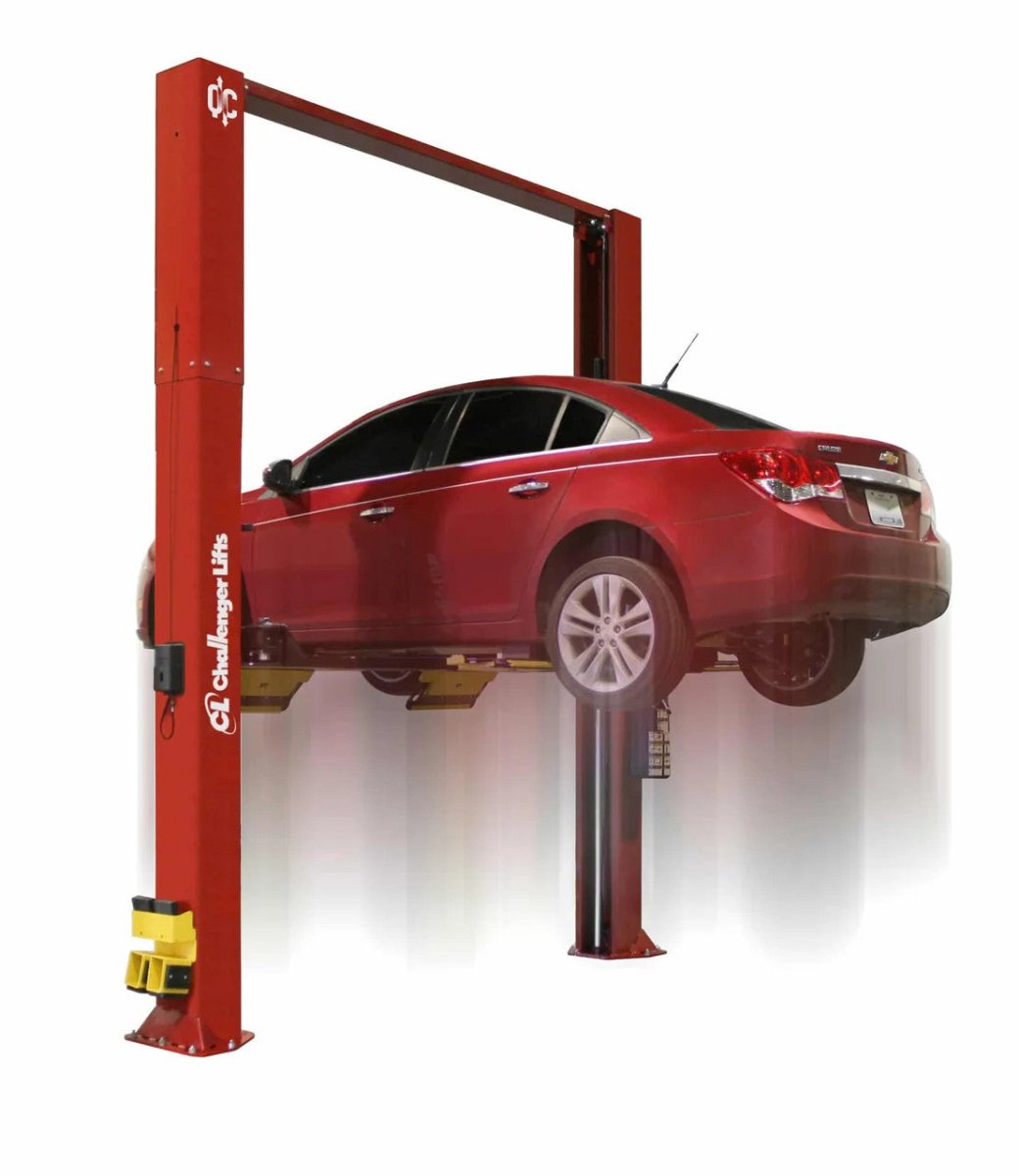
CHALLENGER LIFTS CL10-XP9-2 9,000 Lbs Two Post Lift with 2ft Extensions
Challenger CL10-XP9-2 - 9,000 lb ALI Certified Two-Post Lift with Drive-On Express Pads
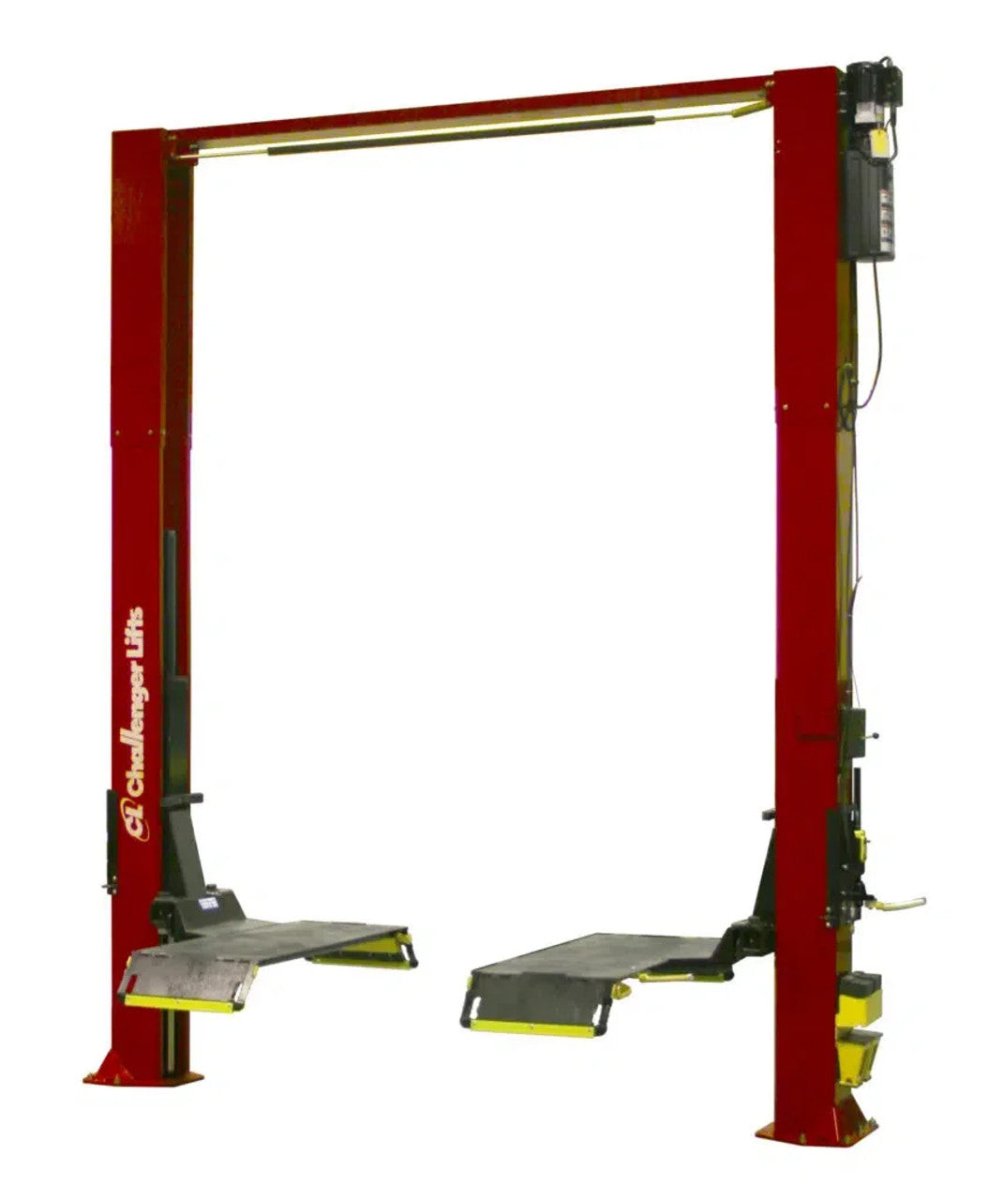
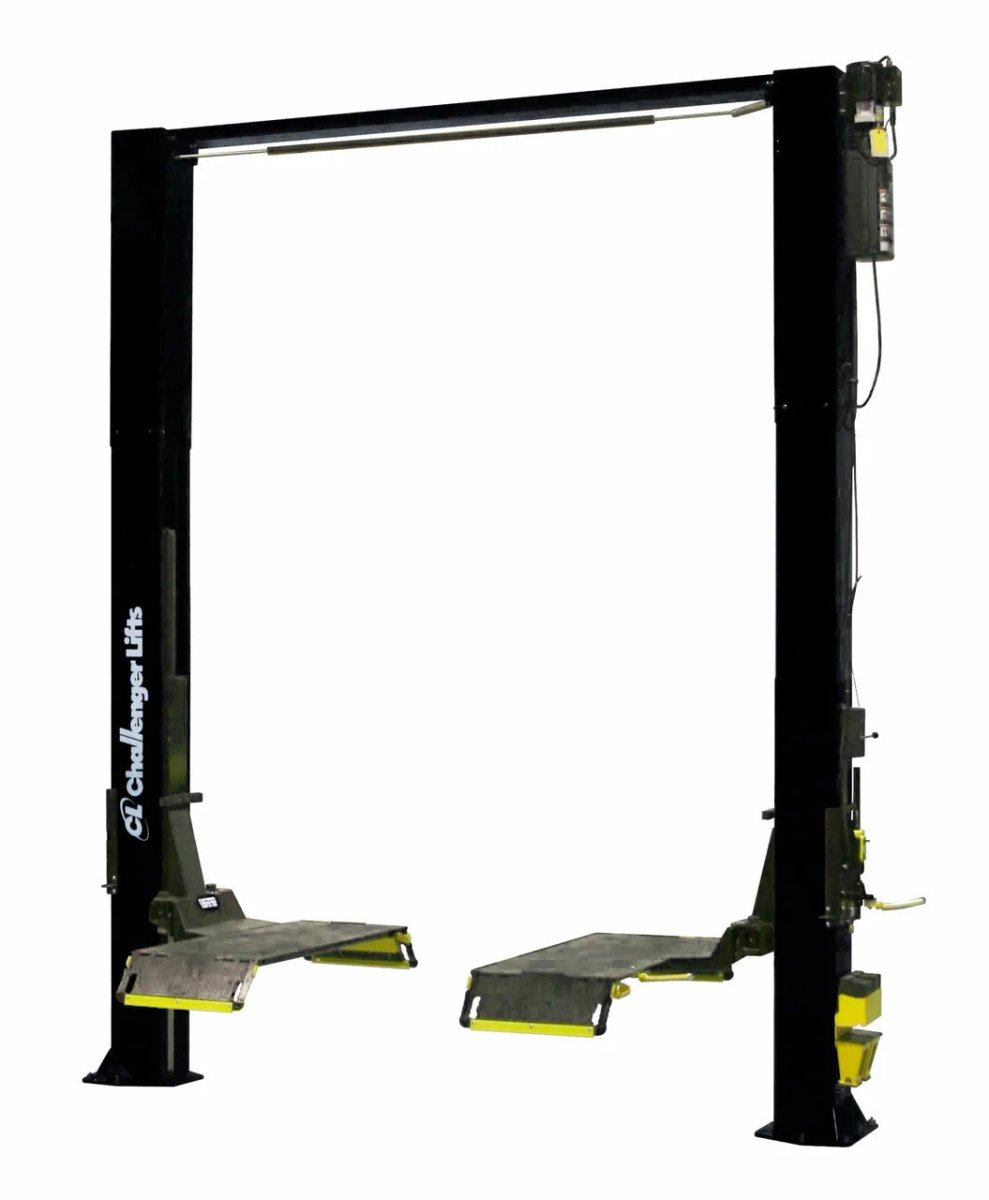
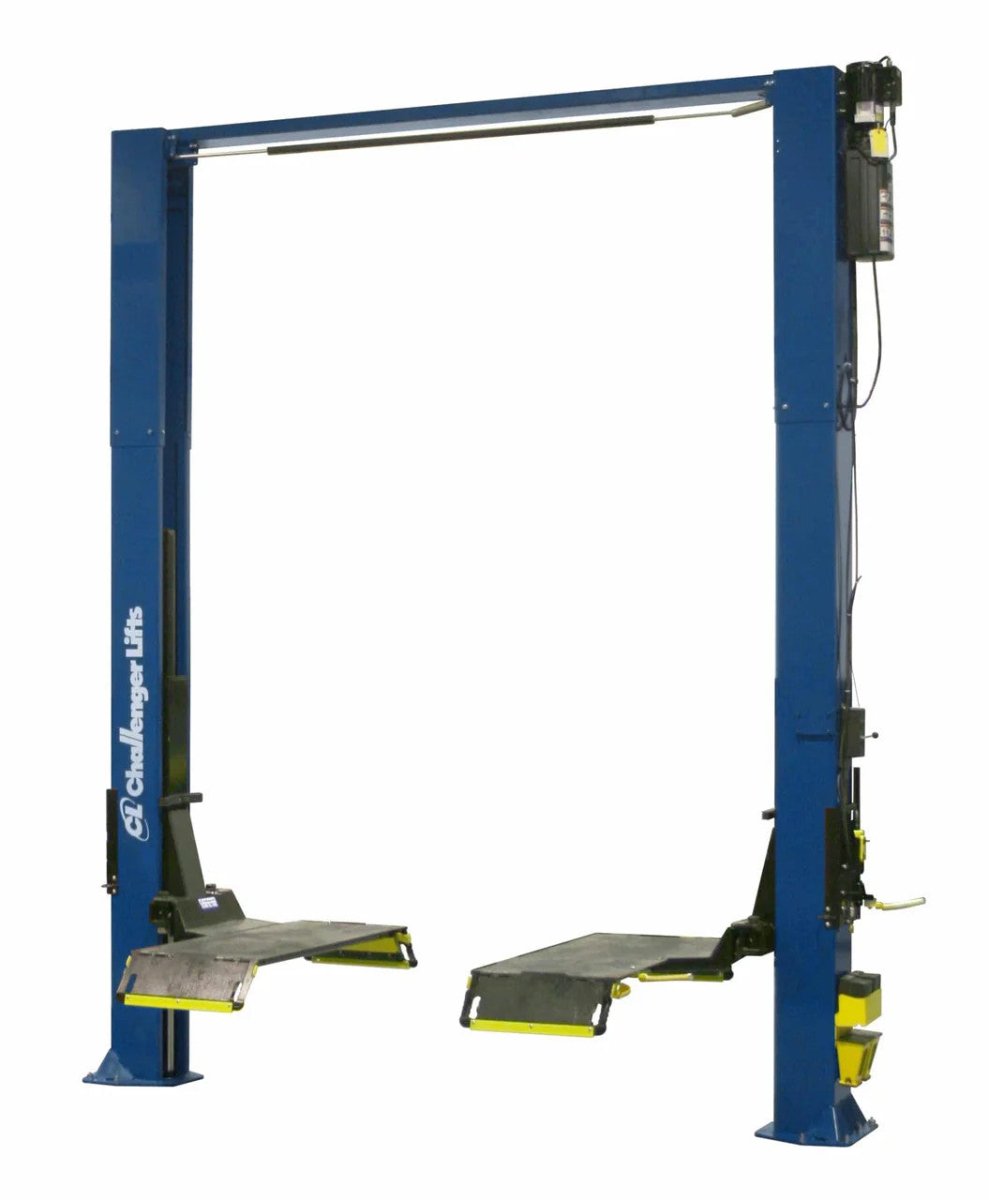
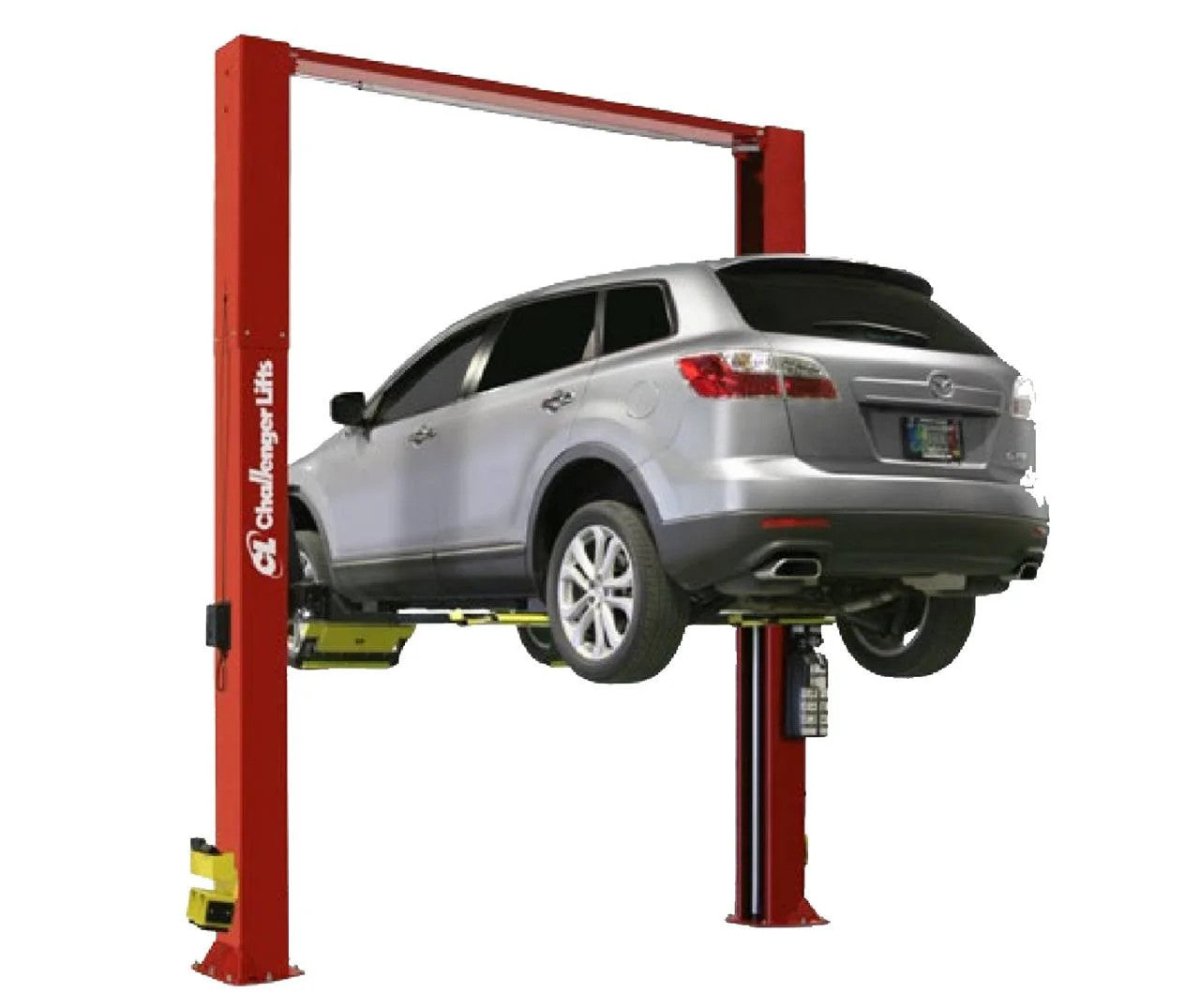
The Challenger CL10-XP9-2 delivers 9,000 lb capacity in a surface-mount two-post design engineered for high-volume express service applications. Featuring drive-on express pads with flip-up ramps that eliminate manual arm positioning, a 48-inch elongated carriage with oversized 5-inch pulleys, and included 2-foot column extensions for 13' 8" total height, this lift handles quick lube, tire rotation, brake service, and multi-point inspection workflows with exceptional efficiency.
Key Features & Benefits
Drive-On Express Pad Design for Fast Vehicle Spotting
The drive-on express pad system features low-profile 2.25-inch platforms with integrated flip-up ramps that extend from 58 inches to 75 inches, accommodating longer wheelbases without repositioning. The non-skip surface provides secure traction during drive-on, while the reinforced locking ramps support vehicle weight across the entire platform length.
Traditional two-post lifts with swing arms require technicians to manually position arms under lift points for each vehicle, consuming 2-5 minutes per service. Drive-on pads address this industry-wide challenge by eliminating positioning entirely - vehicles drive directly onto the pads, and flip-up ramps automatically secure front and rear wheels without adjustment.
This enables faster throughput in express service operations like quick lube, tire rotation, and brake inspections. Shops running 8-12 lifts per hour can increase productivity by 15-25% by eliminating arm positioning delays, while reducing first-try spotting errors that require repositioning.
Commercial-Grade 48-Inch Elongated Carriage System
The 48-inch elongated carriage distributes lifting forces across 20% more surface area than typical 36-40 inch carriage designs. Paired with oversized 5-inch diameter pulleys (vs. standard 3.5-4 inch) and heavy-duty 5/16-inch aircraft-grade steel cable (vs. common 1/4-inch), this system reduces cable wear and bearing stress under continuous commercial use.
Standard carriage lengths concentrate stress on smaller bearing surfaces, leading to accelerated wear in high-volume shops performing 20+ lifts daily. The elongated design spreads load forces across additional bearing points and larger pulley contact areas, reducing cable flexing cycles that cause premature fraying.
This extends cable replacement intervals from typical 4-5 years to 7-10 years in commercial environments, reducing maintenance costs and downtime. The larger pulley diameter also improves cable tracking stability, minimizing binding and uneven wear patterns during repeated lift cycles.
Factory-Included 2-Foot Column Extensions
The CL10-XP9-2 model designation indicates factory-included 2-foot column extensions, bringing total column height to 13' 8" (164 inches) without additional cost. This accommodates facilities with 12-foot ceilings while maintaining proper overhead clearance and enables ergonomic working height when servicing taller SUVs, vans, and trucks.
Most two-post lift manufacturers sell height extensions as separate accessories, adding $500-$800 to the initial purchase. Shops with standard 12-foot ceiling heights must factor this additional cost into budgeting, while also managing separate ordering and installation of extension components.
This eliminates the accessory markup and simplifies procurement for facilities with standard commercial ceiling heights. The included extensions arrive pre-configured with the lift, ensuring proper integration without field modification or compatibility concerns during installation.
ALI Gold Label and ETL Dual Certification
The CL10-XP9-2 carries both ALI Gold Label certification and ETL listing through Intertek, meeting ANSI/ALI ALCTV-2017 construction standards and ANSI/UL 201 garage equipment safety requirements. This dual certification provides independent third-party verification rather than self-certification, with ongoing surveillance and plant inspections validating continued compliance.
Many commercial insurance policies and fleet service contracts require ALI certification as a condition of coverage, while OSHA workplace safety audits verify lift compliance during inspections. Non-certified lifts can result in policy exclusions, contract disqualification, and citation exposure during regulatory reviews.
This satisfies insurance underwriting requirements and fleet contract specifications without waiver requests or alternative documentation. The Gold Label status indicates ongoing quality surveillance rather than one-time testing, providing assurance that manufacturing processes maintain certification standards across production runs.
Extended 5-Year Structural Warranty Program
The tiered warranty structure provides 5 years of coverage on structural components (columns, carriage, overhead beam, ramps), 2 years on functional parts (hydraulics, cables, controls), and 1 year on labor. The 5-year structural term exceeds many competitor offerings that range from 1-3 years on primary load-bearing components.
Traditional 1-year structural warranties shift long-term component failure risk to shop owners within the typical 7-10 year service life of commercial lifts. Shops operating multiple units face potential out-of-pocket costs for column repairs, carriage replacement, or overhead beam issues that develop beyond the short warranty window.
This reduces long-term ownership risk by extending manufacturer coverage through the critical first five years when defects or manufacturing issues typically manifest. The 2-year functional parts coverage also exceeds typical 1-year industry terms, providing additional protection on hydraulic cylinders, cables, and control systems that see heavy wear in express service environments.
Low-Profile 2.25-Inch Pad Design
The 2.25-inch platform height creates a minimal approach angle that accommodates lowered vehicles, sports cars, and performance builds with limited ground clearance. Combined with tapered flip-up ramps and non-skip surface treatment, the system accepts vehicles with as little as 3 inches of ground clearance without scraping or contact damage during drive-on.
Standard lifts with 3-4 inch platform heights and steep ramp angles create approach problems for lowered vehicles, forcing shops to refuse service or risk undercarriage damage during positioning. This limits service capability for enthusiast vehicles, modified cars, and performance builds that represent high-margin service opportunities.
This expands addressable vehicle range to include the lowered and modified vehicle market without purchasing specialized low-rise equipment. Shops can service standard-height vehicles and performance builds on the same lift, increasing utilization and revenue potential without dedicating bay space to single-purpose equipment.
Applications & Use Cases
- Express Service Operations: Quick lube and oil change facilities requiring fast vehicle throughput with minimal positioning time, tire rotation and balancing services, brake inspection and service operations, and multi-point vehicle inspections.
- State and Safety Inspection Lanes: Emission testing facilities needing undercarriage access for exhaust system inspection, safety inspection stations performing brake and suspension checks, and fleet inspection programs requiring standardized lift positioning.
- Fluid Service Applications: Transmission service and differential fluid changes, coolant system service and radiator work, and undercarriage fluid leak diagnosis and repair.
- General Undercarriage Work: Exhaust system repair and replacement, undercarriage protective coating application, and chassis component inspection and service.
- Vehicle Type Compatibility: Passenger cars including sedans, coupes, and hatchbacks; light trucks and SUVs up to 9,000 lb; crossover vehicles and cargo vans; passenger vans and longer wheelbase vehicles with extended ramp positions.
Technical Specifications
| Specification | Value |
|---|---|
| Maximum Lifting Capacity | 9,000 lb |
| Rise Height | 70 inches |
| Speed of Rise (Standard) | 38-48 seconds |
| Speed of Rise (QuickCycle Variant) | 27 seconds rise / 17 seconds lower |
| Platform Height | 2.25 inches |
| Platform Width | 24 inches |
| Platform Length (Variable) | 58 / 66.5 / 75 inches (ramp positions) |
| Specification | Value |
|---|---|
| Column Height (with 2ft extension) | 13' 8" (164 inches) |
| Overall Height (standard, cylinder retracted) | 11' 8" (140 inches) |
| Overall Height (cylinder extended) | 143 inches |
| Overall Width | 138.5 inches |
| Inside of Columns | 110 inches |
| Drive-Thru Clearance | 90 inches |
| Carriage Length | 48 inches |
| Specification | Value |
|---|---|
| Pulley Diameter | 5 inches |
| Cable Diameter | 5/16 inch (aircraft-grade steel) |
| Motor Power | 2HP |
| Voltage | 208-230V, 60Hz, Single-Phase |
| Safety Lock System | Single-point mechanical lock release |
| Overhead Shutoff | Padded shutoff bar with limit switch |
Installation Requirements
Foundation Requirements
- Concrete Thickness: Minimum 4 inches reinforced with rebar or wire mesh
- Concrete Strength: 3,500 PSI minimum, fully cured for 28 days before installation
- Floor Levelness: Within 3/8 inch across the installation area
- Anchor Torque: Anchor bolts torqued to 80 ft-lbs per manufacturer specifications
- Base Inspection: Monthly inspection of concrete within 12 inches of base plates recommended
Space & Clearance Requirements
- Ceiling Height: 13' 9" minimum for 2ft extension model (12' for standard model)
- Overhead Clearance: Adequate clearance for 164-inch total column height plus vehicle height
- Installation Surface: Level reinforced concrete meeting strength and thickness requirements
Electrical Requirements
- Voltage: 208-230V, 60Hz, single-phase (3-phase optional)
- Circuit Protection: Dedicated circuit per local electrical code
- Service Disconnect: Required near point of operation per NEC requirements
- Note: Breaker amperage requirements vary by source; verify current electrical specifications with manufacturer or authorized dealer before installation
Installation Notes
- Professional Installation Required: Must be performed by qualified personnel following manufacturer installation manual to maintain warranty coverage
- Permits: Verify local code compliance and permit requirements before installation
- Equipment Access: Forklift or hoist required for unloading and positioning (cannot be hand-unloaded)
Shipping & Delivery
Freight Coverage
Shipping Method: Freight shipping from manufacturer. Free freight shipping commonly offered by authorized dealers.
Delivery Timeframe: 12-21 days from order placement, depending on location and inventory availability.
Shipping Weight: 2,000 lb total
Delivery Requirements
Unloading Equipment Required: Forklift or hoist with adequate capacity for handling crated components. Lift gate service is not available for this product type due to weight and dimensions.
Delivery Type: Standard freight delivery to customer location. Customer is responsible for unloading from delivery truck.
Receiving Protocol: Inspect all packages for visible damage before signing bill of lading. Note any damage or discrepancies on BOL before driver departs the site.
Damage Reporting
Concealed damage must be reported according to dealer-specific timelines. Typical coverage windows include full replacement parts and freight within 15 days of delivery, and shared-cost coverage for parts discovered within 30 days. After 30 days, customer is typically responsible for parts and freight costs. Verify damage reporting procedures and timelines with your specific dealer at time of purchase.
Warranty Coverage
Tiered Warranty Structure
5 Years - Structural Components: Columns, carriage, swing arms, overhead beam, and drive-on ramps. Exceeds typical 1-3 year industry standard for structural coverage.
2 Years - Functional Parts: Power units, hydraulic cylinders, sheaves, hoses, cables, and control systems. Exceeds typical 1-year industry standard for functional component coverage.
1 Year - Labor: Labor coverage for warranty repairs and service within first year of operation.
Warranty Requirements & Conditions
Registration: Product registration required at manufacturer website to activate warranty coverage.
Eligibility: Warranty is valid for original purchaser only and is non-transferable to subsequent owners.
Installation: Installation must be performed by qualified personnel following manufacturer installation manual. Warranty is void if installed, used, or maintained outside manufacturer specifications.
Extended Warranty: Optional extended warranty coverage available; must be purchased within 30 days of original invoice date.
Ready to Upgrade Your Shop?
Get expert guidance on the right lift for your facility. Our team can help with product selection, installation planning, and technical specifications. Call to verify electrical requirements and confirm included accessories for your specific model.
Frequently Asked Questions
What are the concrete foundation requirements for the Challenger CL10-XP9-2?
The CL10-XP9-2 requires a minimum 4-inch reinforced concrete foundation (rebar or wire mesh) with 3,500 PSI strength, fully cured for 28 days before installation. The floor must be level within 3/8 inch across the installation area, and anchor bolts must be torqued to 80 ft-lbs per manufacturer specifications. Monthly inspection of concrete within 12 inches of base plates is recommended for ongoing structural integrity.
What accessories and components are included with the CL10-XP9-2?
The lift includes (4) 1.5-inch rubber spotting blocks, (4) 3-inch rubber spotting blocks, (4) two-position adapter blocks, (2) column-mounted spotting block storage caddies, reinforced flip-up access ramps (front and rear with locking mechanism), padded overhead shutoff bar, dual integrated rubber door guards, single-point mechanical lock release system, and factory-installed 2-foot column extensions. Call to confirm specific included accessories for your model configuration.
What is the ceiling height requirement for installation?
The CL10-XP9-2 with included 2-foot column extensions requires a minimum ceiling height of 13' 9" (13 feet 9 inches). This accommodates the 164-inch (13' 8") total column height with necessary overhead clearance. The standard model without extensions requires 12-foot minimum ceiling height. Ensure adequate clearance for the combined height of the lift columns plus the tallest vehicles you plan to service.
What certifications does the CL10-XP9-2 carry?
The CL10-XP9-2 is ALI Gold Label certified and ETL certified through Intertek Testing Services. It complies with ANSI/ALI ALCTV-2017 (Automotive Lift Construction, Testing and Validation) and ANSI/UL 201 (Garage Equipment Safety Standard). The ALI Gold Label indicates ongoing surveillance and plant inspections rather than one-time testing, satisfying commercial insurance requirements, fleet service contracts, and OSHA workplace safety audit requirements.
What is the warranty coverage for this lift?
The CL10-XP9-2 features a tiered warranty structure: 5 years on structural components (columns, carriage, arms, overhead beam, ramps), 2 years on functional parts (power units, cylinders, sheaves, hoses, cables, controls), and 1 year on labor. The warranty is valid for the original purchaser only (non-transferable) and requires product registration at the manufacturer website. Installation must be performed by qualified personnel following manufacturer specifications to maintain coverage. Extended warranty options are available if purchased within 30 days of invoice.
What types of vehicles can this lift accommodate?
The 9,000 lb capacity accommodates passenger cars (sedans, coupes, hatchbacks), light trucks and SUVs, crossover vehicles, cargo and passenger vans, and longer wheelbase vehicles with ramps extended to 75 inches. The low-profile 2.25-inch platform height and tapered ramps accommodate vehicles with as little as 3 inches of ground clearance, making it suitable for lowered vehicles, sports cars, and performance builds that standard lifts cannot service.
What are the electrical requirements for installation?
The CL10-XP9-2 operates on 208-230V, 60Hz, single-phase power (3-phase optional). A dedicated circuit per local electrical code and service disconnect near the point of operation are required per NEC standards. Breaker amperage requirements vary by source due to recent power unit specification updates; verify current electrical requirements with the manufacturer or an authorized dealer before installation to ensure proper circuit sizing.
How does the drive-on pad system differ from traditional swing arm lifts?
Drive-on pads eliminate the need for manual arm positioning under vehicle lift points, saving 2-5 minutes per vehicle in express service operations. Vehicles drive directly onto low-profile 2.25-inch platforms with flip-up ramps that extend from 58 to 75 inches for different wheelbase lengths. This provides first-try positioning accuracy without adjustment, increasing throughput by 15-25% in high-volume shops running 8-12 lifts per hour compared to traditional swing arm designs that require technician positioning for each vehicle.
About the Brand