
Rotary Rolling Bridge Jacks
Shop Rotary rolling bridge jacks for wheels-free service on compatible four-post and runway lifts, with rated capacities from 6,000 to 15,000 lb in the current lineup. Fitment matters more than capacity alone: track design, runway geometry, lift model and jack part number determine which Rotary bridge jack belongs on your lift. Use the guide below to separate formed-track, welded-track, X14/XA14 and SM30 applications before ordering.
SEE MORE CLOSE
Match the Bridge Jack to the Lift Before Comparing Capacity
A rolling jack for a 4 post lift raises the vehicle away from the runways so technicians can perform wheels-free brake, tire and suspension work without removing the vehicle from the lift. Rotary uses different jack designs for different runway systems, so two jacks with the same capacity can still be incompatible.
| Rotary jack | Rated capacity | Primary distinction | Compatibility check |
|---|---|---|---|
| RJ6100YM | 6,000 lb | Formed-track rolling jack | Verify that the existing four-post lift uses the formed-track runway design before ordering. |
| RJ6100YM-1 | 6,000 lb | Welded-track rolling jack | For the older welded-track application. Do not substitute it for the formed-track RJ6100YM. |
| RJ7100Y-X | 7,000 lb | X14 / XA14 runway application | Current and historical sources use X14 and XA14 references. Verify the exact lift model and serial number before ordering. |
| RJ152 | 15,000 lb | Heavy-duty SM30 application | Designed for the Rotary SM30 four-post lift family. Confirm the exact SM30 configuration before purchase. |
Formed Track vs. Welded Track
The most important distinction between the two 6,000 lb Rotary jacks is not their lifting capacity. The RJ6100YM is the formed-track version, while the RJ6100YM-1 is the welded-track version. The runway rail profile determines how the jack engages and moves on the lift, so these models should not be treated as interchangeable replacements.
If the lift is already installed and its track type is not documented, use the lift model, serial number and current Rotary documentation to identify the runway system before ordering the jack. Do not rely only on the age of the lift or visual similarity between two runway systems.
RJ152 for Rotary SM30 Heavy-Duty Lifts
The RJ152 moves the collection into a different service class. It carries a 15,000 lb rating and is documented for Rotary SM30-series four-post lifts. That pairing gives an SM30 bay wheels-free capability for service that requires the vehicle to remain on the runways while an axle or vehicle end is raised.
This is not a universal 15K bridge jack for smaller Rotary runway lifts. The runway geometry and SM30 application matter just as much as the capacity number, so the exact SM30 lift configuration should still be confirmed.
RJ7100Y-X and the X14 / XA14 Application
The RJ7100Y-X is the 7,000 lb runway jack represented in this collection. Current GSG cataloging identifies it with the XA14, while older Rotary documentation associates the RJ7100Y-XBK part number with the X14 platform. Because those sources use different family labels, verify the exact X14 or XA14 lift model and serial number before treating the jack as compatible.
That distinction is worth making before purchase because a rolling bridge jack must match the runway engagement and spacing of the lift it rides on. Similar capacity does not establish fitment.
Why Add a Rolling Jack to a Runway Lift?
A drive-on lift normally supports the vehicle through its tires on the runways. A compatible bridge jack changes that workflow by lifting at the vehicle's approved contact points so one end or axle can be raised away from the runway. That creates access for wheel, brake and suspension work without moving the vehicle to a separate two-post bay.
Where the lift and manufacturer-approved setup support multiple rolling jacks, the system can also provide broader wheels-free service capability. The jack capacities and applications still need to be matched to the lift and vehicle rather than simply added together as a generic system rating.
What to Verify Before Ordering
- Lift manufacturer and model: start with the exact Rotary lift model rather than the jack capacity.
- Lift serial number: use it when track design or production-era fitment is uncertain.
- Track or runway design: formed-track and welded-track RJ6100 jacks are different applications.
- Jack capacity: select a jack with the manufacturer-approved rating for the lift and service application.
- Runway engagement: confirm that the jack's wheel or rail system matches the lift's runway architecture.
- Vehicle contact points: verify the correct adapters and approved lifting points for the vehicles being serviced.
- Compressed air: these Rotary rolling-jack systems use pneumatic operation or air-assisted hydraulic operation. Confirm the exact air requirement in the current documentation for the selected jack.
- Included adapters: adapter packages differ by jack model. Verify the current included equipment rather than assuming every Rotary jack ships with the same blocks or extensions.
Rotary Rolling Bridge Jack FAQs
What is a bridge jack for a 4 post lift?
A bridge jack rides on or between the lift runways and raises the vehicle away from those runways at approved lifting points. This gives a drive-on lift wheels-free capability for jobs such as brake, tire and suspension service.
What is the difference between RJ6100YM and RJ6100YM-1?
Both are rated at 6,000 lb, but they are built for different track systems. RJ6100YM is the formed-track version and RJ6100YM-1 is the welded-track version. Verify the existing lift's track design before ordering because the two applications should not be treated as interchangeable.
Can I choose a Rotary rolling jack just by capacity?
No. Capacity is only one requirement. The jack also has to match the lift model, runway or track design, engagement geometry and approved application. A 6K, 7K or 15K rating by itself does not prove compatibility.
Which rolling jack is used with a Rotary SM30?
The RJ152 in this collection is a 15,000 lb rolling bridge jack documented for the Rotary SM30 series. Rotary has offered other SM30 jack applications as well, so confirm the exact SM30 configuration and required jack part number rather than assuming every SM30 uses the same jack.
Does the RJ7100Y-X fit the X14 or XA14?
Current GSG cataloging identifies RJ7100Y-X with the XA14, while older Rotary documentation associates the RJ7100Y-XBK part number with X14. Because fitment is safety-critical, verify the exact lift model and serial number before ordering instead of relying on the family name alone.
Can a rolling bridge jack make a four-post lift wheels free?
Yes, when the jack is approved for the lift and correctly positioned at the vehicle's designated lifting points. The jack raises an axle or vehicle end away from the runways so wheels can be removed for service while the vehicle remains positioned on the drive-on lift.
Confirm Fitment Before You Order the Jack
For Rotary rolling bridge jacks, compatibility is the purchase decision. Check the lift model, serial number, runway or track design and required capacity before selecting the jack. If you're planning the complete runway-lift setup rather than adding a jack to an existing lift, compare the Rotary four-post lift lineup first. For fitment help, contact Garage Supply Guys at (855) 498-2147 or support@garagesupplyguys.com.
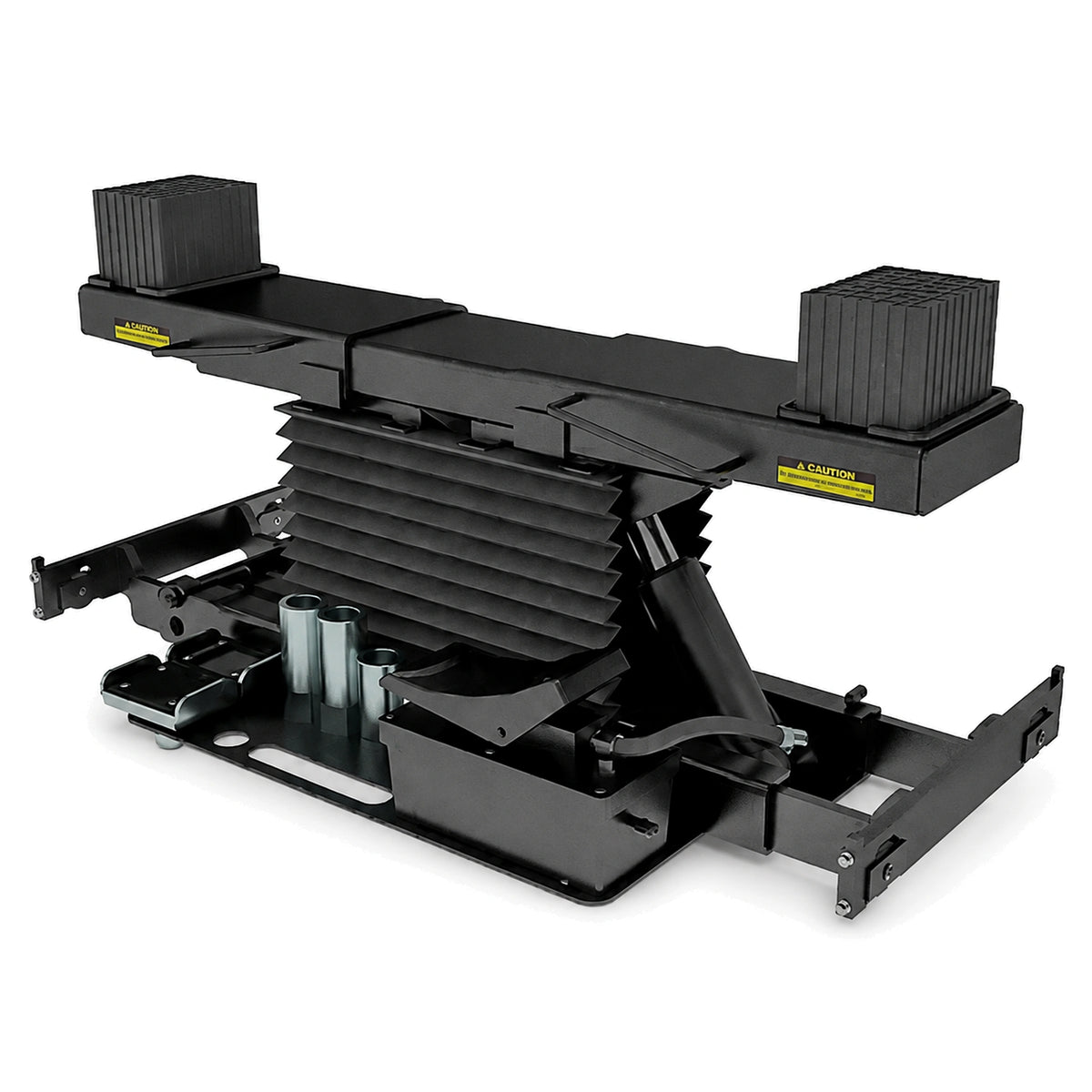
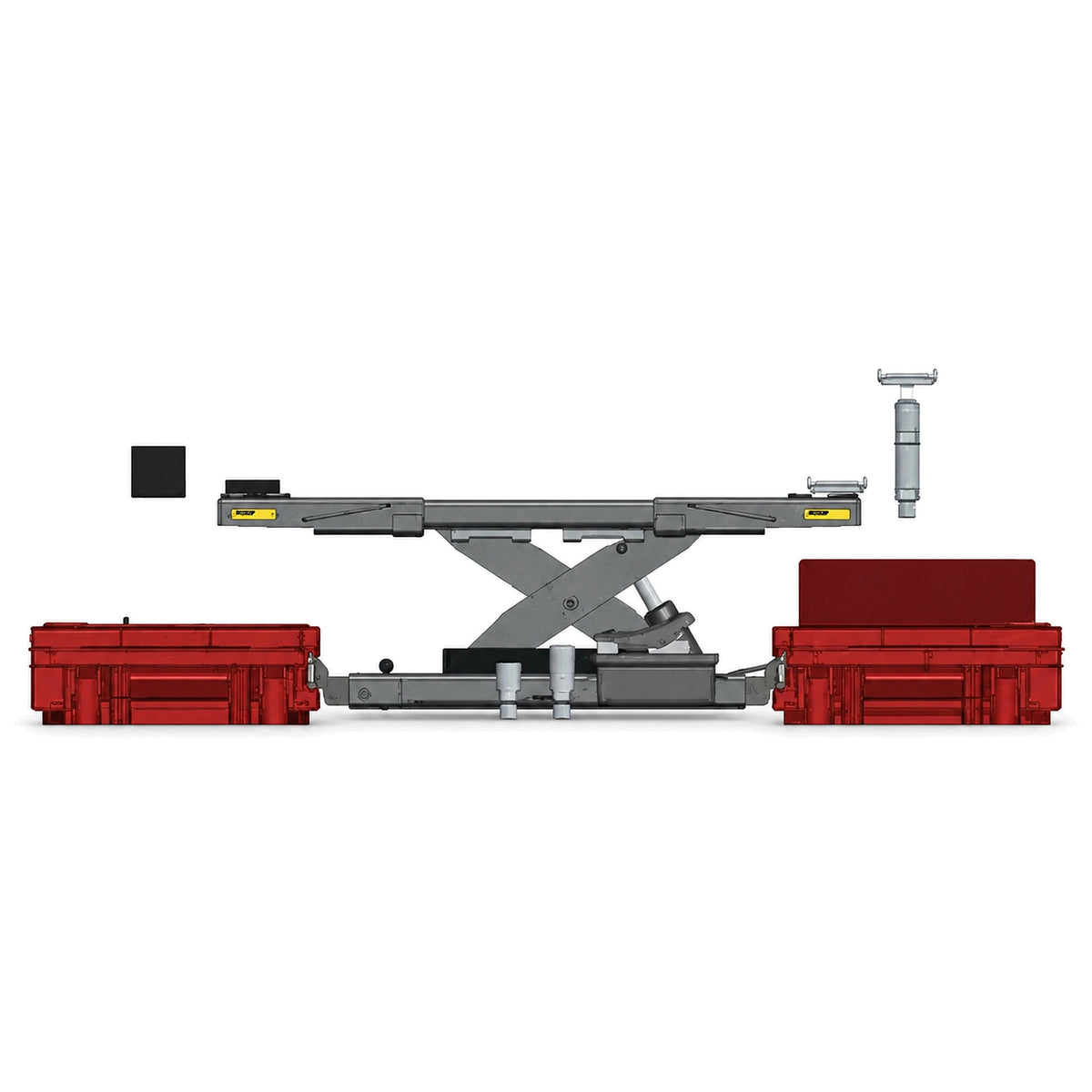
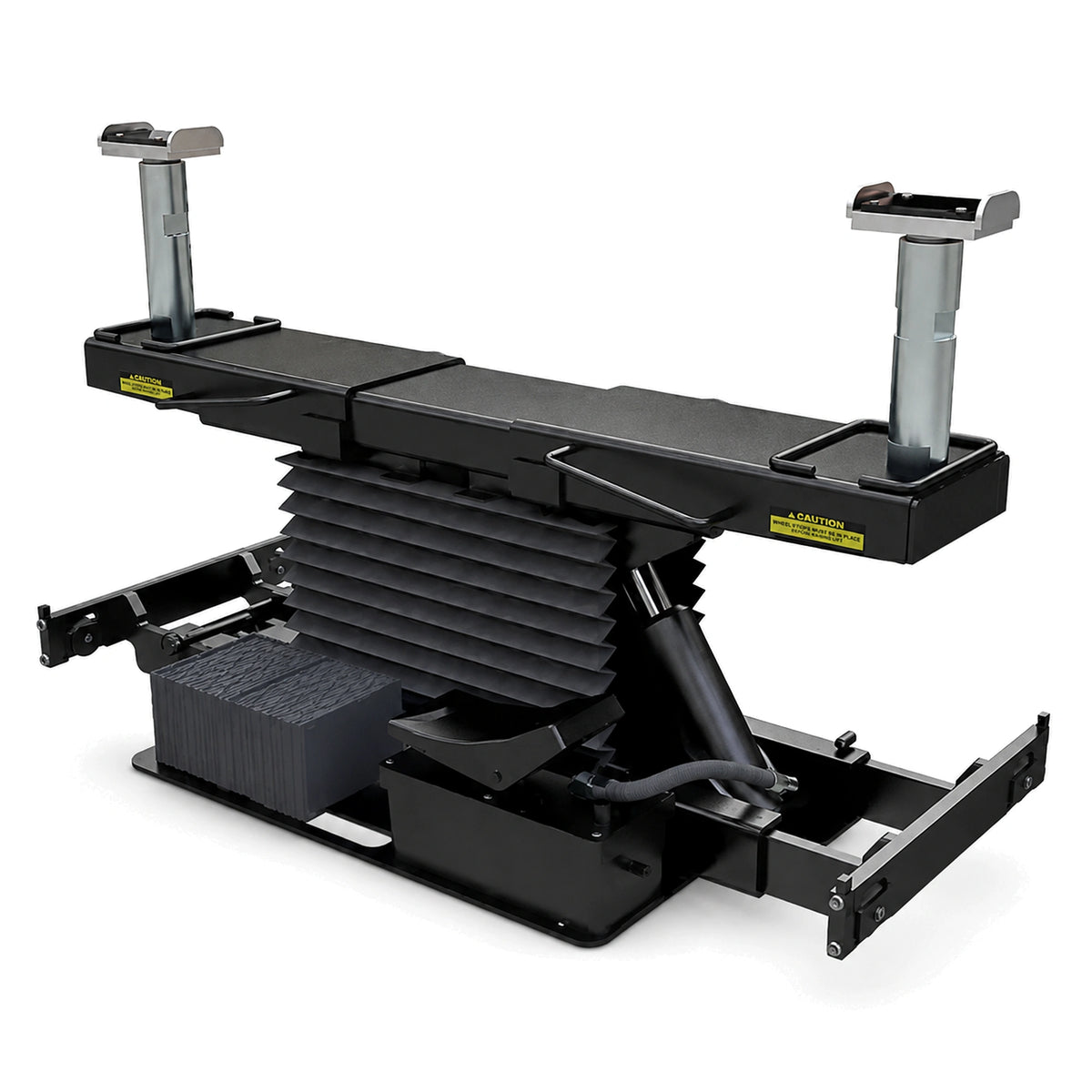
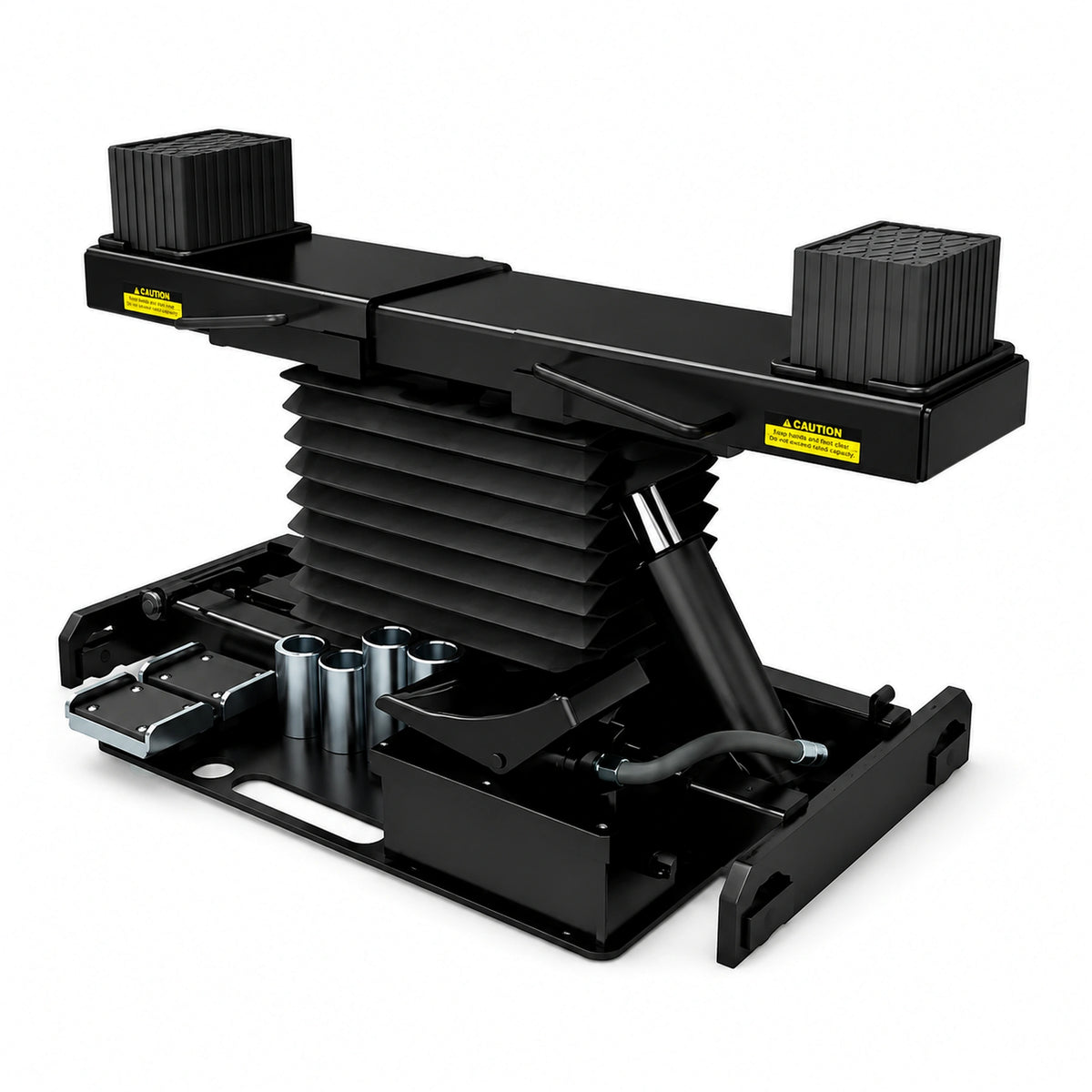
Rotary RJ6100YM - 6,000 lb Rolling Jack, Formed Track

Rotary RJ6100YM-1 - 6,000 lb Rolling Jack, Welded Track
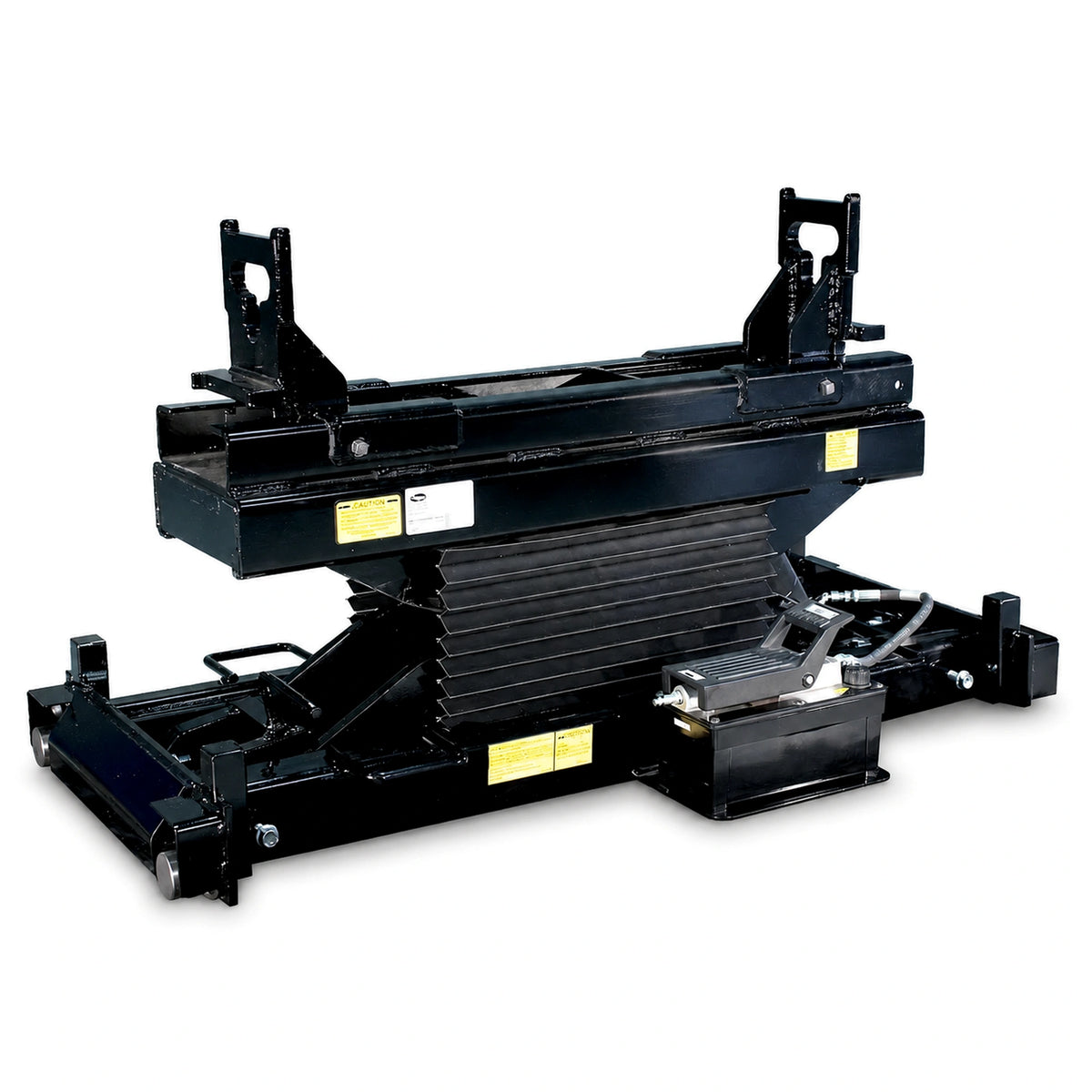
Rotary RJ152 - 15,000 lb Rolling Jack for SM30 Lift