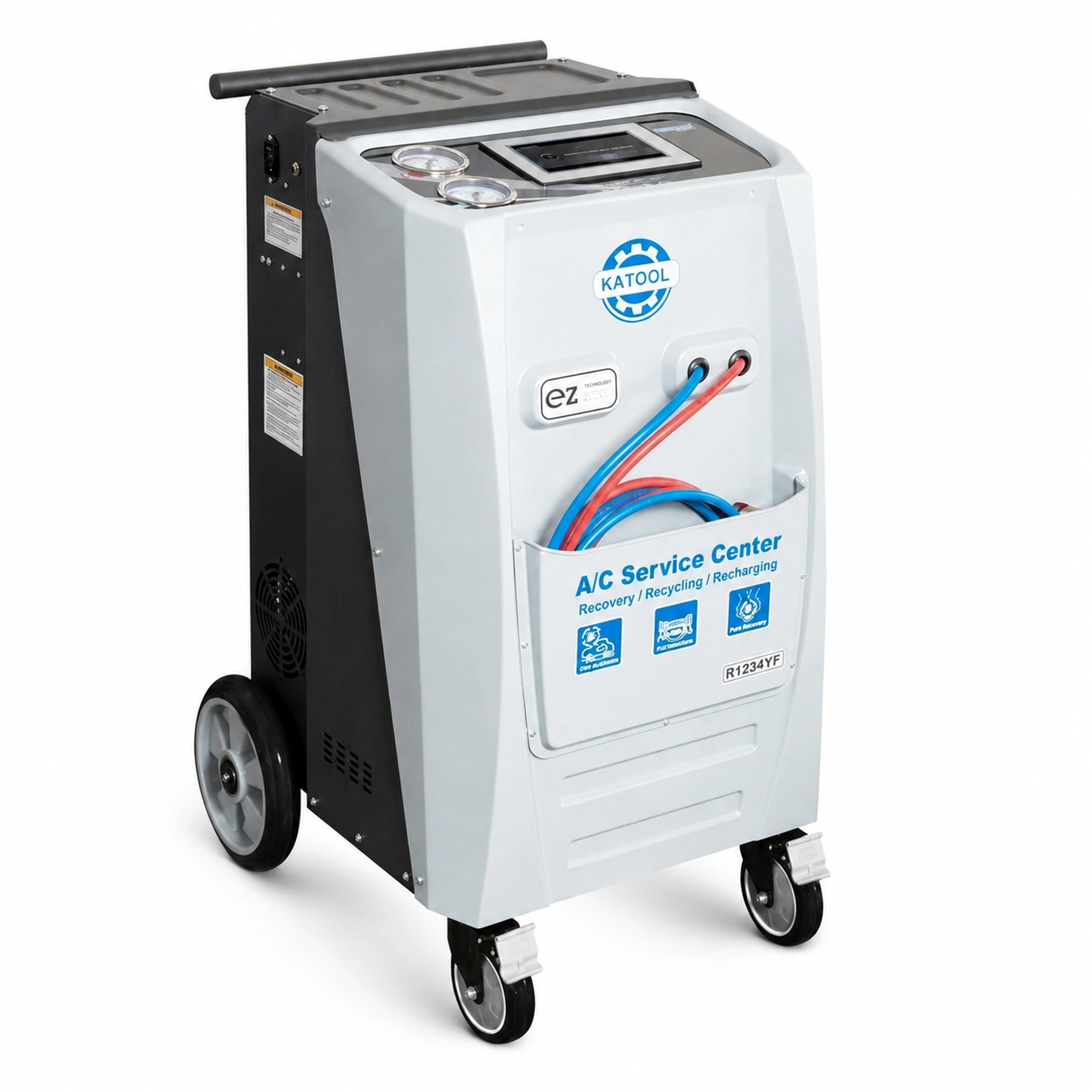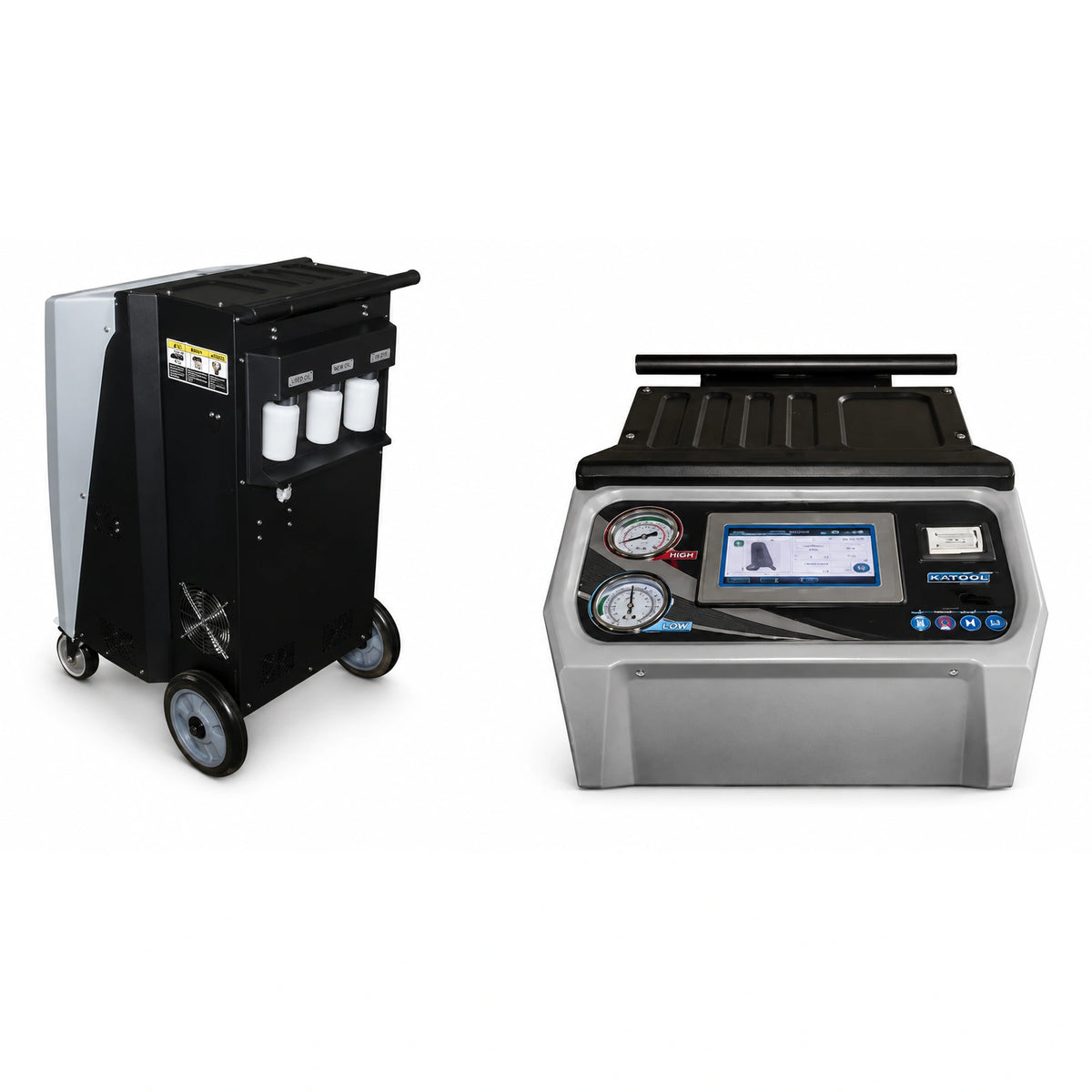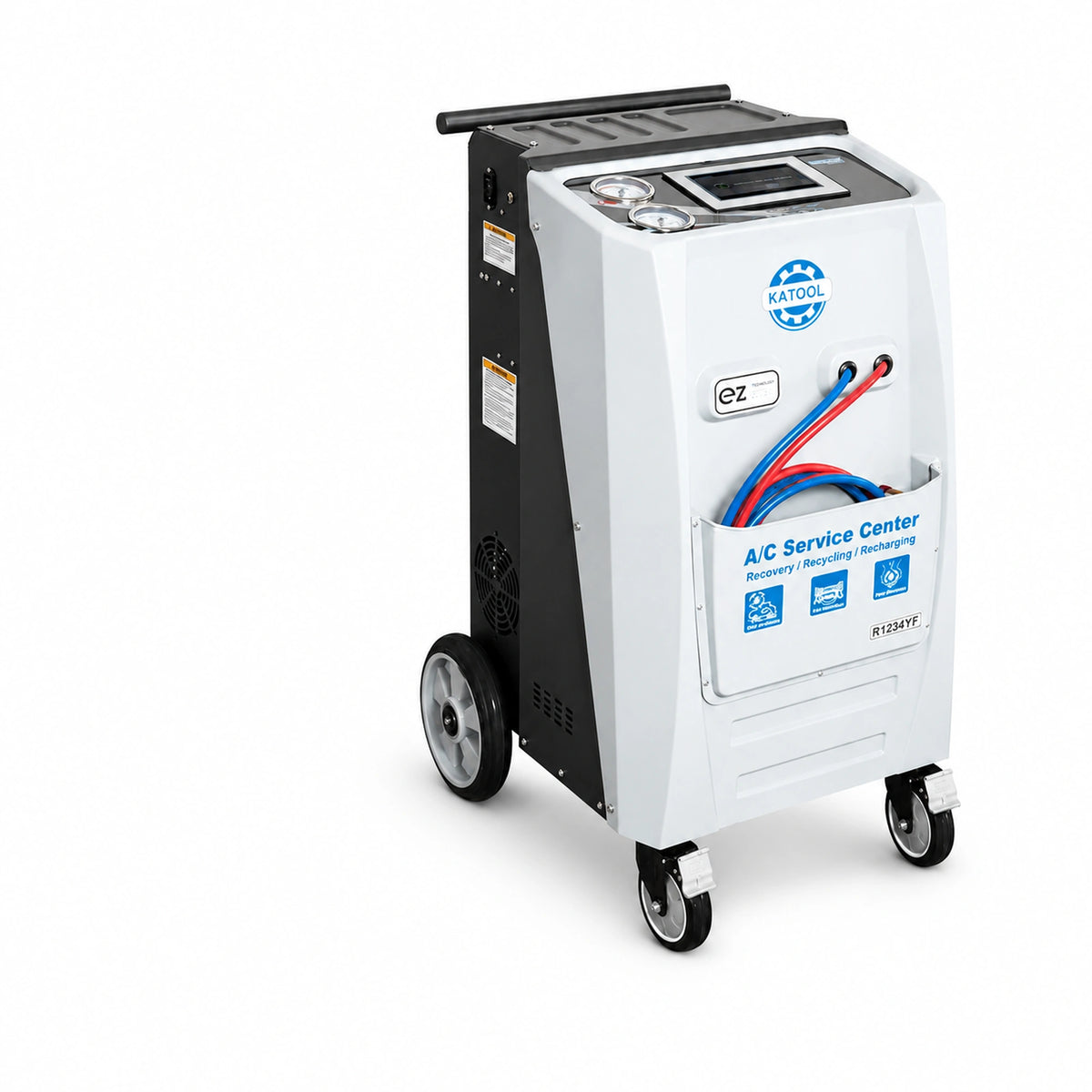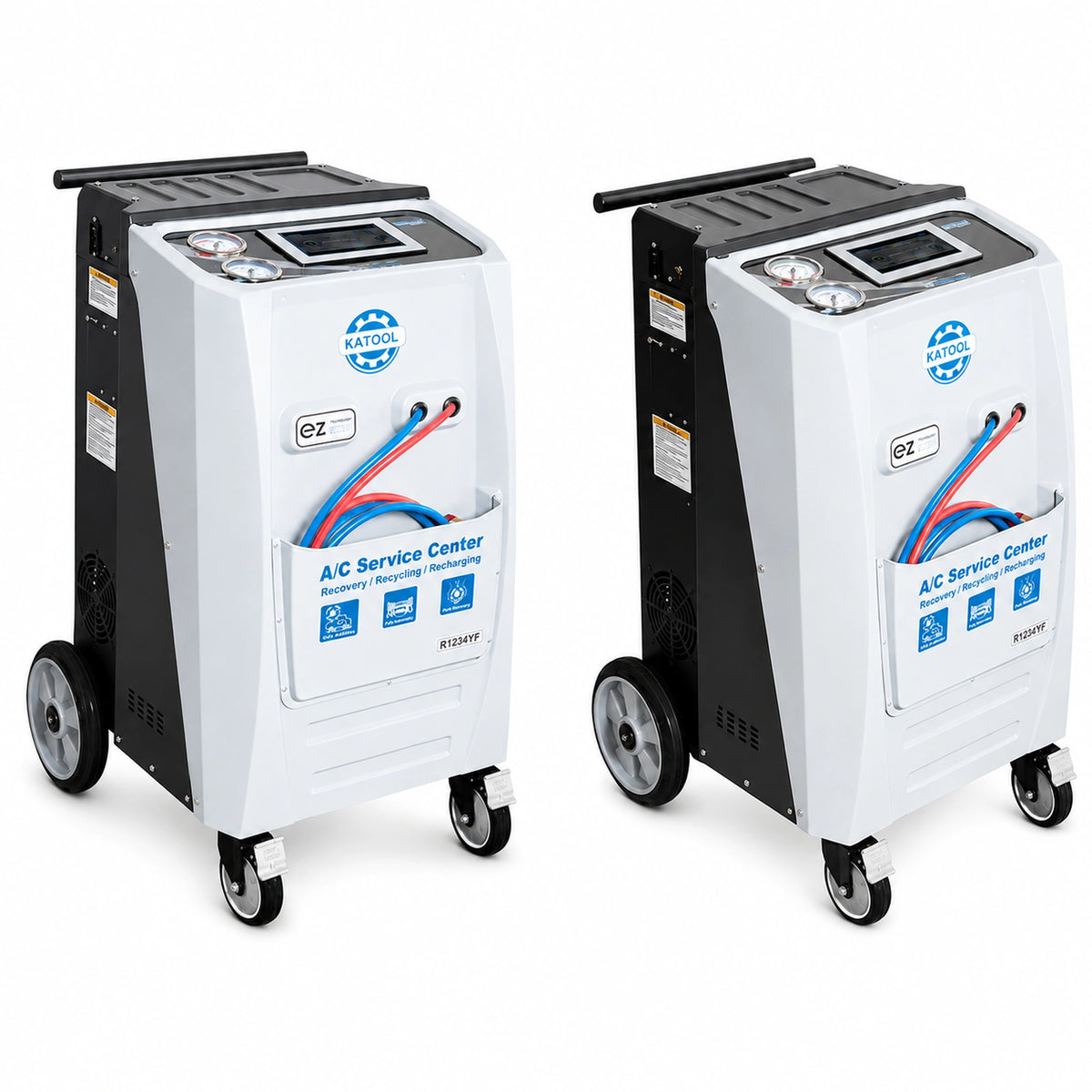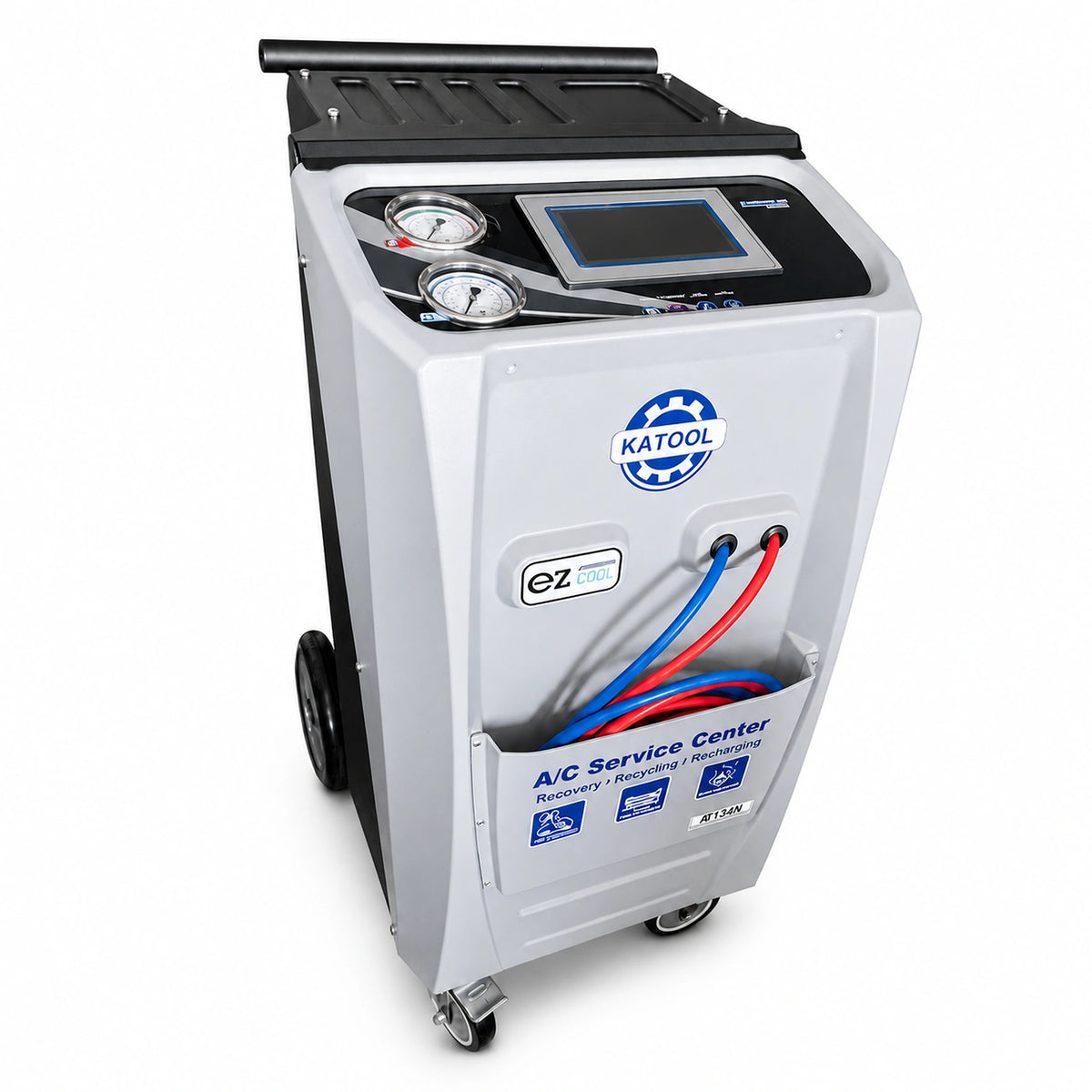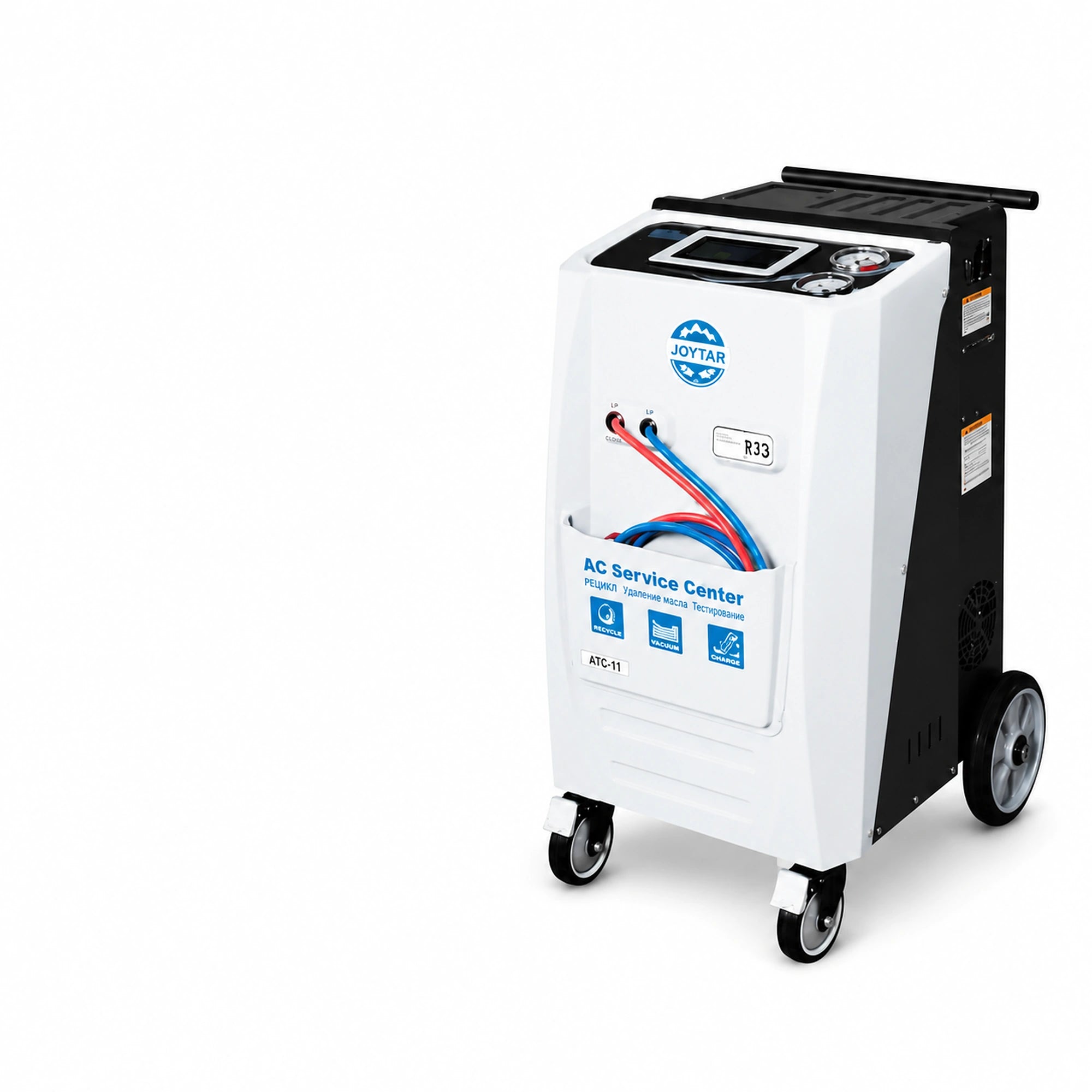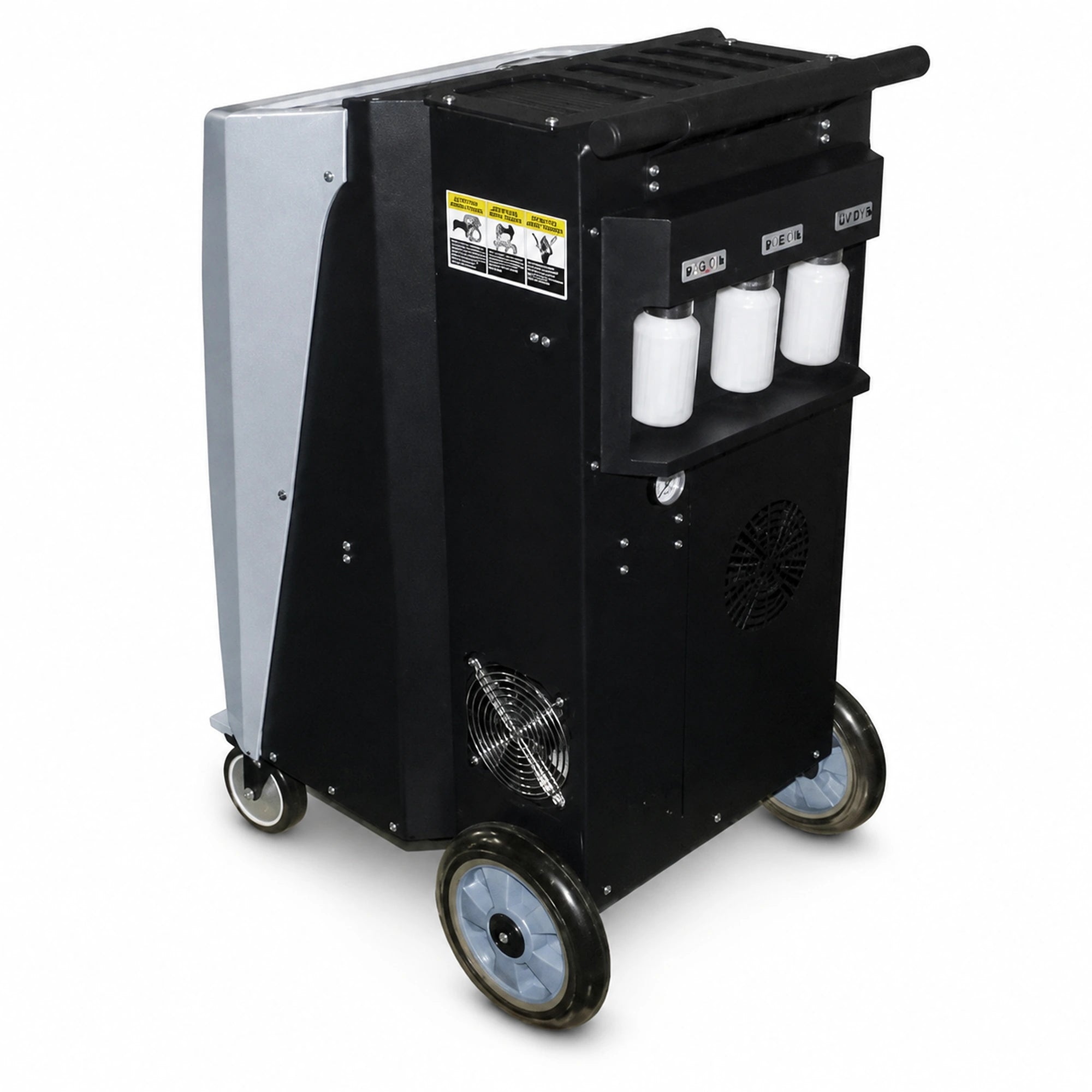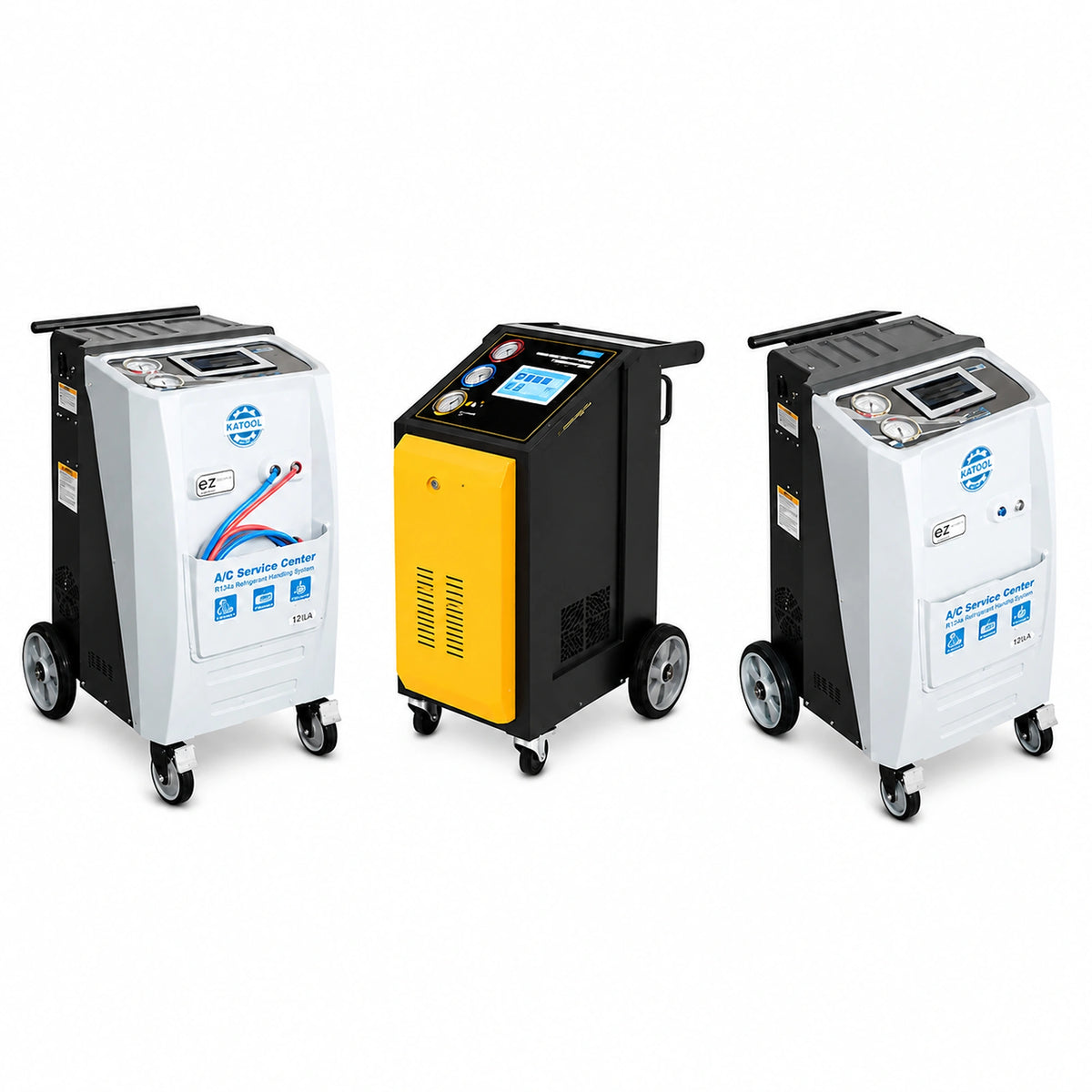
Katool A/C System Recovery, Recycling, and Charging Machines
Here's the problem with automotive A/C work: you can't legally vent refrigerant, which means you need proper recovery equipment. And proper recovery equipment from the legacy brands costs a small fortune. Katool automotive AC recovery machines solve that equation. Full recovery, recycling, and recharge capability at prices that make A/C service profitable for shops of any size.
Every Katool AC recovery machine meets EPA Section 608 requirements for refrigerant handling. SAE J2788 certified for R134a systems. The same recovery rates and accuracy you'd expect from machines costing twice as much. The difference is you're paying for the equipment, not decades of brand markup.
Automotive AC Recovery Machines for Sale
Our car AC recovery machine lineup handles the refrigerants you'll actually encounter:
- R134a Recovery Machines: The workhorse refrigerant for vehicles from the mid-1990s through mid-2010s. Our AC recovery machine R134a units recover, recycle, and recharge with automatic operation and digital accuracy. Still the most common refrigerant you'll service.
- R1234yf Recovery Machines: The newer refrigerant standard appearing in vehicles from 2014 forward. Different pressures, different oil compatibility, different equipment requirements. Katool R1234yf machines handle the transition without forcing you to buy separate units for each refrigerant.
- Dual-Refrigerant Systems: Shops servicing both older and newer vehicles need flexibility. Dual-capable AC recovery and recharge machines switch between refrigerant types without cross-contamination.
What Makes a Good AC Refrigerant Recovery Machine?
A quality AC refrigerant recovery machine does three jobs: recovery (pulling refrigerant out), recycling (filtering contaminants), and recharging (putting clean refrigerant back). The difference between cheap equipment and professional equipment shows up in:
- Recovery speed: Faster recovery means faster job turnaround. Quality compressors and larger internal tanks reduce cycle times.
- Charge accuracy: Digital scales and automatic shutoff ensure correct refrigerant amounts. Overcharging kills compressors. Undercharging kills cooling performance.
- Oil injection: A/C systems need precise oil amounts. Built-in oil injection with measurement takes the guesswork out.
- Vacuum capability: Proper evacuation before recharging removes moisture that destroys system components. Look for machines that pull deep vacuum and hold it.
- Database integration: Vehicle-specific charge amounts built into the machine eliminate manual lookups and reduce errors.
Who Needs an Auto AC Recovery Machine?
- Independent repair shops: A/C work is high-margin when you have the right equipment. An auto AC recovery machine turns away fewer customers and captures work that would otherwise go to the dealer.
- Mobile automotive technicians: Portable AC recovery machines bring A/C service capability to customer locations. Fleet accounts, dealership overflow, roadside assistance upgrades.
- Fleet maintenance operations: Work trucks, delivery vans, company vehicles. Keeping A/C service in-house means faster turnaround and lower per-vehicle costs.
- Dealership service departments: High-volume A/C work demands reliable equipment. Backup machines keep bays productive when primary units are cycling.
- Specialty shops: Performance shops, restoration shops, conversion specialists. Any operation touching A/C systems needs proper recovery capability.
Portable vs. Shop AC Recovery Machines
The choice between a portable AC recovery machine and a full shop unit depends on how you work:
Portable units trade some capacity for mobility. Smaller internal tanks mean more frequent transfers to external storage. But they roll where you need them: mobile service, multi-bay shops, off-site fleet work. For techs doing 2-5 A/C jobs per day, portable machines deliver excellent value.
Shop units prioritize capacity and speed. Larger tanks, faster recovery rates, more robust construction for continuous duty cycles. Fixed location, typically on a dedicated cart or workstation. For shops doing high-volume A/C work, the efficiency gains justify the larger footprint and investment.
What's Included
- Complete AC recovery, recycling, and recharge machine
- High and low pressure service hoses with quick-connect fittings
- Refrigerant tank (internal capacity varies by model)
- Oil injection system with measurement
- Digital display and controls
- Vehicle refrigerant capacity database
- Operation manual and quick-start guide
Certification and Compliance
All Katool AC recovery machines meet EPA Section 608 certification requirements for refrigerant recovery. SAE J2788 certified for R134a equipment. SAE J2843 certified for R1234yf equipment. These certifications aren't optional. They're required by law for any equipment used to service automotive A/C systems. Every Katool unit ships compliant and ready for professional use.
Warranty and Support
Katool AC recovery equipment includes a 1-year manufacturer warranty covering defects in materials and workmanship. Compressors, electronics, hoses, fittings. Parts ship from US inventory. Technical support available for operation questions and troubleshooting. You're not on your own figuring out error codes.
Shipping
AC recovery machines ship freight, crated for protection. These are precision instruments with sensitive components. We pack accordingly. Lift gate service available for deliveries without dock access. Typical transit runs 5-10 business days depending on location.
Common Questions About AC Recovery Machines
Can I use one machine for both R134a and R1234yf?
Not safely. The refrigerants require different oils, operate at different pressures, and contaminate each other if mixed. You need dedicated equipment for each refrigerant type, or a properly designed dual-system machine with separate internal circuits.
How long does automotive AC recovery take?
Typical passenger vehicle recovery runs 10-20 minutes depending on system charge and machine capability. Recharge adds another 10-15 minutes. Total service time including evacuation and leak checking runs 45-60 minutes for straightforward jobs.
Do I need EPA certification to use an AC recovery machine?
Yes. EPA Section 608 certification is required for anyone purchasing or using refrigerant recovery equipment. The certification covers proper handling procedures and is available through various training providers. The equipment itself is certified, but operators need individual certification too.
What's the difference between recovery and recycling?
Recovery pulls refrigerant out of the vehicle system into the machine's tank. Recycling filters that recovered refrigerant to remove moisture, oil, and contaminants so it can be reused. Quality machines do both automatically.
Is Katool AC equipment reliable?
Katool builds to professional standards at accessible prices. Same compressor technology, same filtration systems, same digital controls as premium brands. The difference is distribution model, not component quality. For shops doing regular A/C service, Katool machines deliver the performance and durability the work demands.
Ready to add A/C service capability? Browse our Katool AC recovery machine selection below. Questions about refrigerant compatibility or machine specifications? Contact us. We'll match the right equipment to your shop's needs.